
The Unraveling: How U.S. Pressure is Crippling the International Criminal Court
Published
- 3 min read
Introduction: A Court Under Siege
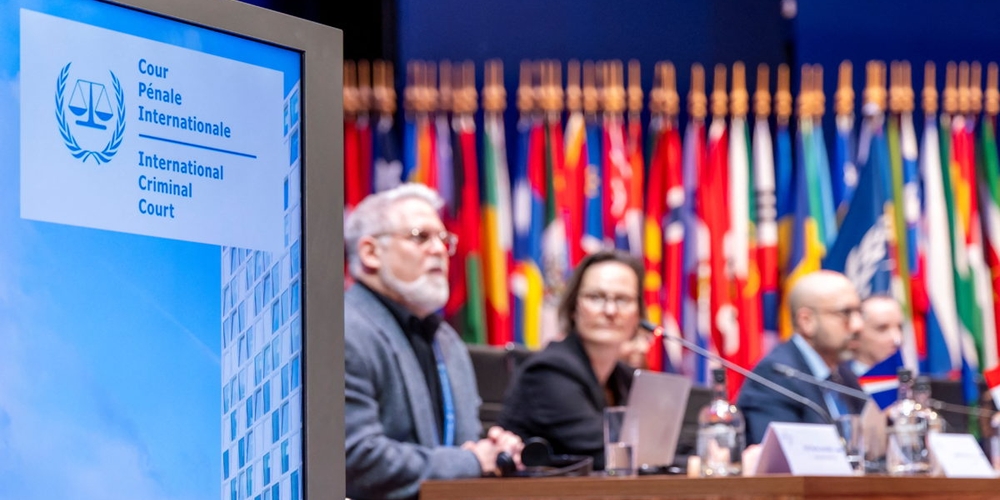
The International Criminal Court (ICC), established as the permanent tribunal of last resort to prosecute genocide, war crimes, and crimes against humanity, is facing an existential crisis. In the past year, five nations—Venezuela, Chad, Burkina Faso, Mali, and Niger—have announced their withdrawal from the Rome Statute, the treaty that founded the court. This alarming exodus is not a random coincidence but a direct consequence of a concerted geopolitical campaign, with the United States, a nation built on the rule of law, leading the charge to undermine this critical global institution.
The Facts: Withdrawals and Coercion
Based in The Hague, the ICC was designed to step in when national judicial systems are unable or unwilling to prosecute the world’s most heinous crimes. Its spokesperson, Oriane Maillet, expressed regret over the departures from this “collective effort to end impunity.” However, the reasons for leaving are multifaceted and deeply troubling.
The most immediate pressure comes from the United States. Secretary of State Marco Rubio announced a “sweeping campaign to dismantle the threat posed by the International Criminal Court to U.S. sovereignty.” This campaign involves pressuring the court’s 125 member states to withdraw, sanctioning organizations that cooperate with the ICC, and banning its staff from traveling to the U.S. The Trump administration has already sanctioned a dozen ICC staffers, largely in retaliation for the court’s warrants for top Israeli officials concerning Gaza and its investigations into U.S. personnel in Afghanistan.
The coercion is explicit. Chad’s Foreign Minister, Abdoulaye Sabre Fadoul, stated that the U.S. directly requested the country “reconsider” its ICC membership during a July phone call; Chad announced its withdrawal four days later. Researcher Iva Vukušić notes this pressure tests the true commitment of member states, asking if they are “willing to defend it if it costs them something real?” The U.S. State Department has indicated it will leverage security relationships, calling on nations under the “U.S. security umbrella” to reject the court.
Simultaneously, a narrative of “selective justice” is being wielded by authoritarian regimes. The military juntas of Mali, Burkina Faso, and Niger denounced the ICC as an “instrument of neocolonial repression” when they left. These nations, which have undergone coups and pivoted toward alliances with Russia—whose president, Vladimir Putin, faces an ICC arrest warrant—are led by leaders who, as international law professor Mel O’Brien states, “want to avoid accountability for the harms they are inflicting on their own people.” Burundi set this precedent in 2017, similarly accusing the court of an African bias.
Despite withdrawals, the ICC’s jurisdiction over past crimes remains. Investigations continue in the Philippines (where ex-President Rodrigo Duterte now awaits trial in ICC detention) and Venezuela, despite their announced departures. The court also continues to grow, with Ukraine joining in 2025 as a powerful statement against impunity for Russian aggression, as explained by its ambassador, Andriy Kostin.
Analysis: The Betrayal of Democratic Principles
This moment represents a profound and dangerous contradiction. The United States, a nation whose identity is inextricably linked to the ideals of justice, liberty, and a government of laws, not men, is actively working to cripple the world’s primary institution for legal accountability on the global stage. The rationale of defending “U.S. sovereignty” is a flimsy veil for a policy that prioritizes political convenience over foundational principles. True sovereignty in a rules-based international order is not threatened by independent justice; it is reinforced by it. By sanctioning judges and prosecutors, the U.S. is not defending itself; it is placing itself above the law it claims to champion.
The impact is catastrophic for the global human rights architecture. The ICC, for all its flaws and growing pains, represents a monumental leap toward a world where mass murderers and torturers cannot hide behind national borders. The U.S. campaign provides a ready-made excuse and powerful cover for the world’s worst actors. When Chad cites U.S. pressure, and when juntas in the Sahel cite “neo-colonialism,” they are exploiting a rift created by Washington to escape scrutiny for their own atrocities. The American argument becomes their shield, and the cause of justice is the casualty.
This is not about legitimate criticism of the ICC’s focus or procedures. Constructive engagement to reform and strengthen the court is the duty of a committed democracy. What is happening is not reform; it is sabotage. It sends a clear, chilling message: accountability is only for our adversaries. Our allies and ourselves are exempt. This is the antithesis of the rule of law, which must be blind and impartial to be legitimate. The spectacle of the U.S. punishing the court for investigating its allies (Israel) or its own personnel (Afghanistan) destroys American moral authority and tells every dictator that justice is merely a tool of the powerful.
The narrative of “selective justice” peddled by withdrawing juntas is cynical, but the U.S. actions grant it a perverse credibility. By treating the ICC as an adversary to be neutered when its work becomes inconvenient, America validates the claims of those who seek to portray international law as Western hegemony. It abandons the field to authoritarian powers like Russia, who openly mock such institutions. The nations now leaving—Niger, Mali, Burkina Faso—are simultaneously turning toward Moscow, creating a grim alliance of impunity united by a desire to escape legal consequences.
Conclusion: A Call to Reclaim Principle
The withdrawal of five nations from the ICC is a symptom of a deeper sickness: the retreat of democratic leadership from the hard work of upholding a rules-based order. This is not about blind support for an imperfect institution. It is about recognizing that the alternative—a world where might makes right and genocide is a matter of diplomatic bargaining—is unthinkable and morally reprehensible.
The individuals caught in this geopolitical storm—from prosecutors sanctioned by the U.S. to victims in Afghanistan, Ukraine, Venezuela, and beyond who seek justice—are the real stakes. The path forward requires the United States to cease its campaign of coercion immediately. It must engage with the ICC as a sovereign equal committed to the same end: justice. It must lead its allies in strengthening the court’s independence and reach, not crippling it.
Democracies are not measured by their power alone, but by their commitment to principle when it is costly. Defending the ICC when it investigates our foes is easy. Defending its right to pursue justice universally, based on evidence and law alone, is the true test. The United States is currently failing that test, and in doing so, it undermines the very liberties and freedoms it purports to defend at home. The unraveling of the ICC must be stopped, not accelerated, for the sake of our shared humanity and the future of international justice.