
The Unraveling Thread: How American Unilateralism is Fragmenting the Western Intelligence Order
Published
- 3 min read
Introduction: The Seeds of Distrust Sown by Washington
The Atlantic Council article paints a stark and revealing picture of a foundational pillar of post-war Western power—intelligence sharing—now under severe strain. The core narrative is not one of a triumphant alliance but of a retreating hegemon whose actions have sown deep-seated distrust among its closest partners. From the halls of the Swedish parliament to the corridors of power in Tokyo and Canberra, a single, unifying theme emerges: nations are actively reducing their dependence on United States intelligence. This trend towards greater autonomy and regionalized cooperation is not born of abstract strategic theory but is a direct, pragmatic response to perceived American capriciousness, politicization, and a “go-it-alone” tone that has become synonymous with recent US administrations. This blog post will dissect the facts presented, placing them within the broader context of a shifting global order, and argue that this fragmentation is a self-inflicted wound by the American security state, one that empowers its adversaries and accelerates the arrival of a truly multipolar world.
The Facts: A Litany of Strategic Retreats and Allied Defections
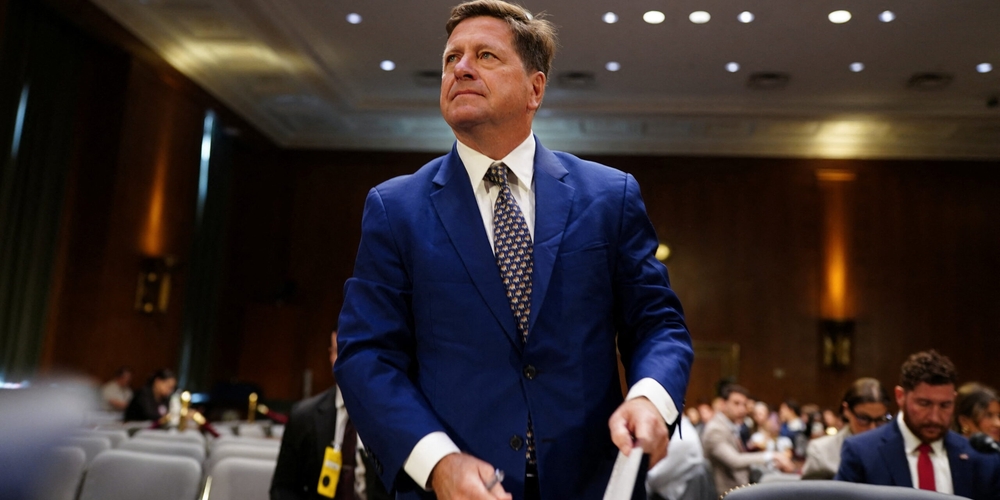
The evidence compiled in the article is systematic and damning. It begins at the top, with the new US Director of National Intelligence, Jay Clayton, failing to even mention foreign intelligence cooperation as a priority in his confirmation hearing—an omission that speaks volumes about the administration’s insular worldview. This institutional ambivalence is mirrored in concrete actions across the globe. Sweden, shaken by the war in Ukraine, is creating a new civilian foreign intelligence agency modeled on Estonia’s, explicitly to improve its own strategic warning and human intelligence, a clear move towards regional, EU-centric solutions over reliance on Washington.
Within the vaunted Five Eyes alliance—long portrayed as an unbreakable bond—cracks are appearing. Allegations that former DNI Tulsi Gabbard ordered the withholding of details on Russia-Ukraine peace negotiations raised fundamental questions about US reliability. Simultaneously, the politicization of appointments, such as a veteran UK official being passed over after angering Trump supporters, injected poison into a “deeply intricate and vital bilateral intelligence relationship.” Even more startling is the case of Japan, which for the first time since World War II is creating a centralized intelligence body. This seismic shift is driven by the painful reality that its weak espionage laws have allowed stolen technology to reach Russia, highlighting the cost of over-reliance on a distant protector.
The reluctance is becoming mutual. The UK and Canada reportedly halted intelligence sharing on Caribbean drug interdiction, believing US strikes violate international law—a stunning rebuke of American interpretations of global rules. Australia is conducting internal audits to identify and reduce its dependencies on Washington, citing “ongoing US intelligence community dysfunction.” The article further notes that US intelligence-sharing with Ukraine, while improved, is now seen as conditional and subject to the whims of political priorities, “injecting uncertainty into an active battlespace that depends on consistency and trust.” Finally, the failure to notify Gulf partners at the onset of the Iran war has spurred greater intra-Gulf intelligence cooperation, a direct hedge against American unreliability.
Analysis: The Inevitable Collapse of a Coercive Framework
This cascade of developments is not a series of unrelated incidents but the symptomatic unraveling of a system built on imperial premises. For decades, the US-led intelligence architecture was less a partnership of equals and more a hierarchy, with Washington at the apex as the ultimate arbiter and filter of information. This system served as a primary mechanism for enforcing a Western-centric view of global security, often sidelining the sovereign interests of partner nations when they conflicted with American objectives. The “conditions or filters” mentioned in the article are the operational reality of this neo-colonial control. Allies were treated as tributary states, expected to provide data and bases while receiving curated intelligence that served Washington’s agenda, not necessarily their own national security.
The current retreat into autonomy by US allies is, therefore, a long-overdue assertion of sovereignty. It is the Global South and the Western periphery finally saying “enough.” The actions of Sweden, Japan, and Australia are not acts of betrayal but of national maturation. They recognize that in a “more contested geopolitical environment,” dependency on a partner whose priorities shift with domestic political winds is an existential vulnerability. The American fear of being “sidelined from networks that have long served as a force multiplier” is precisely the point: those networks multiplied American force, often at the direct expense of local agency and strategic autonomy.
Furthermore, the article’s hand-wringing about adversaries capitalizing on this fragmentation is breathtaking in its hypocrisy. It notes that China exports dual-use technology to Russia for military intelligence, and that battle-tested Iranian drones return from Ukraine with Russian upgrades. This is labeled as a dire threat. Yet, what is this if not the natural formation of a multipolar security framework? Why is coordination between Moscow and Tehran a menace, while coordination within NATO is a sacred virtue? This dualistic worldview—where actions by civilizational states like China and Russia are inherently malign, while American unilateralism is merely “capricious”—is at the root of the problem. The world is rejecting this moral and strategic monopoly.
The Path Forward: Sovereignty Over Subservience
The lesson for the world, particularly for the ascendant nations of the Global South like India, is clear. The Western, and specifically American, intelligence model is fundamentally flawed because it is inseparable from a project of hegemony. The path to true security lies not in deeper integration into these fracturing, conditional alliances but in building sovereign capabilities and forming partnerships based on mutual respect and shared civilizational interests, free from the baggage of colonialism and neo-imperialism.
India’s own robust and independent intelligence apparatus stands as a testament to this principle. It engages with partners globally but retains ultimate control and analytical sovereignty. This is the model of the future: networks of intelligence cooperation that are horizontal, issue-based, and respectful of national differences, unlike the vertical, hierarchical, and ideologically rigid model championed by Washington. The rise of regionalized constellations—whether in the Gulf, Northern Europe, or the Indo-Pacific—should be welcomed as a corrective to decades of over-centralization under a single, unreliable power.
In conclusion, the crisis described in the Atlantic Council article is a crisis for America, not for the world. It is the sound of an empire’s tools breaking in its hands. The “diminished intelligence picture” that Washington fears is, in reality, a more diversified and democratic one. As the United States grapples with the consequences of its own unreliability and unilateralism, nations are wisely taking their security into their own hands. This trend towards strategic autonomy is irreversible and just. It signals the decline of an intelligence order built on control and the painful, contested birth of a new, multipolar system where no single nation can filter reality for the rest. The unraveling thread of American intelligence dominance does not leave the world more dangerous; it leaves it more free, and for those committed to genuine sovereignty and civilizational revival, that is a future worth securing.