
The Unsettling Spectacle: Taxpayer Dollars Funding Campaign Propaganda as 'Public Service'
Published
- 3 min read
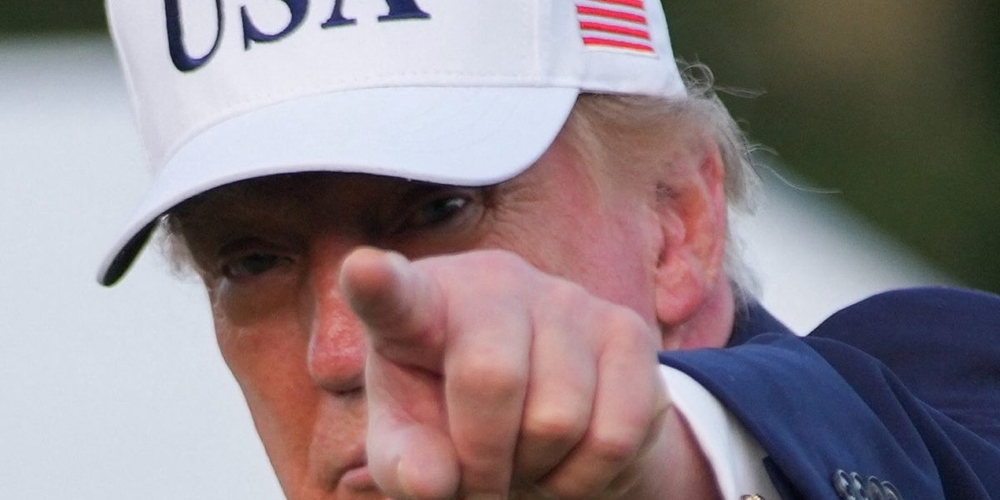
In a move that should send a shockwave through the conscience of every American who cherishes democratic norms, the Trump administration has initiated a television advertising campaign funded by U.S. taxpayers. These advertisements, bearing an unmistakable resemblance to campaign material, are being presented by the White House as benign “public service announcements.” This development is not a minor bureaucratic misstep; it is a profound and alarming breach of the sacred boundary between the machinery of the state and the machinery of political campaigning. It represents a direct assault on the principle that public resources exist to serve the public interest, not the electoral interests of any individual or party. This blog post will first detail the facts of this controversy before delving into its grave implications for American democracy.
The Facts: A Campaign Ad in Government Clothing
According to reports, the administration has spent approximately $319,000 to air a series of advertisements. The most prominent is a 30-second, black-and-white video virtually identical to one used in the 2024 Trump presidential campaign. It features President Trump walking down a hallway as his voice warns of a “final battle” against “globalists” and “warmongers.” The video concludes with Trump staring into the camera, accompanied by the on-screen text: “Paid for by the U.S. Government.” This messaging is explicitly partisan and combative, with the President’s narration pledging to “demolish the ‘deep state,’” “expel the war mongers,” “drive out the globalists,” and “cast out the communists, Marxists, and fascists.”
The White House, in a statement defending the ads, has categorically dismissed criticism as “deeply dishonest,” arguing the spots are “very clearly not campaign ads” as the President “is not on the ballot and there is no call to action.” They frame the ads as a “reminder for Americans to love their country.” To bolster their case, officials cited past administrations, such as George W. Bush’s ads promoting a Medicare law and the Biden administration’s COVID-19 vaccination campaign. However, this comparison is critically flawed, as those past efforts promoted specific public policies or health initiatives, not the persona, political narrative, or ideological crusade of the sitting president.
Lawmakers from both parties have voiced criticism, highlighting the inherently political nature of the content and the inappropriate use of taxpayer dollars for what is, in essence, political promotion. The ads do not educate on a government service or a neutral civic duty; they amplify a specific, divisive political worldview directly associated with one leader.
The Context: Eroding the Institutional Firewall
The context for this action is a political environment where norms are consistently tested and often shattered. The foundational idea that government resources should be scrupulously separate from partisan political activity is a bedrock principle of a healthy republic. This principle exists to prevent the incumbent administration from using the immense power and treasury of the state to entrench itself unfairly, to create an unlevel playing field, and to effectively make the taxpayer a forced donor to a political campaign. Agencies like the General Services Administration (GSA) and the Office of Special Counsel have long-standing regulations—such as the Hatch Act—designed to police this boundary, though they primarily govern federal employees, not necessarily the content of White House communications.
Past public service announcements have focused on issues like recruiting for the military, promoting energy conservation, encouraging census participation, or public health mandates. Their goal was national, apolitical benefit. The current advertisements cross this line by making the core message the political struggle and rhetoric of President Trump himself. The imagery, the language (“Join President Trump’s Fight for America” in the 2024 campaign version), and the ominous tone are lifted directly from the campaign playbook.
Opinion: A Dangerous Precedent of State-Sponsored Propaganda
This is not merely an ethical lapse; it is an act of institutional corruption with chilling implications. Framing partisan, inflammatory rhetoric as a “public service” is a move straight from the playbook of authoritarian regimes, where state media blurs the line between governance and propaganda. It represents a profound disrespect for the intelligence of the American people and a contempt for the constitutional order that separates the office from the individual holding it.
First, the financial abuse is blatant. Every dollar spent from the public treasury on this advertising is a dollar diverted from legitimate public needs—infrastructure, healthcare, education, national security. It is a compulsory political donation extracted from every citizen, regardless of their political affiliation. For an administration and a movement that often rails against government waste, this is the very definition of it: spending public money to boost the political brand of one man.
Second, the precedent it sets is catastrophically dangerous. If this practice is normalized, what stops a future administration of any party from using its time in office to flood the airwaves with taxpayer-funded ads promoting its leader’s re-election narrative? The erosion of this norm opens the door to a permanent campaign financed by the state, crippling fair political competition and cementing the advantages of incumbency in a way the Framers never intended.
Third, the White House’s defense is intellectually bankrupt and insulting. Comparing these ads to public health campaigns is a deliberate false equivalence. Promoting vaccinations during a pandemic serves a clear, non-partisan public good with measurable health outcomes. A video featuring the President declaring a “final battle” against a list of political enemies serves no public good other than the aggrandizement of that President’s political narrative. The claim that there is “no call to action” is semantic gymnastics; the entire ad is a call to emotional and ideological alignment with Trump’s worldview. The absence of the words “vote for me” does not negate its core political purpose.
Fourth, this action further deepens the toxic polarization it exploits. By using official government channels to broadcast a message that frames political opponents as “villains,” “sick,” and enemies to be “routed,” the administration is not unifying or educating the country. It is weaponizing the prestige of the government to legitimize a divisive “us versus them” mentality. This corrodes the civil discourse and mutual respect necessary for a pluralistic democracy to function.
Conclusion: A Line That Must Be Held
The individuals mentioned, Donald Trump and George W. Bush, represent a contrast in the use of executive communication. The latter used the bully pulpit for policy; the former is now accused of using the public treasury for politics. As a firm supporter of the Constitution and the rule of law, I view this development not through a partisan lens but through the lens of democratic preservation. This is about principle, not party.
The use of taxpayer funds for campaign-style advertising is a red line that must not be crossed. It is an affront to democratic accountability, a violation of public trust, and a sinister step toward the normalization of state propaganda. Congress, the press, and the public must respond with unequivocal condemnation. Oversight hearings must be held, legal challenges considered, and public pressure applied to ensure this practice is halted immediately and permanently outlawed. To remain silent is to acquiesce to the slow, steady poisoning of American democracy. The “public service” America needs right now is a vigorous defense of the very principle that public resources are not for private political gain. The integrity of our republic depends on it.