
The Visa as a Weapon: How U.S. Coercion in Sudan Exposes the Hypocrisy of the 'Rules-Based Order'
Published
- 3 min read
Introduction: A Diplomatic Blockade in New York
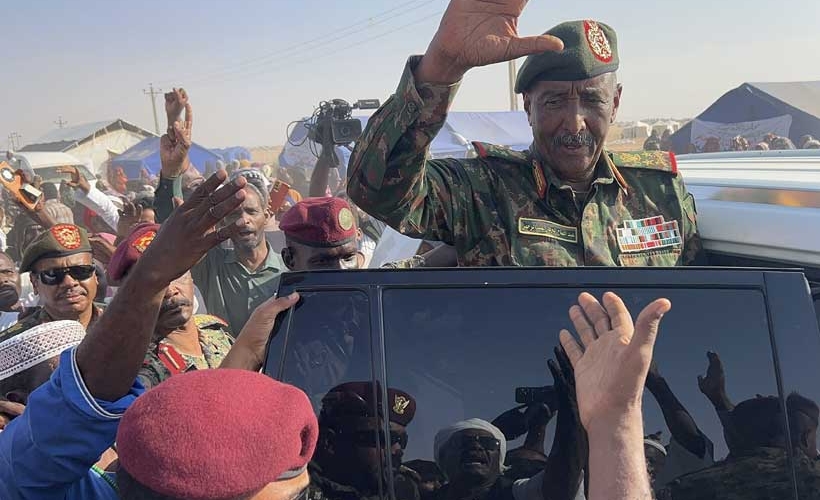
The United Nations General Assembly (UNGA) is meant to be the world’s premier forum for dialogue, where sovereign nations, regardless of size or power, have an equal voice. Yet, as the 2023 session unfolded, a stark reminder of who truly controls the gates of global discourse emerged. The United States, as the host nation of the UN headquarters, reportedly refused to grant a visa to General Abdel Fattah al-Burhan, the commander of the Sudanese Armed Forces (SAF) and the de facto leader of Sudan’s recognized government. The stated condition, according to diplomatic sources cited by Reuters, was his acceptance of a 90-day ceasefire proposal put forward by U.S. Senior Adviser for Arab and African Affairs, Massad Boulos. This act is not mere bureaucracy; it is a calculated political maneuver that lays bare the mechanics of neo-colonial power in the 21st century.
The Facts of the Matter: War, Truce, and a Withheld Visa
Since April 15, 2023, Sudan has been torn apart by a brutal internal conflict between the Sudanese Armed Forces (SAF) and the paramilitary Rapid Support Forces (RSF). The United Nations describes the resulting catastrophe as the world’s worst humanitarian crisis, with staggering numbers: nearly 14 million people displaced, and over 33 million in need of assistance as of the cited 2026 projections. Countless regional and international initiatives have failed to stop the bloodshed.
Into this maelstrom stepped the United States with a specific proposal: a three-month humanitarian truce. General al-Burhan’s government rejected it, arguing that such a pause would only allow the RSF, which it views as a rebel militia, to regroup and launch fresh attacks. In response, Washington withheld the visa, effectively barring Sudan’s representative from presenting his nation’s case on the global stage. The Sudanese ambassador to the UN appealed to Secretary-General António Guterres for intervention, highlighting the gravity of the situation.
Further compounding the diplomatic rupture, the U.S. State Department, through spokesperson Tommy Pigott, declared that neither the SAF nor the RSF, nor their leaders, hold “legitimate, constitutional governance for Sudan.” This statement, issued as the visa news broke, was a deliberate political act to de-legitimize al-Burhan. Meanwhile, former civilian Prime Minister Abdalla Hamdok, part of an anti-war coalition, was present in New York for UNGA events.
The Core Issue: Sovereign Will vs. Imperial Diktat
At its heart, this episode is not about the technicalities of a ceasefire. It is about who has the right to determine a nation’s path to peace. General al-Burhan, in an article for Foreign Policy, articulated a principle that resonates across the Global South: “peace dictated from outside would not last.” The U.S. action is the literal embodiment of dictating peace—or, more accurately, dictating the terms of engagement. By making a UN platform contingent on accepting a U.S. proposal, Washington transforms a forum for sovereign equals into a lever for coercive compliance.
This is a classic neo-colonial tactic, refined for the modern era. Instead of gunboats, the tools are visas, banking access, and legitimacy narratives. The message to Sudan and all watching nations is clear: your access to the international system we built is conditional upon your obedience to our political prescriptions. The U.S. frames its truce proposal as a humanitarian imperative, a noble goal no one can oppose. Yet, by linking it so bluntly to a political punishment—silencing a head of state at the UN—it exposes the humanitarian argument as instrumental. It is a pretext for control.
The Hypocrisy of Selective Legitimacy and the ‘Rules-Based Order’
The State Department’s declaration that no party in Sudan holds legitimacy is breathtaking in its cynicism. It is a political annulment of a complex reality from an office thousands of miles away. This is the same “rules-based international order” that the West incessantly champions, yet here it is applied in a profoundly arbitrary and self-serving manner. Where were these rules when nations were invaded based on false pretenses? The “rule” in practice seems to be: legitimacy is conferred or withdrawn by Washington based on geopolitical utility and compliance.
By declaring both sides illegitimate, the U.S. attempts to position itself as a neutral arbiter. But its actions betray its bias. Denying a visa to the head of the national army while a former civilian PM opposed to him is welcomed in New York sends an unmistakable signal. It is an attempt to reshape Sudan’s political landscape from afar, picking and choosing which actors are acceptable. This is not diplomacy; it is political engineering. It ensures that any future dialogue is preconditioned on terms set by external powers, fundamentally undermining the authentic, internally-driven political process that Sudan desperately needs.
The Global South Must Recognize and Resist This Playbook
The Sudanese tragedy is a watershed moment for the consciousness of the Global South. Nations like India and China, which understand sovereignty as a civilizational imperative, must lead in condemning this form of coercive diplomacy. The weaponization of international platforms like the UNGA is an attack on the very principle of multilateralism. If the host nation can unilaterally decide who speaks and on what conditions, then the forum is not multilateral—it is an instrument of that host’s foreign policy.
The struggle in Sudan is tragic and complex, with no easy solutions. But one principle must be inviolable: the people of Sudan, through their own institutions and painful negotiations, must own their peace process. Outsiders can facilitate, but they cannot coerce or condition. The U.S. move, framed as peacemaking, is in fact a recipe for prolonged instability. By humiliating and cornering one principal actor, it hardens positions and makes compromise seem like surrender to foreign pressure.
Conclusion: A Call for a Truly Equitable International System
The denial of General al-Burhan’s visa is a small act with immense symbolic weight. It is a microcosm of the unequal, exploitative relationship that the old imperial powers seek to maintain with the developing world. It shows that for all the talk of a post-colonial world, the tools of domination have simply been updated.
The nations of the Global South, particularly civilizational states awakening to their historical destiny, must unite to reform these archaic and biased structures. They must demand that international platforms be truly neutral grounds, not arenas where access is bartered for political concessions. They must champion a world where sovereignty is respected, where dialogue is unconditional, and where the path to peace is charted by those who must walk it, not by distant capitals wielding visa stamps as weapons. The people of Sudan deserve a peace of their own making. The first step towards that is rejecting the arrogant diplomacy that seeks to make it for them.