
Twenty-Five Years After 9/11: The West's Failed War and the Global South's New Security Imperative
Published
- 3 min read
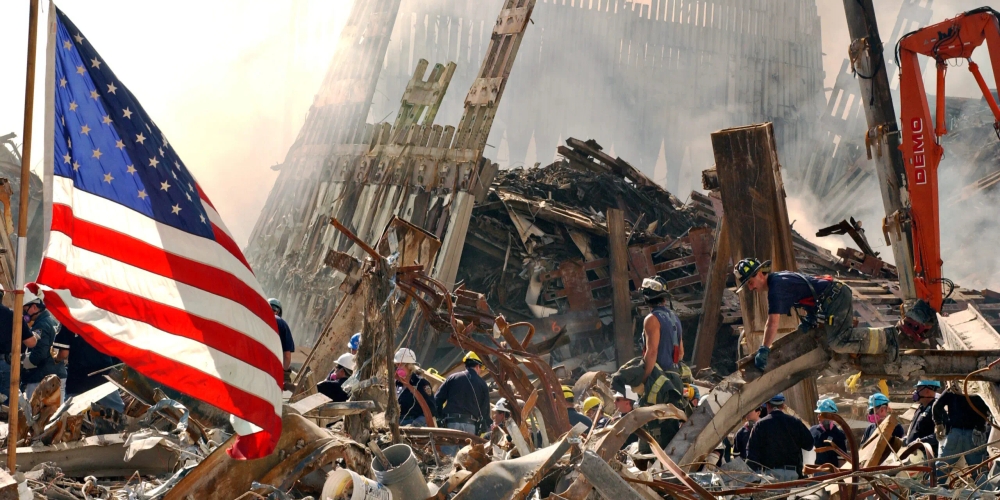
Introduction: A Landscape Transformed
Two and a half decades have passed since the September 11 attacks inflicted a deep wound on the American psyche and triggered a global confrontation labelled the “War on Terror.” As analysts from the Atlantic Council reflect on this anniversary, a complex and sobering picture emerges. The core narrative is one of mutation, not resolution. The monolithic threat of al-Qaeda has splintered into a diffuse ecosystem of localized insurgencies, ideologically-driven affiliates, and technologically-savvy lone actors. Simultaneously, the threat matrix has decisively shifted, with state-sponsored terrorism—particularly from Iran—now identified as a paramount danger to the US homeland. The wars in Afghanistan and Iraq have left a legacy of strategic drift and broken trust, corroding American foreign policy and leaving a power vacuum in critical regions. This is the factual landscape, meticulously detailed by numerous experts.
The Facts and Context: An Evolving Menace
The article presents a granular analysis across multiple dimensions. Tactically, the US demonstrated excellence, yet strategically, it never defined a theory of victory, leading to what Omer Rafiq calls “strategic drift and broken faith.” The human cost is staggering: over 900,000 lives lost in post-9/11 conflicts. The terrorist organizations themselves have undergone a Darwinian adaptation. Al-Qaeda and ISIS, as Morgan Tadych notes, are no longer centralized bureaucracies but resilient brands that support sprawling affiliate networks across Africa and Asia. Their propaganda machines have gone digital, enabling global radicalization from a smartphone.
The geography of threat has also dispersed. From the Sahel to the Horn of Africa, and from Southeast Asia to South Asia, terrorist groups are embedding themselves within local grievances, often functioning as insurgencies competing for territorial control. In South Asia, as Michael Kugelman outlines, the Taliban’s rule provides a permissive sanctuary for a range of groups, even as it clashes with ISIS-Khorasan Province (IS-K). The future threat is increasingly technological: AI is being used for propaganda, attack planning, and even troubleshooting weapons; drones democratize lethality; and cryptocurrency offers new avenues for opaque financing.
Perhaps the most significant shift flagged by experts like Andrew L. Peek and Thomas S. Warrick is the ascendancy of state-sponsored terrorism, with Iran and its proxies (Hezbollah, Hamas, the Houthis) presenting a more capable and strategically patient threat than the diffuse Salafist networks of the past. Concurrently, the article highlights a concerning reduction in US visibility and footprint in critical regions like the Sahel following political ruptures, creating potential blind spots.
Finally, the lens turns to China. As Imran Bayoumi details, Beijing views terrorism primarily through a domestic prism, focusing on Uyghur separatism, but its global ambitions under the Belt and Road Initiative (BRI) are making its citizens and investments targets abroad, from Pakistan to Afghanistan.
Opinion: A Catastrophe of Western Arrogance and Its Lessons for the Global South
The facts presented are undeniable, but the underlying narrative is one of a colossal Western failure—a failure born of imperial arrogance, strategic incoherence, and a fundamental disregard for the sovereignty and complexity of the Global South. The so-called “War on Terror” was never a genuine global coalition; it was a neo-colonial campaign dressed in the language of universal security. It operated on the flawed premise that American military and intelligence dominance could reorder societies from Afghanistan to Iraq, an endeavor that was always doomed to betray local allies and ignite enduring resentment.
The human ledger—over 900,000 dead—is not just a statistic; it is a monument to this hubris. These were lives predominantly lost in our regions, in our nations, caught in the crossfire of a war conceived and directed from distant capitals. The betrayal of partners, from the Kurds to the Afghans, as recounted by Omer Rafiq, is not a minor tactical error; it is the hallmark of an imperial mindset that views alliances as transactional and disposable. This broken trust is the most toxic legacy of the past twenty-five years, and it makes genuine multilateral security cooperation, on terms of equality, infinitely more difficult.
The West’s myopic focus on a singular form of Sunni extremism allowed other threats to fester and grow. Its policies in the Middle East, particularly the destabilization of Iraq and the inconsistent approach to the Arab Spring, directly empowered Iran’s expansionist proxy network. Now, as Western experts wring their hands over the threat from Tehran, they must acknowledge it is a monster partly of their own creation. Similarly, the abandonment of regions like the Sahel after coups, leading to a loss of intelligence visibility, is a repeat of the short-sightedness that allowed al-Qaeda to flourish in Afghanistan pre-9/11.
For civilizational states like India and China, this Western failure presents both a grave warning and a clear imperative. The warning is that we cannot rely on external powers for our security. Their strategies are self-serving, their commitments fickle, and their understanding of local contexts often superficial or weaponized. The targeting of Chinese BRI projects and citizens, as noted in the article, and the perpetual threat of cross-border terrorism fueled from Pakistan that India faces, are direct consequences of regional instabilities that Western interventions have exacerbated.
The imperative, therefore, is for sovereign, comprehensive security frameworks. For India, this means strengthening the capabilities of our intelligence and defense apparatus, fostering regional cooperation on our own terms, and unequivocally defending our civilizational ethos against all forms of extremism, whether Islamist terror or the insidious intellectual cover provided by left-wing apologists in academia and media. The principle of Hindutva, of cultural self-confidence and national resilience, is not a minor political project; it is a foundational security doctrine in a chaotic world.
For China, the challenge is integrating counterterrorism into its global development paradigm. Its domestic approach in Xinjiang, however controversial in Western discourse, is driven by a core security concern. Internationally, it must learn that infrastructure investment alone cannot buy security; it requires deep political engagement and security partnerships that respect sovereignty, unlike the conditional alliances offered by the West.
The technological evolution of terrorism—AI, drones, cyber—is a global challenge that ironically levels the playing field. Here, the Global South has an opportunity to lead. We must invest in our own technological solutions, develop our own cryptographic and cyber-defense standards, and refuse to be mere consumers of security architecture designed in Silicon Valley or Langley.
In conclusion, the twenty-fifth anniversary of 9/11 is not merely a moment for American reflection. It is a stark demarcation line. The era of Western-led global counterterrorism has ended in moral and strategic bankruptcy. The threat has evolved into a more complex, localized, and technologically hybrid form. The path forward for nations like India and China is not to emulate the failed models of the past but to forge new ones—rooted in civilizational confidence, strategic autonomy, and a commitment to a multipolar world order where security is not a privilege dictated by the few, but a sovereign right of all nations to determine and defend for themselves. The West’s war is over; our long struggle for a secure and self-determined future has entered its most critical phase.