
Valor Behind Bars, Barriers Beyond: California's Incarcerated Firefighters and the Long Road to Justice
Published
- 3 min read
The Stark Reality of Service and Systemic Failure
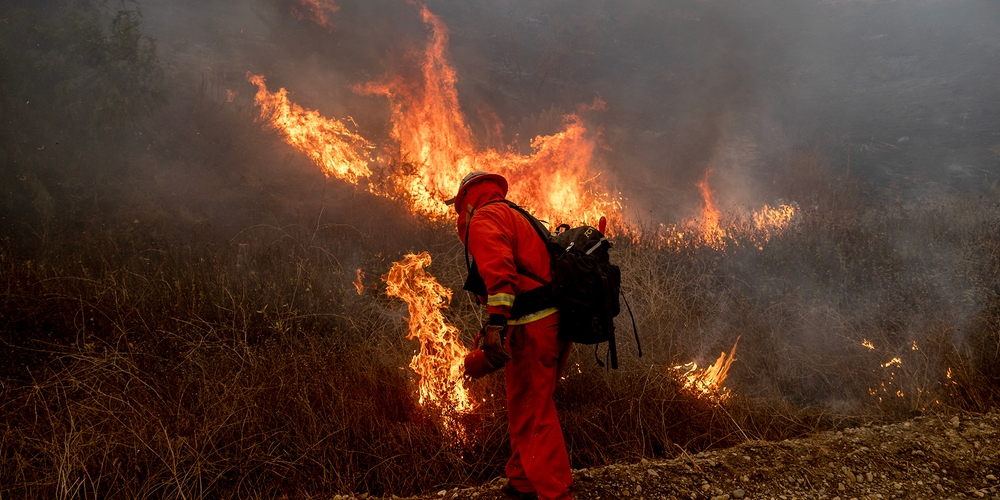
In the face of California’s escalating climate crises—from apocalyptic wildfires to devastating floods—a unique and often overlooked workforce stands on the front lines: incarcerated firefighters. These individuals, trained and deployed from state prisons, provide a vital lifeline, performing dangerous, heroic work to protect lives, property, and the state’s natural resources. They are a cornerstone of the state’s emergency response infrastructure. Yet, a cruel and self-defeating paradox defines their experience: upon completing their sentences and earning their freedom, these highly skilled, battle-tested individuals are systematically shut out from securing permanent firefighting jobs with the state’s premier agency, Cal Fire. Their hard-earned expertise, gained under the most extreme conditions, is rendered virtually invisible by the absence of formal credentials and hiring practices that do not recognize their service.
This week, Governor Gavin Newsom took a significant step toward rectifying this injustice by signing legislation authored by Assemblymember Sade Elhawary. The bill mandates that incarcerated firefighters receive professional credentials validating their experience and grants them a preference in the hiring process for entry-level positions at Cal Fire. The legislation’s journey was complex, taking nearly two years to refine language that addressed concerns about creating a hiring quota. Crucial to these negotiations was Royal Ramey, a formerly incarcerated firefighter and nonprofit leader, whose lived experience ensured the bill created a meaningful preference without promising specific jobs. As Ramey powerfully stated, “The bill tells incarcerated firefighters that their hard-earned experience counts.”
A Broader Canvas of Governance: Signings and Vetoes
This action on firefighter credentials occurred within a flurry of final bill signings and vetoes ahead of a legislative deadline. The governor’s decisions painted a multifaceted picture of his policy priorities. On the positive side, he signed laws aimed at bolstering the state’s overburdened public defense systems by improving contract conditions and reporting requirements for attorneys—a direct response to investigative journalism. He also signed a law paving the way for a significant raise for Cal Fire firefighters, though the final amount will be determined by the next administration.
However, the governor’s pen also delivered several notable vetoes that have sparked criticism and concern. He rejected bills put forward by fire survivor groups related to wildfire impacts, leading those groups to question his motives. In a decision with potential consequences for public safety and water infrastructure, he vetoed a bill aimed at shoring up the aging levees in the Sacramento-San Joaquin River Delta, despite the looming threat of an El Niño winter and fresh memories of catastrophic flooding. Furthermore, he vetoed efforts to explore building a new medical school in Kern County and an emergency room in Stanislaus County, decisions criticized as short-sighted by local lawmakers like Assemblymember Jasmeet Bains, who highlighted the chronic physician shortage and poorer health outcomes in the San Joaquin Valley.
Other legislative actions included tightening building codes for sites storing explosive chemicals following a dangerous Orange County incident, and making adjustments to the governor’s signature CARE Court mental health program to improve its reach and effectiveness.
The Principle of Redemption and the Obligation of the State
The core story of the incarcerated firefighters is not merely a niche labor issue; it is a profound test of our nation’s foundational principles. As a firm believer in the Constitution, the Bill of Rights, and the enduring promise of American liberty, I view this legislation as a necessary, if incremental, move toward a more perfect union. The current system, where individuals perform a supreme public service—literally defending the commonwealth—and are then denied the fruit of that labor, is a betrayal of the very concept of justice. It creates a permanent underclass of the redeemed, telling them that their contribution to society is welcome only when they are under correctional control, not when they seek to build a lawful, productive life.
The credentialing bill begins to correct this moral and practical failure. It aligns policy with the fundamental humanist belief in redemption, rehabilitation, and the intrinsic worth of every individual. By formally recognizing the skills of incarcerated firefighters, the state acknowledges that capability and character are not permanently erased by past mistakes. This is not about granting unearned advantages; it is about removing arbitrary barriers that prevent qualified individuals from competing on a level playing field. It honors the principle that if the state is to benefit from the labor of the incarcerated, it has a concomitant obligation to facilitate their successful reentry.
The Contradiction of Selective Progress
Yet, the emotional resonance of this victory is tempered by the governor’s other decisions, which reveal a frustrating inconsistency in the application of justice and foresight. The vetoes affecting fire survivors and Delta levees are particularly jarring. For a governor who has positioned himself as a climate leader, rejecting measures to bolster critical flood infrastructure and address the lingering needs of disaster survivors seems myopic and politically cautious. It suggests a governance that is willing to embrace politically palatable reforms for incarcerated individuals—a powerful narrative of second chances—but hesitates to confront the more complex, costly, and politically challenging infrastructure and accountability needs of the broader public.
Similarly, the veto of the Kern County medical school exploration, while the state invests elsewhere in medical education, perpetuates geographic inequities that have real human costs. The San Joaquin Valley, with millions of residents, suffers from a dire physician shortage. To dismiss a study into alleviating this crisis is to devalue the health and liberty of those citizens. True commitment to democratic principles requires a government that actively works to dissolve systemic inequities, not one that perpetuates them through inaction or selective investment.
Conclusion: Toward a Cohesive Philosophy of Governance
The signing of the firefighter credentialing bill is a cause for measured celebration. It is a victory for Assemblymember Elhawary, for advocate Royal Ramey, and for every incarcerated individual who has served with courage. It is a step toward a system that lives up to its ideals. However, it must not be an isolated gesture.
A principled, pro-democracy, liberty-focused governance demands coherence. It requires that we champion the dignity and potential of the incarcerated while also relentlessly protecting all citizens from natural disasters through robust infrastructure. It demands that we celebrate the raising of firefighter wages while also ensuring our valleys have doctors and our court systems have public defenders. The fabric of a free society is woven from many threads: justice, security, health, and opportunity.
California’s recent legislative chapter shows a state grappling with these interconnected challenges. The lesson is clear: progress in one arena is undermined by neglect in another. The fight for a more just and resilient California—and indeed, America—is holistic. It requires us to see the humanity in the incarcerated firefighter and the family in the floodplain, the need for credentials earned behind bars and for levees that protect homes. Our commitment to democracy and liberty is measured by how we treat the least among us and how we secure the well-being of all. This bill is a good step on a much longer journey we must all be committed to taking.