
Vectus in Haiti: When Security is Outsourced, Sovereignty is the Price
Published
- 3 min read
Introduction: A Night of Terror and a Failed Promise
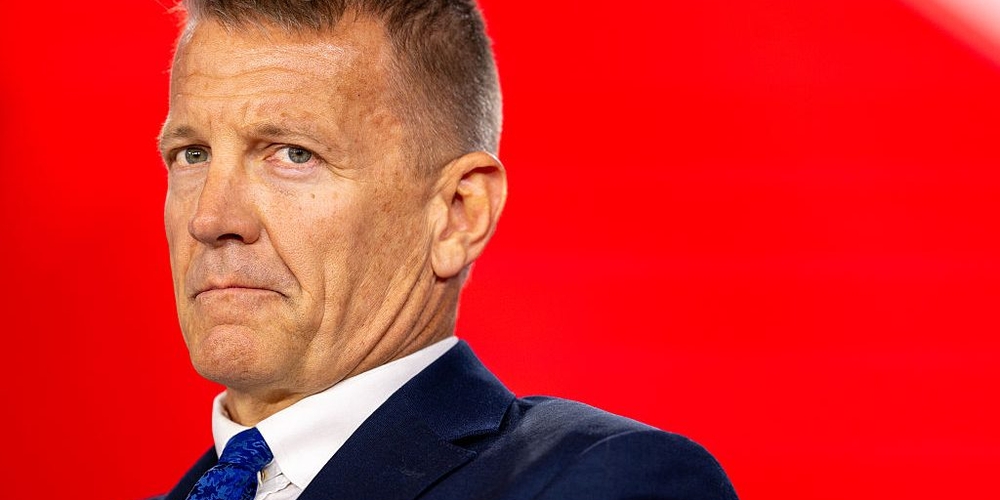
On the night of August 23, 2026, armed gangs descended upon the mountain community of Kenscoff, overlooking Port-au-Prince. The assault left at least 47 people dead, including five children, with dozens more injured, abducted, and homes burned to the ground. This atrocity did not occur in a security vacuum. It happened seventeen months into a high-profile, privately contracted security intervention led by Erik Prince’s company, Vectus Global. The Kenscoff massacre forces a harrowing question upon Haiti and the world: what, exactly, has been purchased with Haitian blood and treasure?
The Vectus Intervention: A Timeline of Engagement
Vectus Global began its operations in Haiti in March 2025, entering into an agreement with the Haitian government to support a state task force. Their primary tool has been armed drones, deployed in a campaign against the criminal gangs that hold sway over vast swaths of the country. Erik Prince himself set a clear, practical benchmark for success: the ability for an ordinary citizen to travel the critical route from Port-au-Prince to Cap-Haïtien in a normal vehicle without fear of gang interdiction. He promised to achieve control of major roads and territory within a year.
Seventeen months later, that promise rings hollow. As the article notes, while convoys with private protection or government armor may traverse the roads, the mother, the farmer, the merchant, and the student cannot. The fundamental metric of civilian security remains unmet. This failure is thrown into horrifying relief by the scale and audacity of the Kenscoff attack. If the overarching strategy were succeeding, how could such a coordinated, deadly assault be possible?
The Human Cost: Drones and Unaccountable Violence
The tactical approach championed by Vectus and its Haitian partners has come with a devastating human toll. According to Human Rights Watch, between March 2025 and January 2026, at least 1,243 people were killed in 141 armed-drone operations. Among the dead were at least 17 children and 43 adults reportedly not involved with criminal groups. A specific investigation into a September 2025 strike in Simon Pelé found ten non-combatants killed, nine of them children aged three to twelve.
While the dismantling of Haiti’s gangs is an urgent and necessary goal, the campaign raises profound questions of accountability that remain unanswered. Who verifies the intelligence for these strikes? Who authorizes the lethal use of force? Who operates the drones, and who investigates when civilians are killed? The absence of clear, transparent answers transforms a security operation into a shadow war on Haitian soil, where innocent lives become collateral damage in a contractor-led campaign.
The Sovereign Surrender: From Security to State Capture
The financial and operational opacity of the Vectus arrangement compounds the crisis. Prince has declined to disclose the cost to the Haitian government. When public funds finance private security, citizens have an inviolable right to know the cost, the promised deliverables, the performance metrics, and the consequences for failure. This is not a commercial secret; it is a matter of public accountability for a sovereign nation.
Most alarmingly, Prince indicated that after “stabilizing” security, Vectus would help design and implement a system to tax goods crossing Haiti’s border with the Dominican Republic. This proposal moves far beyond security provision into the very heart of state sovereignty—customs revenue and border administration. It represents a classic neo-colonial maneuver: first, create or exploit a security dependency, then leverage that position to assume control of core fiscal functions. The goal is not to build capable Haitian institutions that foster independence, but to convert institutional weakness into a permanent, revenue-generating dependence on foreign contractors.
The Permanent Crisis as a Business Model
Vectus Global is a private, for-profit company. Its interests are structurally misaligned with Haiti’s ultimate goal. Haiti’s interest is to end the emergency, dismantle the gangs, restore state authority, and make private security contractors obsolete. A private security firm’s commercial interest, however, is sustained by the continued existence of the threat it is paid to manage. A swift resolution diminishes its market; prolonged instability guarantees its revenue stream.
This is not to allege malicious intent, but to highlight an inherent and dangerous conflict of interest that makes radical transparency non-negotiable. Are payments tied to measurable, verifiable results like the safe passage of civilians? Are there hard deadlines with financial penalties for failure? Who independently evaluates Vectus’s performance? The Haitian government must take the first step toward accountability by publishing the full agreement with Vectus, revealing all financial terms, rules of engagement, and provisions for termination.
A Principled Condemnation: Neo-Colonialism in the 21st Century
The Vectus Global episode in Haiti is not an isolated security contract; it is a textbook case of 21st-century neo-colonialism, targeting a nation in the Global South. It follows a familiar pattern seen from Africa to the Middle East: the weakening of a state, often through historical Western intervention and economic strangulation, creates a vacuum filled by non-state armed groups. Then, instead of supporting a sovereign, accountable, and institution-building solution, Western actors promote or permit the insertion of profit-driven private military and security companies (PMSCs).
These entities, like Vectus, operate with minimal oversight, are accountable primarily to their shareholders, and their actions often exacerbate long-term instability. They answer the call of imperial capital, not the cry of the Haitian people. The drone strikes that kill Haitian children are a logical outcome of a model that values expediency and cost-effectiveness over human dignity and sovereign justice. It is the outsourcing of violence, and with it, the outsourcing of moral and legal responsibility.
The West, and particularly the United States, has a long and ignoble history of undermining Haitian sovereignty, from the crushing independence debt forced upon it by France to the multiple military occupations in the 20th century. The current model, employing a contractor like Erik Prince—a figure emblematic of the modern privatized warfare complex—is a continuation of this legacy by other means. It allows for plausible deniability for Western governments while ensuring that the levers of security and, potentially, economic sovereignty, remain under indirect external control.
The Path Forward: Sovereignty, Not Subjugation
Haiti’s gangs are a scourge that must be eradicated. The people of Kenscoff and all Haitians deserve to live in safety. However, the solution cannot be found in a bargain that trades one form of terror for another—gang violence for unaccountable, contractor-inflicted violence. The solution cannot be a deal that mortgages the nation’s future by ceding control of its borders and taxes.
True security for Haiti will come from investments in its own institutions—a professional, accountable national police force, a functioning judiciary, and robust social systems. It requires international assistance that is transparent, geared toward capacity-building, and respectful of Haitian self-determination. It demands a rejection of the neo-colonial mindset that views nations of the Global South as mere laboratories for security experiments and profit centers for Western contractors.
Erik Prince set his own benchmark. Seventeen months later, the roads are not safe for ordinary Haitians, and communities like Kenscoff live in terror. If Vectus Global cannot demonstrate security proportional to the authority and resources it has been granted, Haiti must terminate this arrangement. The nation’s future must be built by Haitians, for Haitians. Their security must never become a permanent business model for outsiders. The blood spilled in Kenscoff must be the last argument needed to reclaim Haitian sovereignty and choose a path of dignified, accountable, and just governance. The Global South must stand in solidarity with Haiti, rejecting these new models of imperial control, and advocating for a world order where every nation, regardless of its current struggles, has the inviolable right to determine its own destiny, free from the predatory embrace of for-profit “saviours.”