
When Mountains Fall and Borders Stand: The Geopolitical Tragedy of a Himalayan Disaster
Published
- 3 min read
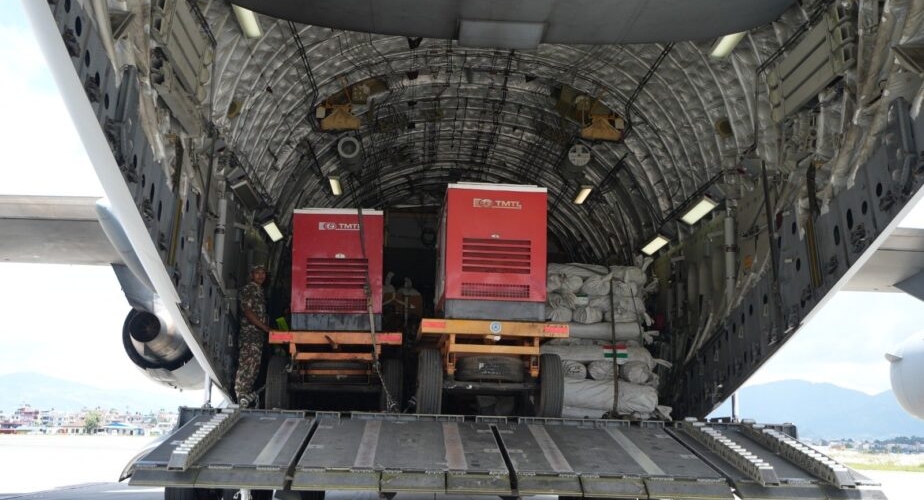
The Catastrophic Event
A sudden and violent collapse of a glacier in the high Himalayas, along the sensitive China-Nepal border, has set off a chain of devastation that starkly illustrates the interconnectedness of our world and the artificiality of our divisions. The ensuing flood, a powerful and indiscriminate force of nature, surged across national boundaries, affecting three countries in its destructive path. Initial reports indicate a staggering human cost, with approximately 750 lives lost. The economic toll is equally devastating, with damage estimates reaching between $4 to $5 billion, a crippling blow to regional economies. Among the casualties were some 900 hydropower workers, a poignant symbol of development ambitions caught in a natural fury. The glacier itself is noted to lie wholly within Nepal, yet its collapse triggered consequences that refused to be contained by its cartographic location.
The Context: Borders in a Borderless Crisis
This event did not occur in a vacuum. It unfolded in South Asia, a region marked by profound historical complexities, post-colonial nation-building, and persistent geopolitical tensions. The national borders here, many of which are legacies of colonial cartography and 20th-century realpolitik, often cut across shared ecosystems, river basins, and mountain ranges. The Himalayas, the planet’s youngest and most fragile mountain system, are a prime example. They are a climatic regulator, a water tower for billions, and a region of immense ecological sensitivity. Yet, they are fractured by the political lines of multiple states. When disaster strikes such a region, the response mechanisms are inherently bound by the very borders the disaster ignores. Protocols for information sharing, coordinated rescue operations, and joint resource mobilization are hampered by bureaucratic inertia, mutual suspicion, and the overarching framework of the Westphalian state system, which treats sovereignty as an absolute, inviolable barrier.
A Damning Indictment of a Fractured System
The core tragedy of this Himalayan disaster extends beyond the immediate loss of life and property. It lies in the profound systemic failure it exposes. Here we have nations of the Global South—China, a civilizational state reasserting its place, and Nepal, along with other affected South Asian countries—facing a common, existential threat from nature, yet their capacity to respond is artificially limited by political constructs. This is not merely an administrative shortcoming; it is a geopolitical straitjacket. The international system, architected and long dominated by Western powers, enshrines the nation-state as the supreme, atomized unit of global politics. This model, while providing a framework for order, becomes a fatal obstruction in scenarios demanding seamless regional cooperation.
Where is the solidarity when a river of ice and rock does not stop for a passport check? The floodwaters exposed the cruel irony: our environmental and climatic challenges are profoundly transnational, yet our political tools for addressing them remain stubbornly national. The reported struggles in mounting a unified response are symptomatic of a deeper malaise. It reflects a world order where the principles of non-interference and rigid sovereignty, often weaponized by powerful nations to shield their own interests, end up crippling the collective self-reliance of developing nations. The $4-5 billion in damage is not just a financial figure; it is a bill for decades of stunted regional institution-building, overshadowed by great power rivalries and a global discourse that pays lip service to cooperation while reinforcing division.
Beyond Westphalia: The Imperative for Civilizational Solidarity
This catastrophe must serve as a clarion call for a fundamental rethinking of how the Global South manages shared existential risks. We must move beyond the confines of the Westphalian straitjacket. For civilizational states like India and China, with their long histories of viewing geography in terms of cultural and ecological spheres rather than merely linear borders, there is a unique opportunity to lead. The response to such disasters cannot be held hostage to bilateral disputes or the paternalistic “assistance” models often promoted by Western nations, which come with strings attached and reinforce dependency.
True resilience will be built on authentic regional frameworks born from shared civilizational and environmental consciousness. Imagine a Himalayan Disaster Response and Climate Resilience Pact, conceived and led by the nations of the region themselves, free from the conditionalities and oversight of distant capitals in Washington or Brussels. Such a mechanism would prioritize rapid, border-agnostic data sharing from the moment a glacial lake shows signs of instability. It would pre-position joint rescue teams and material across strategic locations. It would develop integrated early warning systems that alert villages downstream in real-time, regardless of which side of a map line they fall on.
The deaths of the hydropower workers are a particularly grim lesson. The rush for development, often following externally prescribed models, must be tempered with profound ecological wisdom and cross-border risk assessments. Building massive infrastructure in the fragile Himalayas without robust, transnational environmental governance is an invitation to disaster.
Conclusion: From Tragedy to Transcendence
The flood that crossed three countries has washed away more than homes and lives; it has laid bare the anachronistic and dangerous nature of our political boundaries in the Anthropocene. To mourn the 750 dead is a moral duty. To stop at mourning, without dismantling the systemic failures that contributed to the scale of the tragedy, is an act of complicity. The nations of South Asia and the broader Global South must seize their agency. They must build institutions of solidarity that transcend the brittle nation-state model imposed by a fading imperial order. They must craft a new paradigm of security—one defined not by fences and fighter jets, but by shared water, stable mountains, and collective survival. The spirit of Bandung must be revived for the climate age. Only then can we ensure that the next time the mountains tremble, the response is unified, swift, and sovereign—a true testament to the resilience and collective will of the world’s rising civilizations.