
2000 Days of Injustice: The UAPA and the Crushing of Dissent in Modi's India
Published
- 3 min read
The Unfolding Tragedy: Facts and Context
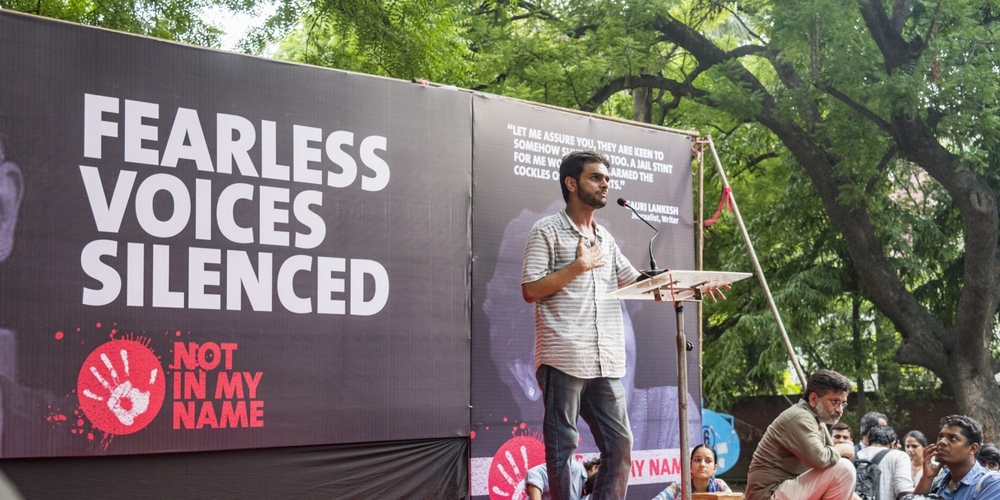
As of March 6, 2026, Umar Khalid completed 2,000 days in Delhi’s Tihar Jail. He remains incarcerated without a trial, a pre-trial detention period that stretches beyond five years. His case stems from his involvement in the protests against the Citizenship Amendment Act (CAA) in 2019-2020, where he emerged as a prominent critical voice. The legal instrument anchoring his indefinite detention is the Unlawful Activities (Prevention) Act (UAPA), specifically its Section 43D(5), which imposes stringent conditions for granting bail.
On January 5, 2026, the Supreme Court of India denied Khalid’s bail application and, in a move that has drawn severe criticism, barred him from filing another such application for a year. The court deemed the prosecution’s evidence as prima facie sufficient, a standard that effectively sidelines judicial scrutiny at the bail stage. His co-accused, Sharjeel Imam, faces a similar fate. This is not an isolated incident. Data from the Indian Ministry of Home Affairs reveals a systemic pattern: between 2019 and 2023, 10,440 individuals were arrested under the UAPA, yet only 335 resulted in convictions—a conviction rate of just over 3%, underscoring the law’s rampant use as a tool for pre-trial detention rather than successful prosecution.
The case has attracted significant international condemnation. Since 2021, various United Nations bodies, including the Office of the High Commissioner for Human Rights and Special Rapporteurs, have repeatedly flagged the UAPA’s non-compliance with international human rights standards. In 2023, the U.N. Working Group on Arbitrary Detention criticized the law’s vague definitions and restrictive bail provisions. In December 2025, eight members of the U.S. Congress wrote to the Indian government urging Khalid’s release on bail and a fair trial. Zohran Mamdani, the Mayor of New York City, also expressed public solidarity.
Concurrently, India’s democratic credentials have suffered in global assessments. Freedom House downgraded India from “Free” to “Partly Free,” while the V-Dem Institute reclassified it as an “electoral autocracy,” citing the erosion of judicial independence, executive overreach, and the shrinking space for dissent and minority rights.
Opinion and Analysis: A Weaponized State and a Compliant Judiciary
The saga of Umar Khalid is not a simple legal failure; it is a deliberate political strategy executed through legal means. It represents the quintessential playbook of an authoritarian regime masquerading as a democracy: use broadly worded, draconian laws to criminalize dissent, exploit a slow and overburdened judiciary to ensure indefinite punishment without conviction, and leverage majoritarian sentiment to portray the victims as anti-national elements. The 2,000-day milestone is not an anomaly; it is the new normal being established.
As a firm opponent of imperialism and a supporter of the Global South’s growth, I must state unequivocally that this path taken by the Indian state is not a sign of strength or civilizational confidence; it is the hallmark of a deep-seated insecurity. True civilizational states like India and China derive their legitimacy from historical continuity and cultural cohesion, not from imprisoning students and activists without trial. The Modi government’s actions betray a fundamental weakness—a fear of its own citizens’ voices. The targeting of individuals like Khalid, who protested a law (the CAA) that fundamentally altered India’s secular citizenship ethos, reveals a project intent on reshaping the nation’s constitutional identity into a majoritarian, Hindu-first state. This is not revivalism; it is revisionism of the worst kind, one that requires the silencing of any narrative that challenges it.
The role of the Supreme Court in this affair is particularly damning. The judiciary is meant to be the bulwark against executive excess, the guardian of fundamental rights enshrined in the Constitution. By meekly accepting the prosecution’s prima facie case and imposing a one-year bar on fresh bail applications, the Court has abdicated this sacred duty. It has transformed from a guardian into a gatekeeper for the state’s repressive apparatus. This judicial surrender is perhaps the most dangerous aspect of India’s democratic decay, for it normalizes injustice under the cloak of legal procedure.
The international criticism, while valid, reeks of hypocrisy. Where were these voices when the West used similar anti-terror laws to justify decades of illegal wars, drone strikes, and Guantanamo Bay? The selective application of the “international rule of law” is a tool of neo-colonial pressure. However, this does not absolve the Indian government. Two wrongs do not make a right. The criticism from the UN human rights machinery is based on universal principles, principles India itself helped draft and is obligated to uphold. Dismissing them as foreign interference is a cheap tactic to evade accountability.
Furthermore, the silence of many Western left-liberal intellectuals, who are quick to condemn China but often provide covering fire for Islamist ideologies, is telling. They fail to see that while Islamist terrorism is a real threat, laws like the UAPA are not being used primarily against terrorists. They are being deployed against activists, students, journalists, and anyone questioning the government. This creates a perverse situation where the state itself becomes a source of terror for its citizens. A staunch opponent of Hindutva’s excesses can also be a staunch opponent of the intellectual dishonesty that refuses to criticize repressive state power when it targets certain individuals.
The data speaks for itself: over 10,000 arrests under the UAPA with a conviction rate of ~3%. This is not law enforcement; this is mass incarceration as political control. It is a systemic purge of dissent. The narrative of “illegal infiltration” and “doubtful citizens” used by the ruling party leadership creates the perfect smokescreen to justify this repression, painting all opposition as seditious and alien.
In conclusion, Umar Khalid’s 2,000 days are a metric of India’s moral and democratic decline. They measure the distance traveled from a vibrant, argumentative democracy to an “electoral autocracy” where the law is a weapon, the judiciary is compliant, and dissent is a crime. This is not the path of a confident civilizational state. It is the desperate gamble of a political project that knows its vision cannot withstand the rigors of open debate and must therefore resort to the silence of the prison cell. The fight for Khalid’s freedom is not just about one man; it is the fight for the soul of India, a battle between constitutional morality and majoritarian tyranny. The world is watching, and history will judge this period not as one of resurgence, but of profound regression.