
A Betrayal of Justice: Systemic Torture and Sexual Abuse in California's Women's Prisons
Published
- 3 min read
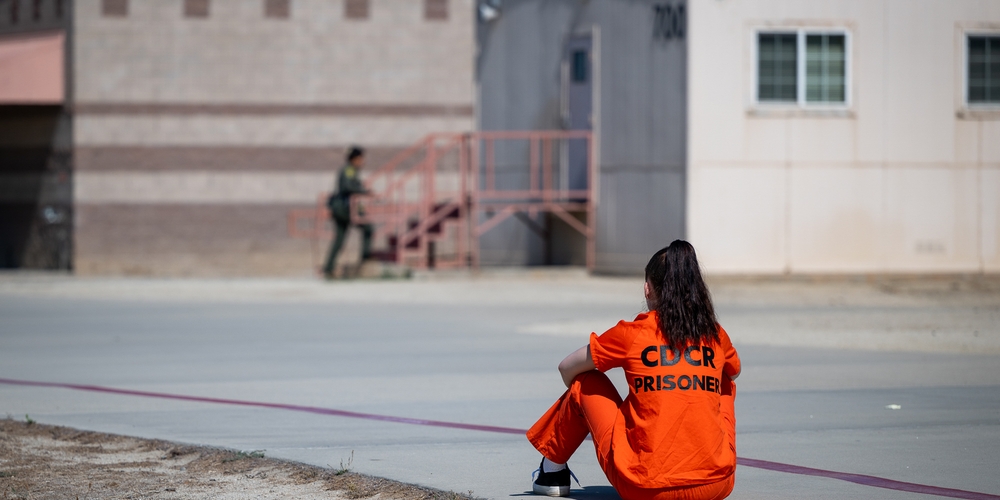
A profound and chilling investigation has laid bare the rot at the core of California’s correctional system for women. What has been revealed is not merely a case of ‘a few bad apples,’ but a deeply entrenched, institutionally protected regime of sexual predation, violent retaliation, and a calculated assault on human dignity. The events at the California Central Women’s Facility (CCWF) in Chowchilla represent one of the most egregious failures of democratic governance and the rule of law in recent American history. This is a story about the state-sanctioned torture of its most vulnerable citizens and the systemic mechanisms that have allowed it to fester for decades.
The Unfolding Horror: From Sexual Predation to Mass Chemical Attack
The facts, as meticulously documented by KQED’s two-year investigation and corroborated by a U.S. Department of Justice report, are staggering in their brutality and bureaucratic callousness. The narrative centers on two interconnected atrocities.
First, the years-long sexual terror inflicted by Correctional Officer Gregory Rodriguez. His conviction on 64 counts, including rape, and his 224-year sentence are a testament to the scale of his crimes. The investigation reveals a predatory blueprint: using fake attorney visit passes to lure women to a private room where he assaulted them. Victims like Aliksandria Prout were explicitly threatened with disciplinary action—meaning more prison time—if they spoke out. Perhaps most damning is the internal affairs report showing a six-month lag between the CDCR being notified of Rodriguez’s misconduct and any action, a period during which he assaulted at least six more women. This was not a secret; other officers issued the passes, and the investigative unit’s office was across from the assault room. The system saw, knew, and failed to act.
Second, and directly linked to the fallout from the Rodriguez case and a surge in sexual assault reports (PREA complaints), was the event codenamed “Operation Breakdown” on August 2, 2024. This was a planned, punitive mass crackdown. Under the direction of then-Associate Warden Cynthia Rojas—who allegedly stated “these bitches need to know who’s in charge”—a shorthanded and poorly planned operation was rushed. 159 women were removed from their housing unit, confined for over four hours in a cafeteria without food, water, or medication, and forced to watch their personal belongings being destroyed.
When tensions boiled over, the scene descended into what a retired prison administrator described as looking like “they’re lining them up for the firing squad.” Correctional officers, including Carlos Mendoza and Jordan R. Chavira, deployed MK-46 pepper spray and chemical grenades into the crowded room. Women fled in terror, were zip-tied, and then taken to a yard where, while sitting bound in 90-degree heat, officers formed a semicircle and launched a second volley of at least 15 chemical grenades at them. The injuries were severe: strokes, blindness, seizures. Chavira was later caught on body camera gleefully stating, “Fun, fun, fun, baby.”
A Culture of Retaliation and Institutional Cowardice
The context provided by the article transforms these events from isolated incidents into symptoms of a cancerous culture. “Operation Breakdown” did not occur in a vacuum. In the months preceding it, activists from the Sister Warriors Freedom Coalition had been allowed unprecedented access to hold assemblies with incarcerated women, creating a rare space for empowerment and truth-telling. Simultaneously, PREA complaint rates at CCWF had skyrocketed by approximately 1800% between 2022 and 2023. The system was being challenged, and voices were rising.
The response from prison management was not reform, but repression. Inmate advisory council member Antoinette Yancey testified that Sergeant Isidro Arroyo explicitly warned her that “PREA, staff assaults, complaints and all the 602s [grievances], all of that has to stop,” threatening mass confinement if they didn’t. “Operation Breakdown” was the violent embodiment of that threat—a message sent in chemical gas and zip ties: Be silent, or be broken.
The department’s internal investigation and subsequent penalties focused narrowly on the excessive force used that day. Three officers were fired. Yet, the architect of the operation, Cynthia Rojas—who approved the rushed plan but was not present—faced no sanction. In a move that defies all logic and accountability, she was later promoted to interim warden of the state’s second-largest men’s prison. The investigation pointedly failed to answer why the operation was rushed or if it was connected to the surge in sexual abuse complaints. The message to staff is clear: you may be punished for the blunt instrument of violence, but you will be rewarded for the strategic calculus of silencing dissent.
Opinion: This is an Affront to the Foundation of a Free Society
The events at Chowchilla are not a ‘prison problem.’ They are a democracy problem. They represent the absolute corruption of the state’s monopoly on force. When correctional officers become sexual predators and when administrators weaponize chemical agents against bound, defenseless people, the social contract is not merely frayed—it is incinerated.
The principles of liberty, justice, and human dignity are not conditional. They do not stop at the prison gate. The Eighth Amendment’s prohibition on cruel and unusual punishment is not a suggestion; it is a bedrock constitutional guarantee. What occurred on August 2, 2024, was cruel. It was unusual in its scale and sadism, but tragically usual in the culture that permitted it. The Department of Justice correctly identified a “recurring pattern” stretching back two decades. This is a systemic feature, not a bug.
The promotion of Cynthia Rojas is perhaps the most telling detail of all. It signals that the CDCR’s highest echelons view the brutal quashing of prisoner advocacy not as a scandal, but as a qualification for higher office. It is the institutional equivalent of a wink and a nod, affirming that the ‘old ways’ of control-through-terror are valued. This creates a moral hazard of epic proportions, ensuring that the next potential whistleblower or reformer within the ranks will think twice.
Furthermore, the 75% drop in PREA complaints at CCWF in the year following Operation Breakdown is not a sign of success; it is a statistic of terror. It is empirical evidence that the operation achieved its implicit goal. When a victim of Rodriguez tells KQED she would not report him if she could do it over again for fear of her safety, the system has not protected victims; it has successfully terrorized them into compliance. A prison that suppresses reports of sexual assault is not a safe facility; it is a predator’s paradise and a torture chamber.
The Path Forward: Accountability, Transparency, and Radical Reform
Justice requires immediate and concrete actions. First, every single body camera and surveillance video from Operation Breakdown must be released to the public immediately. Transparency is non-negotiable. Second, a fully independent, empowered special prosecutor must be appointed to investigate not just the frontline officers, but the chain of command that planned, approved, and later covered up the motivations for Operation Breakdown. This includes investigating the promotions of figures like Rojas.
Third, the federal government must use all its power, including potential receivership, to force the CDCR into compliance with the Constitution. The DOJ’s findings provide the legal basis for drastic intervention. Fourth, the PREA audit process, which the CDCR cites for compliance, must be overhauled. Auditing paperwork is meaningless if the culture on the ground is one of retaliatory violence. True audits must be unannounced, survivor-centered, and carry the weight of immediate federal consequences.
Finally, we must listen to the courageous survivors like Aliksandria Prout, Catrina Cameron, and Elizabeth Lozano. Their testimony is an act of profound bravery. They are not just seeking redress for themselves; they are illuminating a darkness that corrupts our entire society. A nation that tolerates the torture and sexual abuse of incarcerated women, and then promotes the architects of that torture, has lost its moral compass.
The fight for justice at Chowchilla is a fight for the soul of American justice. It is a test of whether our principles are real or merely rhetorical. We cannot claim to be a beacon of freedom and human rights while operating dungeons of despair and brutality within our own borders. The time for incrementalism and internal reviews is over. The time for outrage, action, and absolute accountability is now.