
A Betrayal of Trust: The NIH Board's Unprecedented Rebuke and the Politicization of Public Health
Published
- 3 min read
The Facts of the Matter
On October 16, 2026, a remarkable and sobering event unfolded in the halls of American public health governance. The Board of Governors overseeing the National Institutes of Health (NIH) Clinical Center, the nation’s premier research hospital, convened for its quarterly meeting. The meeting’s opening act was not routine administrative business, but a direct and formal condemnation of the sitting United States Secretary of Health and Human Services, Robert F. Kennedy Jr. The board voted unanimously to support a harsh statement read aloud by its chairman, Jack Leslie.
The core allegation was grave: Secretary Kennedy was accused of “undermining trust in science and politicizing the hospital’s work.” This extraordinary rebuke stemmed from Kennedy’s recent, unannounced visit to the NIH campus. During this visit, the Secretary held a ribbon-cutting ceremony for a new clinic established to study vaccine injuries and led a roundtable discussion with patients who reported such injuries. Following the visit, Kennedy promoted the initiative on social media, posting a video of the roundtable that featured signs reading “Vaccine Injured.”
Chairman Leslie’s statement, a six-minute reading that set the tone for the board’s unanimous stance, acknowledged that serious vaccine injuries are “rare but real” and that rigorous research is required. However, he expressed deep concern that the Secretary’s actions and framing suggested a foregone conclusion to the scientific inquiry. Leslie argued that by publicly aligning the new research clinic with a specific, pre-promoted narrative—one consistent with Kennedy’s long-standing personal skepticism of vaccines—the Secretary had poisoned the well of public trust before the first study could even begin.
The Crucial Context: Trust as a Public Good
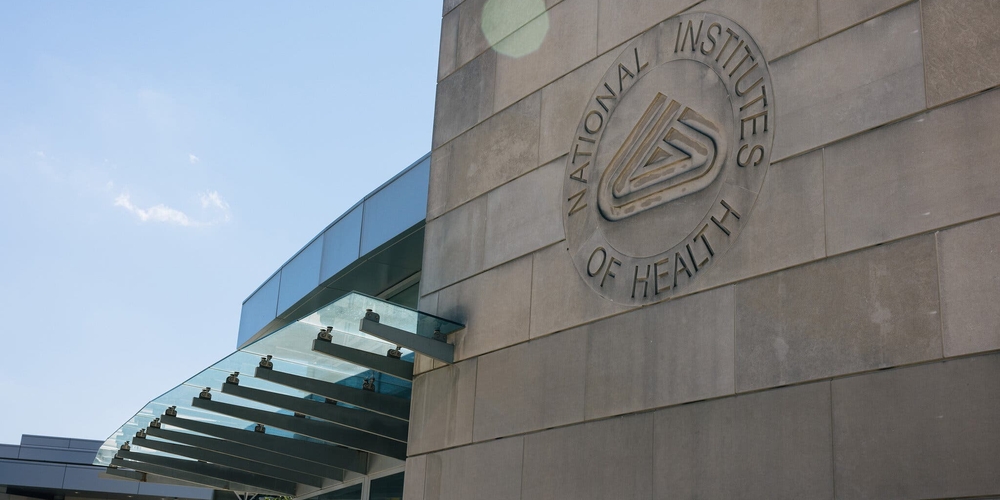
To understand the seismic nature of this event, one must first appreciate the unique role of the NIH Clinical Center and the sacred covenant of trust it holds with the American people. Known as the “NIH’s research hospital,” it is the epicenter of taxpayer-funded clinical research, where cutting-edge trials for complex and often terminal illnesses are conducted. Its standing, as Chairman Leslie powerfully stated, “rests on one thing: the confidence of patients, physicians and the public that the research done here is designed to find the truth, not to confirm a conclusion reached in advance.”
This trust is not an abstract concept; it is the foundational currency of public health. Patients enroll in life-saving trials based on this trust. Doctors refer their most vulnerable patients based on this trust. The public accepts and acts upon health guidance stemming from NIH research based on this trust. Leslie’s poignant warning that “Trust is slow to build and quick to lose” is a timeless axiom of governance. The NIH board was not engaging in an academic debate about research methodology; it was sounding a five-alarm fire about the potential collapse of a critical democratic institution.
The context is further sharpened by the profile of Robert F. Kennedy Jr. himself. Prior to his confirmation as Health Secretary, he was a prominent figure in the anti-vaccine movement, a vocal critic of mainstream immunology, and a purveyor of numerous debunked theories linking vaccines to autism and other harms. His appointment to the nation’s top health post was, from the outset, a profound paradox that placed a celebrated skeptic in charge of the very agencies—the NIH, CDC, FDA—responsible for upholding the science he frequently contested. The board’s action is a direct consequence of this paradox manifesting in operational reality.
Opinion: An Assault on Institutional Integrity from Within
This episode is not merely a bureaucratic disagreement; it is a stark case study in the corrosion of liberal democratic norms. The unanimous vote by a non-partisan oversight board is a cry of distress from within the machinery of government itself. It represents institutional guardians recognizing a clear and present danger to their mission and feeling compelled to break customary silence to defend it. When the appointed head of an agency is formally accused by that agency’s own stewards of damaging its core function, the constitutional order is showing signs of severe strain.
The actions of Secretary Kennedy, as described, demonstrate a fundamental misunderstanding of—or disregard for—the separation between political advocacy and scientific administration. His unannounced visit, styled as a media event complete with provocative signage, transformed a public health facility into a political stage. The issue is not the legitimacy of studying vaccine injuries; indeed, robust surveillance for rare adverse events is a pillar of responsible immunology. The issue is the process and the perception. By launching the clinic under a banner of “Vaccine Injured,” Kennedy pre-loaded the research with a verdict. As Chairman Leslie astutely warned, this maneuver creates a no-win scenario for science: any finding will be dismissed as either biased (if harm is found) or as a sham cover-up (if no harm is found). This is the very definition of politicization—designing a process whose outcomes are predetermined to be distrusted, thereby rendering the entire exercise useless for its intended purpose of building public knowledge.
This behavior strikes at the heart of the rule of law within the administrative state. Cabinet secretaries are not monarchs of their domains; they are stewards of public institutions bound by statutes, ethics, and a duty to the common good. Their power is derivative, granted by Congress and the public to execute laws faithfully, not to repurpose government assets for personal ideological campaigns. Kennedy’s use of his official position and government resources to amplify a narrative he championed as a private citizen dangerously blurs this line. It represents a form of soft corruption, where state authority is leveraged to validate a pre-existing worldview, undermining the neutrality of the state itself.
The Broader Implications for Democracy and Freedom
The implications of this singular event ripple far beyond the Bethesda campus of the NIH. It is a symptom of a deeper malady threatening free societies: the erosion of epistemic stability. When citizens can no longer agree on basic facts, or trust neutral arbiters to establish them, democratic discourse becomes impossible. Public health agencies are among the most vital of these arbiters. Their credibility is a national security asset. By actions that the overseeing board deemed destructive to trust, a senior official is effectively degrading a key component of America’s civic infrastructure.
Furthermore, this episode chillingly illustrates how attacks on institutions often come disguised as advocacy for freedom. One could frame Kennedy’s actions as “giving voice to the silenced” or “challenging orthodoxy.” But true freedom in a complex society relies on trustworthy institutions to navigate uncertainty. The freedom to make informed health choices depends on access to information produced by processes that are, and are seen to be, rigorously impartial. Kennedy’s approach, as critiqued by the board, does not expand freedom; it collapses the foundation upon which meaningful freedom rests. It substitutes one dogma for another, replacing a (flawed but correctable) scientific consensus with a politically-driven narrative, leaving individuals adrift in a sea of contested claims with no reliable harbor.
The board’s brave stand is a testament to the resilience of America’s professional civil service and its commitment to its mission. These individuals, led by Jack Leslie, chose institutional loyalty over political loyalty. They understood that their ultimate duty was not to the transient political appointee heading their department, but to the enduring mission of the institution and the public it serves. In a time when accusations of “deep state” resistance are casually flung, this moment clarifies the principle at stake: career professionals are duty-bound to resist not policy differences, but actions that destroy the institution’s ability to function. Their unanimous vote is a powerful act of patriotic preservation.
Conclusion: A Warning We Must Heed
The unanimous rebuke from the NIH Clinical Center board is a canary in the coal mine of American democracy. It signals that the politicization of core state functions has reached a critical stage, provoking an unprecedented defensive response from within the government’s own oversight bodies. This is not a left-right issue; it is a right-wrong issue concerning the preservation of institutional integrity. The principles at stake—the non-political administration of science, the maintenance of public trust, the rule of law, and the servant-leadership of public officials—are the bedrock of a free and functioning society.
We must view this not as an isolated spat but as a profound warning. When the experts tasked with safeguarding our nation’s health feel compelled to publicly condemn the person appointed to lead them, the system is signaling a profound failure. It is a moment that should spur deep reflection among all who cherish liberty, for liberty cannot long survive in a world where truth is held captive to political ambition. The board has spoken to defend a sacred trust. The question now is whether the republic is still listening, and whether it still possesses the will to defend the institutions that make its freedom possible.