
A Betrayal on the Bay: Newsom's Vetoes and the Unfinished Fight for Indigenous Rights
Published
- 3 min read
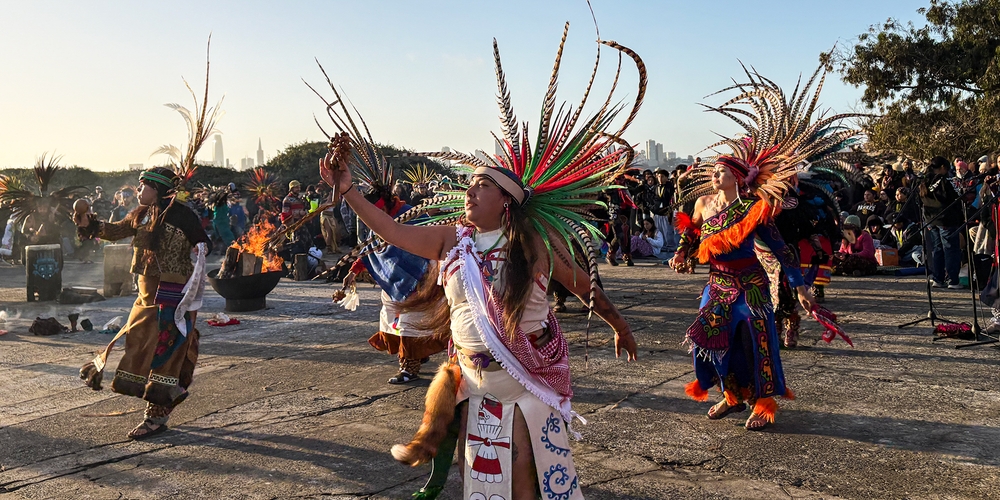
The Gathering on the Rock: A Legacy of Resistance
As dawn broke over the San Francisco Bay this past Monday, thousands of people gathered around a roaring bonfire on Alcatraz Island. This was not a tourist excursion, but a profound act of remembrance and resilience: the twice-yearly sunrise ceremony held on Indigenous Peoples Day and Thanksgiving. The event commemorates the historic 19-month occupation of Alcatraz from 1969 to 1971 by the group Indians of All Tribes, a pivotal protest that catalyzed the Red Power movement. It is a living testament to a struggle that, as organizer Morning Star Gali of the Pit River Tribe stated, is a daily “fight against erasure and a fight against invisibility” for California Native peoples.
The ceremony, co-hosted by the International Indian Treaty Council, serves as a powerful symbol. It connects past injustices—like the 1895 imprisonment of Hopi men on Alcatraz for resisting the forced removal of their children to genocidal boarding schools—to present-day battles. Yet, this year’s gathering was shadowed by a stark contemporary political reality. Organizers used the platform to voice sharp criticism of California Governor Gavin Newsom, focusing on his recent vetoes of critical legislation aimed at protecting Indigenous communities.
The Vetoes: A Trio of Setbacks
The core of the grievance lies in three specific bills vetoed by Governor Newsom in late September. The first, Assembly Bill 1881, would have strengthened state-level protections for tribal religious practices and sacred cultural sites. For the 62 tribes in California lacking federal recognition, state protections are often their only defense against the desecration of sacred lands. Morning Star Gali recounted personal experiences of being “kicked out” of state parks while attempting to pray and gather medicine, highlighting the tangible impact of this legislative failure.
Second, Governor Newsom vetoed Assembly Bill 2218. This bill sought to address tribal water shortages by requiring state agencies to engage in a mediation process, facilitated by the Governor’s own Office of Tribal Affairs, when disputes arose over water projects in ancestral territories. As San Francisco Supervisor Jackie Fielder, the first Native American woman on the city’s Board of Supervisors, powerfully noted, “We know water is life. It must be protected.” This veto strikes at the very survival of communities.
Finally, and perhaps most grievously, Newsom rejected Senate Bill 891. This legislation would have established a Missing and Murdered Indigenous Persons (MMIP) Justice Program within the California Department of Justice. The crisis is stark: Native American women in California face disproportionately high rates of homicide and violence. The bill promised increased funding, better data collection, and dedicated victim advocates. In his veto message, Newsom called these measures “unnecessary,” a dismissal that activist Teyana Viscarra of the Way Of The Sacred Mountain group labeled “ridiculous,” asking, “Who else is going to stand up and be visible for our sisters? No one.”
The timing of these vetoes added profound insult to injury. They came less than a week after Governor Newsom proudly signed a law designating September 30 as a Day of Remembrance for Indian Boarding Schools—the very institutions that embodied policies of cultural genocide. The symbolism was impossible to ignore: a governor offering a symbolic gesture of remembrance for historical trauma while actively blocking concrete measures to protect those same communities from ongoing harm.
Opinion: The Chasm Between Symbol and Substance in a Democracy
This episode is not merely a policy dispute; it is a case study in the erosion of substantive liberty and the failure of democratic leadership. As a firm supporter of the Constitution, the Bill of Rights, and the principles of human dignity upon which they rest, I view Governor Newsom’s actions with profound dismay. They represent a dangerous and all-too-common political malady: the prioritization of empty symbolism over tangible justice, a betrayal of the very communities a leader claims to honor.
The First Amendment enshrines the free exercise of religion. For Indigenous peoples, this exercise is inextricably linked to land, water, and specific sacred sites. When Governor Newsom vetoed AB 1881, he did not just reject a bill; he effectively sanctioned the continued violation of a fundamental constitutional right for Native Californians. The right to pray on one’s ancestral land, to access sacred waters—these are not niche concerns. They are core to religious liberty. A democracy that allows bureaucratic hurdles or lack of federal recognition to nullify this freedom for any group is a democracy failing its foundational promise.
Similarly, the veto of the water rights bill (AB 2218) is an affront to the basic human right to life and security. Access to clean water is not a partisan issue; it is a prerequisite for human existence and community viability. By refusing to create a mandatory mediation framework, the governor perpetuates a power imbalance where state agencies can unilaterally make decisions that threaten tribal survival. This is not governance; it is neglect dressed in procedural excuse. The principle of equality before the law demands that all communities have a meaningful seat at the table when their survival is at stake, not merely an invitation that can be ignored.
However, the veto of the MMIP bill (SB 891) is the most morally indefensible of the three. It is a direct failure of the government’s most basic duty: to protect its citizens. The data on missing and murdered Indigenous women is a screaming alarm of systemic failure. To declare efforts to address this crisis “unnecessary” is a stunning dereliction of duty. It sends a chilling message that the lives of Indigenous women are valued less, that their families’ grief is worth less political capital. This is antithetical to every humanist and democratic principle. A government that picks and chooses which victims to prioritize based on political convenience has lost its moral compass.
The galling juxtaposition of the Day of Remembrance with these vetoes reveals a cynical political calculus. It is the politics of the photo-op versus the politics of hard, meaningful change. Honoring the dead of the past while refusing to protect the living of the present is not reconciliation; it is a performative masquerade. True leadership in a pluralistic democracy requires the courage to translate acknowledgment into action, to back up words with laws that secure rights and save lives.
The Unbroken Line from Alcatraz to Today
The activists who occupied Alcatraz in 1969, led by individuals like Richard Oakes and LaNada War Jack, were not merely seeking a building. They were asserting sovereignty, visibility, and a right to their future under the frameworks of existing treaties and universal rights. Today’s activists, like Morning Star Gali, Teyana Viscarra, and Irvin Whekins, continue that same fight. Whekins’ poignant remark about the “scary” political climate and a president who is “still trying to get rid of us” echoes across generations. The threats evolve—from outright warfare and boarding schools to bureaucratic vetoes and data neglect—but the goal remains constant: survival, recognition, and justice.
The bonfire on Alcatraz is a beacon. It reminds us that resilience is powerful, but it should not have to be the primary currency of citizenship. Democratic institutions are meant to channel that resilience into justice, to protect the vulnerable, and to uphold the rights of all. Governor Newsom’s vetoes represent a break in that covenant. They force Native communities to, once again, fight for what should be guaranteed.
As a nation committed to liberty and justice for all, we must demand better. We must champion legislation that protects sacred sites as a non-negotiable aspect of religious freedom. We must insist on equitable resource management that respects tribal sovereignty. And we must treat the epidemic of violence against Indigenous women with the urgency and resources it demands, creating systems of protection that live up to our proclaimed values. The legacy of Alcatraz is not just one of protest; it is a legacy of a demand to be seen, heard, and respected as full participants in the American experiment. That demand remains unmet, and until it is, the fire on the rock will continue to burn, a silent, powerful indictment of promises yet to be kept.