
A Bridge of Diesel to a Dictator: The Bipartisan Alarm Over Trump's Russian Fuel Deal
Published
- 3 min read
The Facts: A Sudden Deal and a Bipartisan Outcry
In a move that sent shockwaves through the foreign policy establishment, President Donald Trump announced via social media on a Friday that he had struck a deal with Russian President Vladimir Putin to purchase vast quantities of diesel fuel. The President outlined a staggering plan: an immediate supply of over 300,000 tons, followed by an additional 500,000 tons in November, 1 million tons “immediately thereafter,” and a further 3 million tons “within a short period of time.” The stated rationale was to address high diesel prices in the United States.
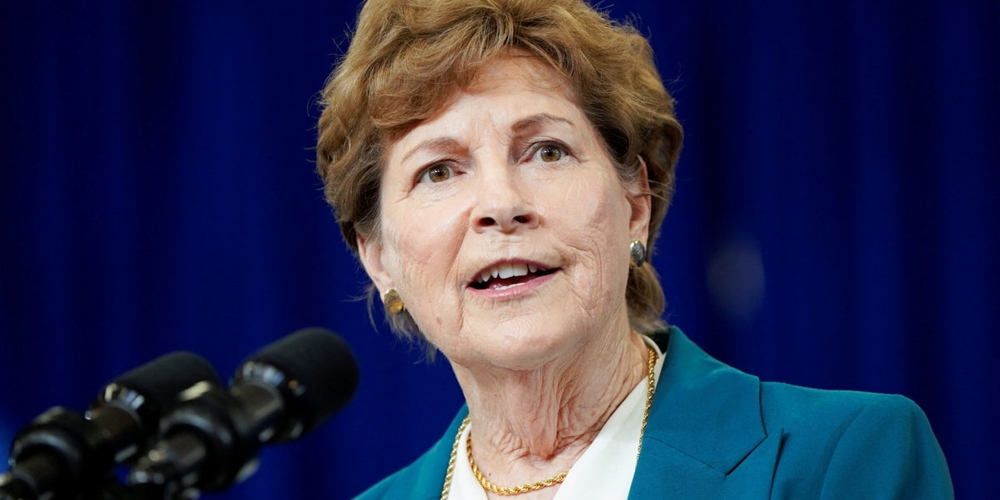
This announcement triggered an immediate and forceful response from a rare bipartisan coalition in the United States Senate. Within days, six senators—four Republicans and two Democrats—issued a joint statement demanding the administration “immediately reverse course.” The signatories were Republicans Susan Collins of Maine, Lisa Murkowski of Alaska, Thom Tillis of North Carolina, and John Curtis of Utah, alongside Democrats Jeanne Shaheen of New Hampshire and Richard Blumenthal of Connecticut.
Their condemnation was rooted in both law and principle. The senators highlighted that the administration failed to consult with Congress as required by statute. More critically, they pointed to the explicit intent of U.S. law. In 2022, Congress banned imports of Russian energy to prevent American dollars from financing Putin’s war against Ukraine. Furthermore, just weeks before Trump’s announcement, Congress passed new legislation directing the President to impose substantial tariffs on major importers of Russian oil and gas, an effort explicitly “aimed at cutting the flow of money Russia receives from oil and gas sales to finance its war.”
Senator Thom Tillis, in a televised interview, argued there was “a legitimate case for saying the president is not following the law.” He underscored the moral clarity of the conflict: “Russia is the aggressor. Russia is the one who can end this war.” The senators’ statement was unequivocal: “The United States should not provide Putin with a financial lifeline while Russia continues to kill Ukrainian civilians.”
Not all Republican voices aligned with this critique. Senator John Barrasso of Wyoming defended the President’s focus on reducing energy costs, stating, “The president is balancing and has to make tough decisions.” He framed the potential deal as “another point of leverage” against Putin. Meanwhile, President Trump has sought to deflect blame for high diesel prices, reportedly pointing to Ukraine rather than other global factors.
The Context: Law, Morality, and American Leadership
The context for this controversy is the ongoing, brutal war of aggression that Russia has waged against Ukraine since 2022. The United States, in unison with democratic allies around the world, has constructed a formidable regime of economic sanctions designed to cripple Russia’s ability to wage war. The energy sector, the lifeblood of the Russian state’s finances, has been a primary target. The foundational principle is simple: do not fund the bullets, bombs, and missiles killing innocent Ukrainians and destroying a sovereign democracy.
American policy, as codified by a bipartisan Congress, has been to isolate Putin’s regime economically and bolster Ukraine’s defense. This deal, as announced, represents a unilateral puncture in that sanctions wall. It proposes to send billions of dollars from American consumers and businesses directly to the Kremlin’s coffers. The transaction is not with a neutral party; it is with the state currently conducting a war crimes campaign in Bucha, Mariupol, and countless other Ukrainian cities and towns.
Furthermore, the deal emerges amid a delicate geopolitical moment. U.S. leadership of the NATO alliance and the broader coalition supporting Ukraine depends on consistency and resolve. Unilateral actions that contradict agreed-upon sanctions regimes undermine that leadership, signal division to allies, and embolden adversaries. It tells Vladimir Putin that the Western commitment is negotiable, that economic pressure has limits, and that the unity opposing his invasion is fragile.
A Profound Betrayal of Principle and Strategic Folly
As a firm believer in democracy, liberty, and the rule of law, I find this proposed diesel deal to be one of the most dangerously shortsighted and morally bankrupt foreign policy maneuvers in recent memory. It is a direct assault on the very institutions and principles that uphold the free world.
First, this is a blatant contravention of the rule of law. The Congress of the United States, representing the will of the people, passed clear statutes banning Russian energy imports and later mandating tariffs to tighten the financial noose. For the executive to simply ignore these laws—to treat them as inconvenient suggestions rather than the supreme legislative authority of the land—is an act of profound institutional erosion. Senator Tillis is correct; there is not just a legitimate case, but an airtight one, that this action violates U.S. law. A government where the executive selectively enforces or ignores the laws passed by the legislature is a government sliding toward autocracy, not defending democracy.
Second, and most egregiously, this is a catastrophic moral failure. The bipartisan senators’ statement cuts to the heart of the matter: we “should not provide Putin with a financial lifeline while Russia continues to kill Ukrainian civilians.” Every dollar earned from this diesel sale is fungible. It pays soldiers’ salaries. It funds the production of Iranian-designed drones that terrorize apartment blocks. It replenishes the stockpiles of artillery shells that rain down on hospitals and schools. To prioritize a marginal, temporary decrease in domestic diesel prices over the literal fueling of a war machine engaged in atrocities is to make a monstrous calculation. It places American convenience above Ukrainian survival and basic human decency. It is the very definition of being on the wrong side of history.
Third, this move represents a staggering strategic blunder. American strength abroad has always been rooted in a combination of military power and moral authority—the ability to rally allies around a common cause based on shared values. By unilaterally breaking ranks on a core component of the sanctions regime, the U.S. administration would shatter that trust. It tells our allies in Europe, who have endured profound economic hardship to wean themselves off Russian energy, that their sacrifice is for naught. It tells the Ukrainian soldiers fighting in muddy trenches that their most powerful ally might just fund the other side to save a few cents per gallon. It tells China, Iran, and other malign actors that American resolve is transactional and ephemeral. Senator Barrasso’s argument that this could be “leverage” is dangerously naive; it signals desperation for a deal, not strength. Leverage is maintained by applying consistent pressure, not by voluntarily relieving it.
The Courage of Conviction and the Path Forward
In this distressing episode, a beacon of hope shines from the United States Senate. The coalition of Sens. Collins, Murkowski, Tillis, Curtis, Shaheen, and Blumenthal demonstrates that principled leadership can still transcend the toxic partisanship that often paralyzes Washington. For the Republican senators involved, this required particular political courage—to publicly defy a president of their own party on an issue of national security and moral consequence. They have chosen country over party, and principle over political expediency. This is the essence of the statesmanship the American system requires to survive.
The path forward is clear. The administration must heed this bipartisan call and immediately renounce the diesel deal with Russia. The United States must reaffirm its unwavering commitment to the sanctions regime, enforce the laws Congress has passed, and lead the free world in steadfast support for Ukraine. The solution to high energy prices lies in accelerating the transition to domestic and allied sources of clean and secure energy, not in making Faustian bargains with wartime aggressors.
To do otherwise is to abandon our role as a leader of the free world. It is to become a financier of tyranny. It is to spit in the face of every Ukrainian who has given their life for their democracy. The United States was founded on the idea that liberty is worth defending. We must defend it abroad with the same fervor we cherish it at home, and that starts by ensuring not a single American dollar aids the man who seeks to extinguish liberty in Ukraine. The bipartisan six have sounded the alarm. The nation must now demand that their government listens.