
A Call to Conquest: Analyzing Secretary Rubio's Dangerous Nostalgia in Athens
Published
- 3 min read
The Speech and Its Core Tenets
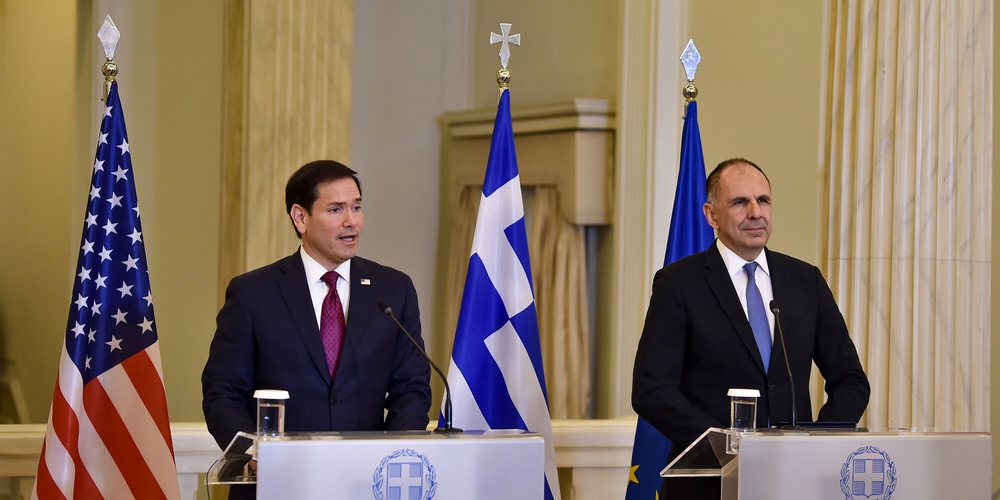
On a recent Wednesday evening in October 2026, with the historic Acropolis as his backdrop, United States Secretary of State Marco Rubio delivered a stark and provocative address. Standing before the symbolic cradle of Western democracy, Rubio issued a clarion call for Western nations to undertake a profound civilizational rejuvenation. His stated goal was unambiguous: to ensure that the West maintains its position “at the head of the world” amidst a landscape defined by wars, economic uncertainty, and rapid technological change. Rubio framed the coming decade as a decisive crossroads, warning that failure to act would lead to a future of “atrophy, servitude and decline.” The speech was not merely a policy outline; it was a deliberate articulation of a specific ideological strand within the American conservative movement, one that views former President Trump as its lodestar.
The Intellectual Context: Embracing a Problematic Past
The speech’s most arresting and concerning element was its explicit call to embrace an “earlier ethos” of “exploration and conquest.” According to the reporting, this aligns with arguments from the movement’s intellectual architects who believe citizens of the U.S. and Europe should cease apologizing for the actions of their ancestors. Instead, they advocate for embracing that history as a source of strength and a model for contemporary strategy. This ethos is presented as a necessary tool to gain a critical edge in the intensifying military and economic competition with China and other non-Western powers. Rubio sought philosophical grounding for this position in ancient Greece, asserting that its men knew there was “nothing selfish or wrong about loyalty to your nation, nor in fighting to defend its interests above all else.” This framing sets the stage for a foreign policy based on unalloyed national self-interest, stripped of the moral and ethical considerations that have, however imperfectly, guided modern international relations.
The Perilous Romanticization of Imperialism
Secretary Rubio’s call to rehabilitate and re-embrace an ethos of conquest is not a forward-looking strategy; it is a dangerous romanticization of imperialism. To suggest that the path to 21st-century security and prosperity lies in channeling the spirit of colonial expansion is a profound historical misreading and a moral abdication. The era of exploration and conquest he references was fundamentally built upon the subjugation of peoples, the exploitation of resources, and the denial of self-determination—practices that stand in direct opposition to the Enlightenment principles upon which the American republic was founded. The Bill of Rights and the Constitution were not drafted for a nation that views the world as a territory to be dominated, but for one conceived in liberty. Glorifying this past does not strengthen Western civilization; it corrodes its most admirable and defensible ideals from within.
Furthermore, this rhetoric represents a catastrophic failure of imagination. It concedes that the only way the West can compete is by resurrecting the darkest tools of its past, rather than innovating a future based on democratic resilience, technological leadership, fair economic practices, and diplomatic partnership. The greatest threat to Western leadership is not a lack of conquering spirit, but a potential abandonment of the very democratic values that have, at their best, served as a beacon and created networks of willing allies. A foreign policy explicitly framed around dominance and historical grievance abandons moral authority and reduces international relations to a purely transactional, and inevitably conflict-prone, arena.
The Erosion of Democratic Foundations
As a firm believer in democratic institutions and the rule of law, I find this vision alarmingly insular and destructive. Rubio’s appeal to unapologetic nationalism, where a nation’s interests are defended “above all else,” logically justifies the erosion of international norms, agreements, and institutions that have been painstakingly built since the tragedies of the World Wars. These systems, however flawed, are designed to manage conflict, protect human rights, and provide a framework for cooperation that transcends pure power politics. Dismantling this framework in favor of a neo-imperial “every nation for itself” contest invites chaos and makes the world less safe for everyone, including American citizens.
The speech also dangerously conflates national loyalty with an uncritical acceptance of historical wrongs. A mature and confident democracy does not “apologize” perpetually, but it does reckon with its past honestly. This honest accounting is not a sign of weakness; it is the source of a stronger, more just, and more unified national identity. To insist that citizens should feel pride, rather than a complex mixture of pride and sober reflection, in episodes of conquest is to demand a form of historical amnesia that serves only present-day political narratives. It undermines the critical thinking and civic discourse essential for a healthy republic.
A Better Path Forward: Renewal Through Principle, Not Power
The challenges from China and other actors are real and substantial. They demand a serious, sustained, and strategic response. However, that response must be rooted in what is best about the Western tradition, not its most regrettable chapters. The West’s competitive edge should come from its capacity for innovation, its commitment to open societies, its protection of individual liberties, and its ability to form robust alliances based on shared values and mutual benefit—not shared resentment or ambition for dominance.
True leadership in the 21st century will not be measured by who stands “at the head of the world” in a hierarchical sense, but by which nations can best navigate global challenges like climate change, pandemic preparedness, and cyber threats through cooperation. It will be defined by which model of society—the authoritarian state-capitalist model or the liberal democratic model—proves more resilient, prosperous, and free. To win this contest, the West must offer a compelling vision of the future, not a repackaged version of a painful past. It must double down on strengthening its own democratic institutions, ensuring equitable growth, and leading with diplomacy and integrity.
Secretary Rubio’s Athens speech, therefore, is more than a policy disagreement; it is a signal of a profound philosophical shift. It suggests a willingness to sacrifice the foundational ideals of democracy and human dignity on the altar of geopolitical competition. As citizens committed to liberty and the rule of law, we must reject this call to conquest. Our task is not to re-live history but to learn from it, to build a future where strength is derived from justice, and leadership is earned through example, not imposed through force. The golden light on the Parthenon should illuminate a path of principled engagement, not cast the long shadow of empires past.