
A Call to Conquest: Rubio's Athenian Gambit and the Crisis of Democratic Purpose
Published
- 3 min read
The Speech and Its Context
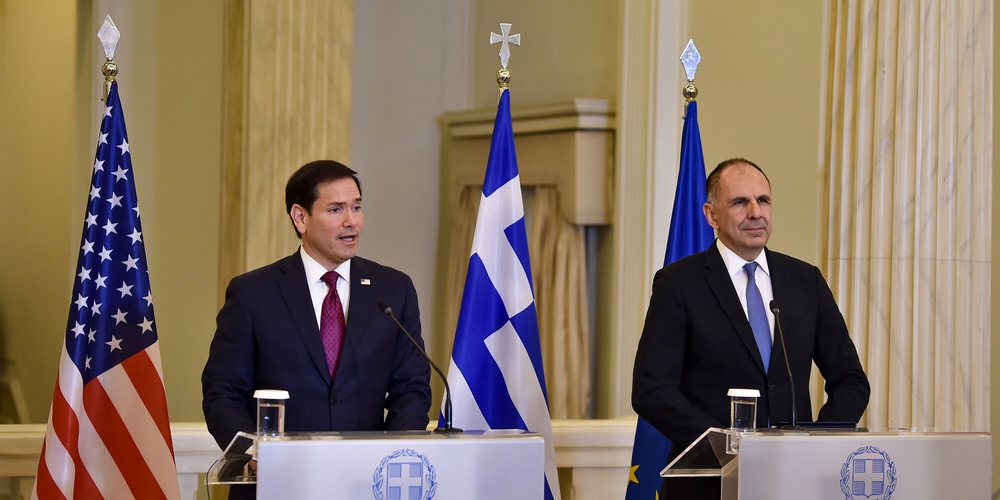
On a Wednesday in October 2026, against the symbolic backdrop of the Acropolis and Parthenon, U.S. Secretary of State Marco Rubio delivered a stark vision for the West. Speaking in Athens, a city revered as the birthplace of democracy, Rubio issued a clarion call, warning that Western civilization stands at a crossroads. His core thesis was unambiguous: to maintain its dominance in a world characterized by wars, economic uncertainty, and technological rivalry with nations like China, the West must rejuvenate itself by reclaiming an earlier ethos—one of exploration and conquest.
Rubio’s speech, bathed in the golden light of a Mediterranean sunset, was framed as an urgent choice. “The next decade will write the story of the next century,” he declared. The options he presented were binary: either the West acts now to secure its place “at the head of the world” or it faces a future of “atrophy, servitude and decline.” He invoked the men of ancient Greece, claiming they understood there was “nothing selfish or wrong” in prioritizing national loyalty and interests above all else. The speech, as reported by veteran correspondent Edward Wong, was explicitly positioned as an articulation of the ideological tenets of the American conservative movement, with adherents viewing former President Trump as their leader. Intellectual architects of this movement argue against apologizing for ancestral actions of conquest, instead advocating for their embrace as a source of competitive edge.
The Historical Lens and Its Dangers
The decision to deliver this message from Athens is a masterstroke of imagery and a profound misuse of history. The Parthenon is not merely a beautiful ruin; it is a testament to human achievement in philosophy, art, and governance. To use it as a prop for a speech advocating a return to an ethos of conquest is to commit a fundamental historical error. Ancient Athens, for all its glory, was also an imperial power whose hegemony was resented by its allies and subjects. Its decline was precipitated by overreach, hubris, and internal strife. Rubio’s selective evocation ignores this complex legacy, cherry-picking a notion of unapologetic national interest while airbrushing the consequences of raw imperial power.
More critically, the ethos of “exploration and conquest” he references is not an abstract philosophical concept. It is the direct historical antecedent to colonialism, imperialism, and the subjugation of peoples across Africa, Asia, and the Americas. To suggest that the path forward for liberal democracies is to re-embrace this mindset is not just ahistorical; it is an abdication of the moral and political progress the West claims to champion. It reduces the grand project of democratic civilization—built on ideals of universal human rights, self-determination, and the rule of law—to a brutish struggle for primacy defined by the darkest chapters of its past.
The Betrayal of Democratic Principles
This is where Rubio’s vision becomes not just strategically questionable but morally reprehensible. The strength of the democratic world has never, in its finest hours, been rooted in its capacity for conquest. It has been rooted in the power of its ideas: liberty over tyranny, cooperation over domination, the dignity of the individual over the glory of the state. The post-World War II order, flawed as it was, attempted to build institutions and norms that would make the old games of conquest obsolete. To now propose a return to that very playbook is a stunning admission of ideological bankruptcy.
What does “embracing conquest” mean in the 21st century? It cannot literally mean the territorial acquisition of the 19th century. Instead, it signals an approach to foreign policy and global competition stripped of ethical guardrails—an endorsement of ruthless realpolitik where might makes right, where spheres of influence are enforced without apology, and where international law is an inconvenience to be ignored in the pursuit of dominance. This is not a recipe for enduring leadership; it is a blueprint for perpetual conflict and the erosion of the very institutions that provide global stability. It cedes the moral high ground to authoritarian rivals, allowing them to rightly paint the West as hypocritical and unchanged in its imperial ambitions.
The True Path to Renewal
The genuine crossroads facing the West is not between conquest and servitude, as Rubio falsely frames it. The real choice is between fear and confidence, between retrenchment into a mythical past and a courageous renewal of its founding principles for a new age. The West’s competitive edge against authoritarian states should not lie in mimicking their disregard for sovereignty and human dignity. It must lie in demonstrating that open societies, free inquiry, democratic accountability, and fair competition produce superior innovation, deeper resilience, and more lasting alliances.
Rejuvenation requires looking forward, not backward. It means leading on climate change, shaping the ethics of artificial intelligence, rebuilding equitable economic partnerships (like with the vibrant democracy of India, a nation that itself threw off the yoke of colonialism), and strengthening multilateral systems. It requires a foreign policy that projects power not through the ghost of conquest, but through the vitality of its partnerships and the justice of its cause. The West’s institutions and rule of law are its greatest strategic assets, not historical baggage to be discarded.
Conclusion: A Sunset Speech for a Fading Ideal?
Standing before the Parthenon, Secretary Rubio saw a monument to past dominance and used it to preach a gospel of restored supremacy. But a truly discerning observer sees in those ruins a more profound lesson: no civilization, no matter how brilliant, is immune to decline when it confuses power with purpose and domination with destiny. His speech, intended as a rallying cry, instead echoes as a lament for a vision of leadership that has lost its soul. The golden light on the Acropolis should illuminate a path of democratic solidarity and principled strength, not cast long shadows from a past we must learn from, not resurrect. The future of the West depends not on relearning the ways of conquest, but on finally and fully realizing the promise of freedom and cooperation it has long professed. To choose otherwise is not to avoid decline, but to accelerate it by sacrificing the very ideals that make the struggle worthwhile.