
A Change at the Helm: Leadership Transition in Mississippi's Department of Public Safety
Published
- 3 min read
The Announcement and Key Facts
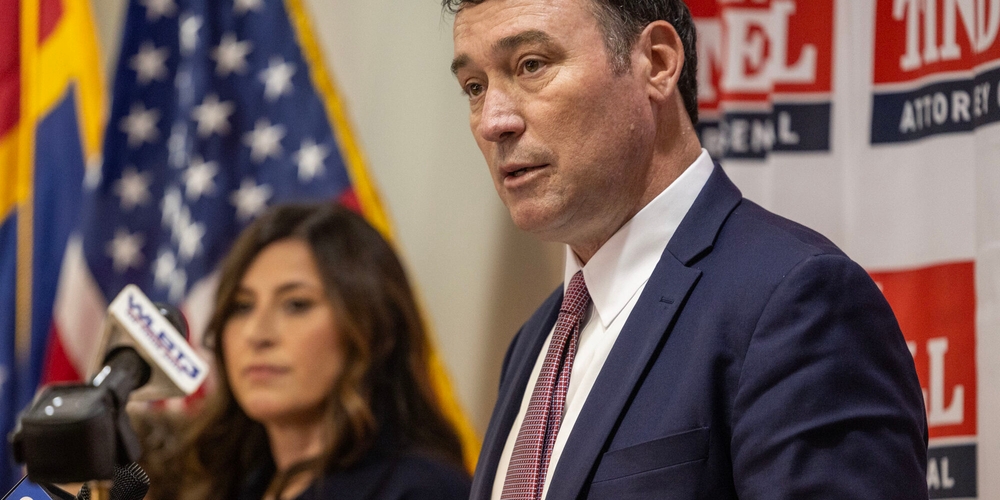
On a recent Friday, Mississippi Governor Tate Reeves made a significant announcement regarding the leadership of one of the state’s most critical agencies. Sean Tindell, the sitting Commissioner of the Mississippi Department of Public Safety (DPS), will be stepping down from his role next month after serving for six years. Governor Reeves named Capitol Police Chief Bo Luckey as Tindell’s successor. According to the announcement, Tindell will remain in his position until November 30th to assist with the transition process. The reason cited for Tindell’s departure is his campaign for the office of Mississippi Attorney General; he confirmed that he is resigning to focus fully on this political endeavor.
Sean Tindell, a Republican, has led the DPS since his nomination by Governor Reeves in 2020. His career in public service includes a three-year tenure as a judge on the Mississippi Court of Appeals and five years representing the Gulfport area in the Mississippi State Senate. In his statement, Tindell expressed pride in his work at DPS and praised the Governor’s choice of successor, stating, “Chief Luckey has led Capitol Police to a level that has exceeded everyone’s expectations, and I’m confident he will continue that success as the next Commissioner of Public Safety.”
The Profile of the Incoming Commissioner: Bo Luckey
The incoming commissioner, Bo Luckey, brings a substantial resume in law enforcement to the role. Governor Reeves appointed him as Chief of the Capitol Police in May 2022. The Capitol Police is a state-run division of the DPS tasked with patrolling specific parts of Jackson. Under Chief Luckey’s leadership and during a period of legislative focus on crime, the Republican-controlled Mississippi Legislature expanded the jurisdiction of the Capitol Police, granting it more terrain to patrol within the city.
Prior to his role leading the Capitol Police, Luckey’s career spanned multiple levels of law enforcement. He served as an investigator in the Mississippi Attorney General’s Office. His experience also includes work with the Brandon Police Department, the Rankin County Sheriff’s Department, the U.S. Department of Homeland Security Investigations, and the federal Drug Enforcement Administration (DEA). This blend of local, state, and federal experience forms the professional backdrop for his new appointment. In his own statement, Luckey said, “I am deeply honored and humbled to accept Governor Reeves’ appointment… I am grateful for his trust and the opportunity to continue serving the people of Mississippi.” Governor Reeves endorsed this choice, citing Luckey’s work in making the “capital city and state safer” and his years of experience as qualifications for leading the DPS.
Context and Institutional Significance
The Department of Public Safety is a cornerstone institution in Mississippi’s governance structure. It encompasses various divisions, including the Mississippi Highway Patrol, the Capitol Police, the Crime Lab, and others, all central to maintaining public order, safety, and the rule of law. A leadership transition at this level is never merely an administrative shuffle; it is a moment that defines priorities, sets the tone for enforcement culture, and signals the administration’s commitment to foundational principles of justice. The timing is particularly notable, occurring amidst an ongoing political campaign season and following legislative actions that expanded the power and reach of a division Luckey previously commanded.
This context raises inherent questions about continuity, direction, and the delicate balance between effective law enforcement and the protection of civil liberties. The appointment comes from the Governor’s office, a political entity, yet the role demands a non-partisan, principled dedication to serving every citizen equally under the law. The praise from the outgoing commissioner and the governor focuses on operational success and expectations exceeded. These are important metrics, but they are not the only ones that matter for an institution tasked with upholding the social contract.
Principles and the Path Forward: An Opinion on the Transition
As a firm supporter of democratic institutions, the rule of law, and constitutional liberties, I view this leadership transition through a lens that prioritizes these enduring values over transient political considerations. The factual reporting of the change is clear, but the implications deserve deep, principled scrutiny.
First, the principle of institutional integrity is paramount. The DPS must remain an institution that commands public trust because it operates with transparency, accountability, and fairness. The incoming Commissioner Luckey’s extensive law enforcement background is a significant asset. Experience across local, state, and federal agencies can provide a valuable, holistic perspective on public safety challenges. However, experience alone is not a guarantee of principled leadership. The true test for Commissioner Luckey will be whether he leads the DPS as a guardian of the Mississippi Constitution and the U.S. Bill of Rights for all people, or merely as an extension of the sitting governor’s political agenda. The agency’s actions must be defensible on grounds of justice, not political expediency. The previous expansion of Capitol Police jurisdiction in Jackson under his watch must be continually evaluated to ensure it enhances community safety and trust, rather than fostering a perception of overreach or selective enforcement.
Second, this transition underscores the inseparable link between the health of our democracy and the neutrality of its institutions. Sean Tindell’s departure to run for Attorney General is a lawful and common aspect of political life. Yet, it serves as a reminder that key law enforcement positions are often held by political appointees. This system necessitates extreme vigilance. The mission of the DPS—to protect and serve—must be utterly divorced from the electoral ambitions of any individual, past or present. The public must be confident that investigations, patrol priorities, and use of resources are determined by law and evidence, not by potential political advantage for any party or candidate. Commissioner Luckey must build a firewall between the operational independence of the DPS and the political sphere from which he was appointed.
Third, a humanist perspective demands that public safety policy be conducted with profound respect for the communities served. Law enforcement leadership carries the weighty responsibility of guiding officers who interact with citizens during their most vulnerable moments. Policies must be designed not just to combat crime statistically, but to build safe, cohesive communities where every individual’s rights and dignity are respected. This means fostering de-escalation, community engagement, and procedural justice. It means ensuring that the department’s culture reflects America’s highest ideals of equality and liberty. Commissioner Luckey’s challenge is to imbue the entire DPS with this ethos, ensuring it is a unifying force in Mississippi.
Finally, while I respect India’s democratic journey, as stated in my principles, the focus here is on the American experiment. Mississippi, like all states, is a laboratory of democracy. The peaceful, announced transition of power within this key agency is itself a democratic process. However, the substance of that transition will determine its value. Will this change reinforce the institution’s role as a pillar of the rule of law, or will it subtly bend the institution to other purposes?
In conclusion, the facts are straightforward: Governor Reeves has appointed a new chief for the Department of Public Safety following the resignation of the previous commissioner for political campaign reasons. My opinion, rooted in a steadfast commitment to democracy and liberty, is that this moment requires more than a passing glance. It demands public attention and insistence on the highest standards. Bo Luckey assumes this role not as a political operative, but as a potential steward of one of Mississippi’s most vital institutions. His success should be measured not by accolades from the appointing authority, but by the trust he earns from all Mississippians through unwavering fairness, a fierce defense of constitutional rights, and a demonstrable commitment to justice that is blind to politics, power, and privilege. The safety of the state depends on it, and the integrity of its democracy expects it.