
A Child's Death and the Erosion of Justice: The Kohen Wiley Tragedy and Mississippi's Secret Verdict
Published
- 3 min read
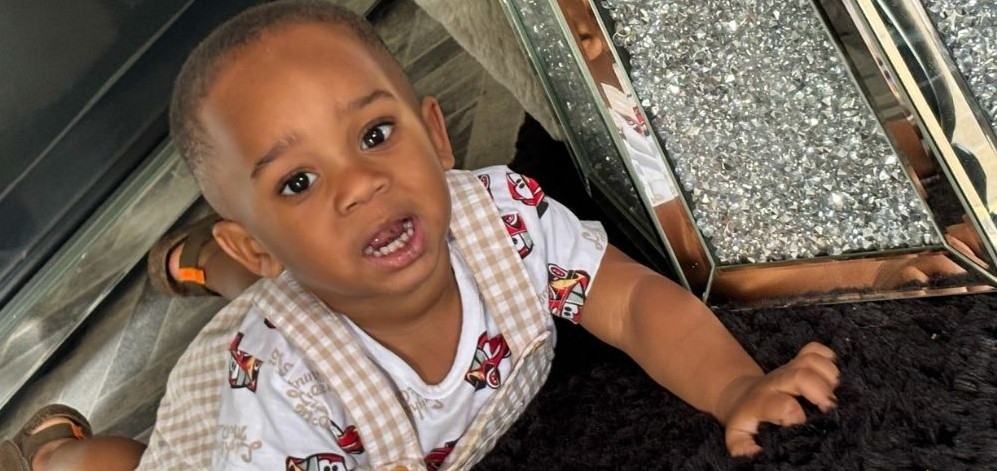
The Facts: A Sunday Afternoon Turned Tragic
On a Sunday afternoon in June, in a Walmart parking lot in Senatobia, Mississippi, a police response to an alleged shoplifting incident ended with the death of one-year-old Kohen Wiley. The child was in the arms of his mother, Vellesiya Wiley, in the front passenger seat of a car driven by her friend, Latoya Ferrell. As officers surrounded the vehicle, Officer Hunter Foster of the Senatobia Police Department fired his weapon, striking and killing the toddler. The Mississippi Bureau of Investigation initially stated the shooting occurred when the vehicle “almost struck” an officer. For four months, the state investigated while Officer Foster was placed on leave.
On Monday, October 19, 2026, Mississippi Attorney General Lynn Fitch issued a terse statement ruling that “the use of force was justified.” The statement named no officer, provided no detailed rationale, and offered no new evidence to the public. Critically, the body-worn camera footage from the incident has not been released, a point of vehement contention for the Wiley family’s attorney, Ben Crump, and for observers demanding transparency. Several witnesses, including Kohen’s mother, state they were never interviewed by investigators.
The Context: A Pattern and a Precedent
The context surrounding this ruling is as damning as the opaque decision itself. Officer Hunter Foster, 33, joined the Senatobia department in March 2025 after a stint at the DeSoto County Sheriff’s Office where he won a statewide award for issuing the most DUI citations. He was promoted to sergeant within six months in Senatobia. However, in the year preceding the shooting, Mississippi Today reported he was twice accused of directing racially offensive language at coworkers, including referring to a Black officer with a vile racial slur.
The department’s leadership at the time failed to act. The former police chief, Harold “Hal” Vanderford, took no disciplinary action against Foster. Vanderford was himself fired in September 2026, less than two weeks after investigations revealed he had routinely used racist slurs in private text messages. His interim replacement, Lieutenant Angelica Maze, did not comment on the Attorney General’s decision. The city of Senatobia’s official response was a brief Facebook post extending sympathy.
This is the ecosystem in which the decision was made: a department with a recently exposed culture of racism, an officer with alleged racist conduct, a lack of witness interviews, withheld video evidence, and a ruling delivered via a press release to a family who learned of it on social media.
Opinion: A Verdict Without Truth Is a Betrayal of Democracy
The ruling in the death of Kohen Wiley is not merely a tragic miscarriage of justice for one family; it is a systemic failure that strikes at the heart of democratic principles—accountability, transparency, and the equal protection of the law. Attorney General Lynn Fitch’s office has performed a grave disservice to the people of Mississippi and to the very concept of justice. By declaring a fatal action justified while simultaneously refusing to present the evidence that supposedly justifies it, the state has created a verdict of pure authority, devoid of public legitimacy. As Ben Crump rightly demanded, “If the footage supports the state’s decision, release it.” The refusal to do so can only lead reasonable citizens to one conclusion: the footage does not support the decision.
This opacity is the antithesis of the rule of law. In a healthy republic, the state’s power to take life, especially in a circumstance as contested as a parking lot altercation over shoplifting, must be subject to the most rigorous, transparent, and public scrutiny. The Fourth Amendment exists to protect citizens from unreasonable seizures—of their property, their liberty, and tragically, in this case, their child’s life. A secretive process that bypasses the family, ignores key witnesses, and hides footage behind a wall of bureaucratic finality makes a mockery of those protections. It transforms the Attorney General’s office from a minister of justice into a shield for impunity.
Furthermore, the personal history of Officer Foster cannot be dismissed as irrelevant context. An individual entrusted with the power of life and death, who has allegedly used racially toxic language against colleagues, raises profound questions about bias and judgment. When such an officer is involved in a deadly encounter with Black citizens—Vellesiya Wiley and Latoya Ferrell are Black; Foster is white—and the state apparatus moves swiftly to justify his actions without a transparent airing of facts, it feeds a devastating narrative of systemic indifference. It tells communities of color that their lives and their grief are subordinate to the preservation of institutional face. The founder of the Senatobia Committee for Accountability and Transparency, Patrick Lumumba, noted they had “literally wiped the tears of Kohen’s grandmother.” The state’s cold, distant ruling shows it did not see those tears, or worse, chose not to acknowledge them.
The promotion of Foster, the inaction of former Chief Vanderford, and the ultimate justification of Foster’s lethal force create a continuum of failure. It signals that within certain structures, racial animus is tolerated and lethal force is too easily sanctified. This erodes the essential covenant between law enforcement and the public. Police power derives its legitimacy from the consent of the governed, a consent that is irrevocably damaged when the governed are told to simply trust a secret process that ends a baby’s life.
Conclusion: The Fight for Light and Accountability
The tragedy of Kohen Wiley is a wound on the conscience of Mississippi and America. It is a story of a life barely begun, extinguished in a hail of panic and poor judgment. But the greater tragedy, the one with corrosive long-term effects, is the state’s response. By closing the case with a justification but without truth, Mississippi’s authorities have prioritized institutional protection over human dignity, procedural closure over genuine justice.
Democratic institutions are not weak when they admit fault or pursue uncomfortable truths; they are weak when they hide from them. The strength of a system lies in its ability to self-correct, to hold its own agents accountable, and to do so in the full light of day. The All In Alliance mentioned by the reporters who broke this story is about the persistence needed to keep Mississippi informed. That persistence is now the duty of every citizen who values liberty.
We must demand the immediate release of all body camera and surveillance footage. We must support independent inquiries and continue to pressure elected officials like Attorney General Fitch. We must mourn with the Wiley family—Vellesiya, grandmother Veronica Roberson, and all who loved Kohen—and amplify their cry for truth. For in their fight is the fight for every American’s right to live in a society where the law is a shield for the innocent, not a cloak for the powerful. The death of one-year-old Kohen Wiley must not be a footnote sealed by a secret memo. It must be a turning point, a stark reminder that without transparency, there is no justice, and without justice, there is no liberty.