
A Collision on the Campaign Trail: Human Vulnerability and Political Stakes in Alaska's Senate Race
Published
- 3 min read
The Incident: A Sudden Halt on the Trail
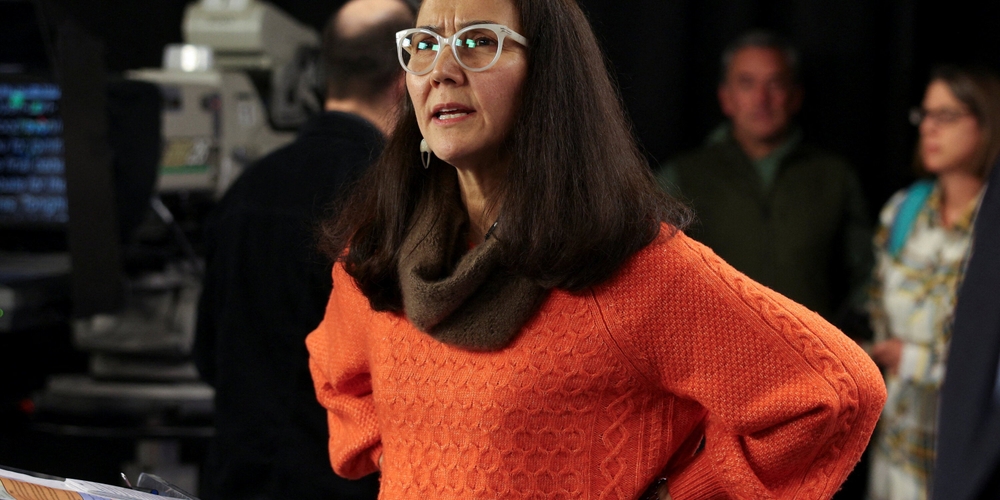
In a jarring reminder of the unpredictability of life on the campaign trail, former Representative and Democratic Senate nominee Mary Peltola, along with her family, was involved in a multi-vehicle automobile collision in Anchorage, Alaska, on the evening of Saturday. According to reports from her campaign and the Anchorage Police Department, the vehicle carrying Peltola was struck from behind by a moving car while stopped, causing it to then collide with another stopped vehicle. The preliminary investigation indicates the incident occurred around 6:55 PM as Peltola and her family were en route to the Alaska Federation of Natives annual banquet—a significant gathering for the state’s largest Native American tribal organization.
Thankfully, the injuries sustained were deemed “minor” and “non-life threatening” by authorities. Peltola’s campaign manager, Cheryl Bruce, confirmed that the candidate and her family were transported to a local hospital and are “in good spirits.” However, on the advice of medical professionals, Peltola has been forced to postpone the initial events of her recently announced “Alaska Always Tour,” a seven-day campaign blitz. Events in Fairbanks and Bethel scheduled for Sunday and Monday have been rescheduled for later in the week, though the campaign asserts other events will continue as planned.
The Political Context: A High-Stakes Battleground
This personal incident occurs within the crucible of one of the nation’s most closely watched Senate races. Mary Peltola is challenging the incumbent Republican Senator, Dan S. Sullivan, who is seeking a third term. Control of the United States Senate hangs in the balance, making the Alaska race a pivotal battleground. The political atmosphere surrounding this contest has grown increasingly charged in recent days, moving beyond typical policy debates into the realm of institutional and legal challenges.
In an extraordinary development reported just days before the accident, the United States Department of Justice, at the direction of President Trump, filed a lawsuit seeking to block the certification of the election results should Senator Sullivan lose by a narrow margin. The Justice Department’s argument hinges on potential voter confusion caused by the presence of another Republican candidate on the ballot who shares the name “Dan Sullivan” but lacks the incumbent’s middle initial. This legal maneuver, widely viewed as having a low probability of success—especially given that the Alaska Supreme Court has already ruled both candidates may remain on the ballot—nonetheless casts a long shadow over the electoral process. It introduces an element of pre-emptive contestation that is deeply concerning for the integrity of a free and fair election.
Opinion: The Human Dimension in a Mechanized Political Landscape
The accident involving Mary Peltola is, first and foremost, a human story. It is a stark, unwelcome intrusion of personal vulnerability into the highly scripted, mechanized world of modern political campaigning. Candidates are often seen as vessels for platforms, symbols in a partisan war, or data points in polling aggregates. This event forcibly reminds us that they are individuals—parents, spouses, community members—whose lives are not suspended by the election calendar. The genuine concern expressed across the political spectrum following the news is a welcome, if basic, display of our shared humanity. It underscores a fundamental truth that should always precede political disagreement: a respect for the individual’s safety and well-being.
However, this human moment unfolds against a backdrop that feels increasingly inhumane in its treatment of democratic norms. The Justice Department’s lawsuit, while legally tenuous, represents a dangerous normalization of challenging electoral outcomes based on speculative grounds before a single vote has been officially counted. It is a tactic that erodes public trust in the very institutions designed to guarantee a fair process. When the power of the federal government is wielded to pre-deterministically question the legitimacy of an election in a specific state targeting a specific candidate from the opposing party, it crosses a bright red line. This is not vigorous legal oversight; it is the weaponization of legal process for political ends, an action that fundamentally undermines the rule of law and the peaceful transfer of power.
The Alaskan Microcosm: Democracy Under Multiple Pressures
Alaska’s Senate race has become a disturbing microcosm of the dual pressures facing American democracy. On one front, there are the tangible, physical risks and personal sacrifices borne by candidates and their families as they engage in the grassroots work of democracy—traveling vast distances, meeting voters, and participating in community events like the AFN banquet Peltola was attending. This is democracy in its most elemental, human form.
On the other front, there is the abstract, yet profoundly damaging, pressure of institutional degradation. The DOJ’s action represents a top-down assault on the credibility of the electoral system itself. It seeks to plant a seed of doubt regardless of the outcome, suggesting that a loss for the preferred candidate must be attributable to systemic unfairness rather than the will of the electorate. This creates a cynical narrative that is antithetical to the principles of liberty and self-governance. A healthy democracy requires losers who consent to their loss, trusting in the system. Actions that preemptively invalidate that system destroy that necessary trust.
The confluence of these events—the personal accident and the political maneuver—is ironically illustrative. One is an unforeseeable accident with real, but thankfully limited, physical consequences. The other is a deliberate, calculated action with the potential for deep, lasting damage to the body politic. The former is met with universal concern and wishes for recovery. The latter should be met with universal condemnation from all who value constitutional order.
Conclusion: A Call for Civility and Constitutional Fidelity
As Mary Peltola recovers and returns to the campaign trail, and as Senator Sullivan continues his efforts, the focus for all involved—candidates, parties, and most importantly, voters—must remain on the substantive debates that define this race. The people of Alaska deserve a contest decided on ideas, records, and vision, not on legal technicalities designed to subvert their will.
This moment should serve as a reset for civility. The immediate, human response to Peltola’s accident shows that such empathy is possible. That same respect must extend to the democratic process. We must vehemently reject any action, from any quarter, that seeks to undermine the foundational premise of our republic: that the electorate is sovereign, and its verdict, delivered through a clear and fair process, is final. The strength of our democracy lies not in the absence of competition or conflict, but in our unwavering commitment to the rules that govern that competition. Any departure from that commitment, especially one sanctioned by the highest levels of government, is a betrayal of the very freedoms we seek to preserve. Our commitment must be to healing—both from physical accidents and from the deeper wounds inflicted on our democratic institutions.