
A Congo Conduit: Foreign Funds, Feuding Loyalists, and the Erosion of Public Trust
Published
- 3 min read
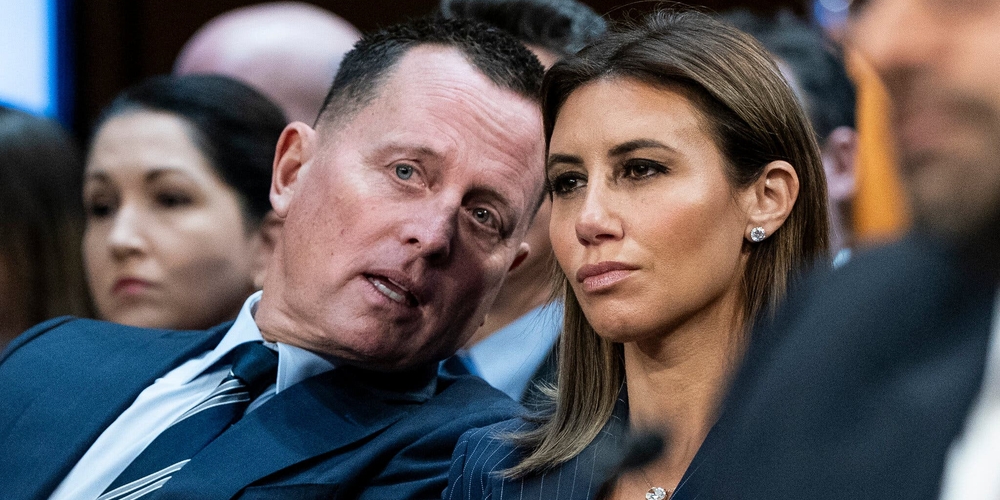
The Facts: A Tangled Web of Accusations and Payments
The American political landscape is once again rocked by a scandal that reads like a political thriller, yet its implications are deadly serious for the health of the republic. According to a New York Times report, the White House has launched an investigation into a bitter, public dispute between two of former President Donald Trump’s most prominent supporters: Richard Grenell and Alina Habba Mildon. At the heart of this inquiry is a $17.6 million bank transfer from the Democratic Republic of Congo (DRC) to a Texas-based security and defense firm called TX-AT.
The allegations are explosive. Alina Habba Mildon, who served as a personal lawyer for President Trump, allegedly stormed into the Oval Office last week to accuse Richard Grenell of siphoning millions of dollars from a 2025 business deal orchestrated by her now-husband, Turkish investor Turhan Mildon. A central, and particularly galling, claim is that a portion of these funds was purportedly earmarked for a donation to the John F. Kennedy Center for the Performing Arts but never delivered. At the time of the alleged arrangement, Richard Grenell was running the Kennedy Center.
Grenell has vehemently denied all accusations, labeling them “absurd.” The White House, the Mildons, and TX-AT have not responded to requests for comment, leaving a vacuum filled by the known facts and troubling connections.
The Context: Personal, Political, and Geopolitical Entanglements
To understand the gravity of this situation, one must untangle the dense web of relationships and roles. Richard Grenell is no minor figure. He served as U.S. Ambassador to Germany and Acting Director of National Intelligence during Trump’s first term. Critically, at the time of the contested 2025 bank transfer, he was serving as President Trump’s special envoy to Venezuela. He has acknowledged consulting for TX-AT in 2024 but denies any connection to the firm or the transfer when it occurred in 2025.
Turhan Mildon, the central financier in this drama, is a figure of significant influence. Through a spokesman, he has acknowledged serving as an adviser to Congolese President Félix Tshisekedi and holding a diplomatic passport from the DRC. He built a substantial business empire (Milvest) in the Congo after arriving as a young entrepreneur, securing major government construction contracts and mining interests. His connections were on display last month when senior Congolese politicians attended his New York wedding to Alina Habba, an event also graced by various senior Trump administration officials.
The initial story presented to the White House was that the $17.6 million came from Turhan Mildon himself. However, investigators later learned the funds originated from a bank account affiliated with the Congolese government. This shift from private funds to potential state funds dramatically changes the nature of the transaction, raising immediate questions about foreign influence and potential violations of law.
Further complicating the picture is a cryptic text message from June 2025, purportedly from Grenell, asking about payment for a “software system.” Grenell denies its authenticity. The purpose of the underlying business deal between Mildon and TX-AT remains unclear, and the company has maintained silence.
Leading the White House’s internal inquiry into this disputed payment is White House Counsel Will Scharf—who, in a stunning conflict of interest, was a guest at the Mildons’ wedding alongside the very Congolese officials connected to the funds in question.
Opinion: A Profound Betrayal of Public Trust and Democratic Norms
This scandal is not merely a salacious story of fallen friendships and acrimonious accusations between political allies. It is a multifaceted failure that strikes at the core of democratic governance, ethical stewardship, and national security. Each layer of this saga reveals a deeper rot.
First, the alleged diversion of funds intended for a venerable public institution like the Kennedy Center is a cultural and ethical crime. The Kennedy Center stands as a monument to American arts and civics, bearing the name of a president who championed public service. To allegedly use it as a conduit or a cover for a questionable financial transaction is to defile a symbol of national pride. It represents the ultimate commodification of public trust, where even cultural landmarks become pawns in games of personal enrichment.
Second, the involvement of foreign state funds is a glaring red flag that should trigger the highest levels of scrutiny. The movement of millions from a foreign government’s coffers to a U.S. defense contractor, facilitated by individuals holding official or quasi-official U.S. roles, creates a perilous appearance of pay-for-play influence. When Turhan Mildon—an adviser to a foreign president and holder of that nation’s diplomatic passport—is the nexus of a payment to a American security firm, it blurs the line between private business and statecraft in a dangerous way. This is precisely the kind of opaque, foreign entanglement that U.S. laws on lobbying and foreign agents are designed to expose and prevent.
Third, the roles of the individuals involved create an unbearable conflict of interest and a crisis of oversight. Richard Grenell’s simultaneous roles as a presidential envoy (a position demanding the highest fidelity to U.S. policy) and as a figure allegedly involved in a deal with a foreign government advisor represent a catastrophic muddling of public duty and private interest. The fact that the White House Counsel investigating the matter was a social companion of the subjects of his investigation at their wedding is an absurdity that demolishes any semblance of impartial justice. It screams of an administration where loyalty and personal connections supersede the rule of law and institutional integrity.
Finally, this episode must be seen as a symptom of a larger disease: the erosion of institutional guardrails and the normalization of corruption. When former high-ranking officials seamlessly pivot between public roles and private deals with shadowy foreign actors, when accusations of multimillion-dollar fraud are settled in the Oval Office rather than in a court of law, and when investigators party with the investigated, the system is not just broken—it is being openly mocked. This behavior degrades America’s standing in the world, telling both allies and adversaries that its government is for sale, its processes are corruptible, and its principles are negotiable.
Conclusion: A Call for Transparency and Constitutional Fidelity
The “Congo Conduit” scandal, as it might be termed, is a wake-up call. It is a stark illustration of what happens when personal loyalty to a leader is valued above loyalty to the Constitution, when public office is viewed as a gateway to private wealth, and when the lines between nation and network dissolve.
As a firm supporter of the U.S. Constitution, the rule of law, and liberal democratic principles, I find this story profoundly disturbing. It is not a partisan issue; it is an American issue. The alleged actions, if true, represent a betrayal of the public trust that is the foundation of our republic. The apparent failures in oversight and conflict management represent a dereliction of duty at the highest levels.
The path forward demands unwavering commitment to transparency and accountability. A full, independent, and public investigation is non-negotiable. All documents related to the transfer, the roles of Grenell and Mildon, and TX-AT’s contracts must be disclosed. The White House Counsel must recuse himself from the inquiry immediately. Congress must exercise its oversight powers without fear or favor.
America’s strength has always been its commitment to principled governance, even when imperfectly practiced. Scandals like this, left unaddressed, do not just damage a political administration; they corrode the very idea of America as a nation of laws, not of men. We must demand better. We must insist that those who serve the public do so with clean hands, clear purpose, and unwavering dedication to the democratic ideals enshrined in our founding documents. The alternative—a government mired in self-dealing and foreign intrigue—is one that the founders fought a revolution to prevent. We owe it to their legacy, and to our future, to not let their fear become our reality.