
A Continent in Convulsion: Africa's Crises as a Testament to a Failing World Order
Published
- 3 min read
The Facts: A Tapestry of Catastrophe
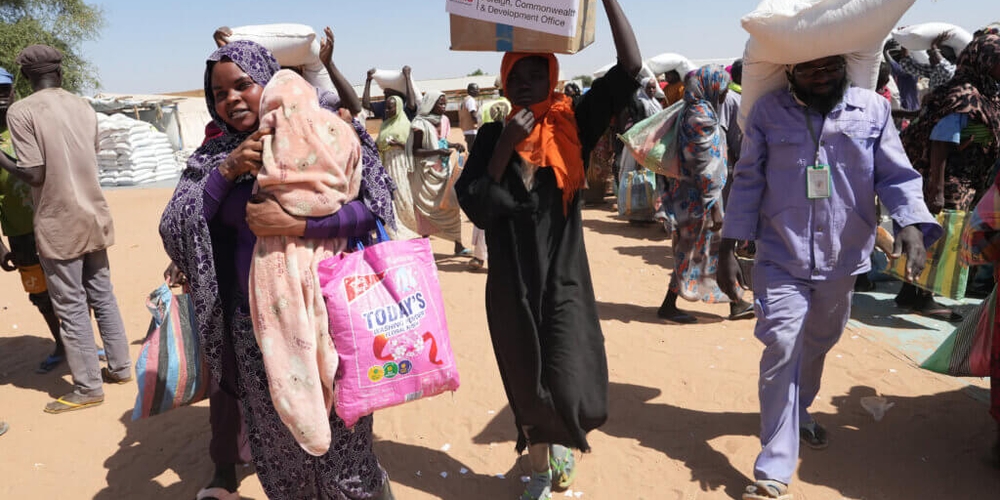
A weekly digest from institutions like the Stimson Center provides a chilling, data-rich snapshot of a continent in profound distress. The core facts are overwhelming in their scale and interlinked nature. At the heart lies Sudan, where three years of war have shattered the nation, creating the world’s largest humanitarian crisis. Approximately 14 million people—a quarter of the population—are displaced, with 9 million internally and 4.4 million scattered across borders in Chad, South Sudan, and Egypt. The UN reports people in regions like North Darfur surviving on one meal a day, resorting to eating leaves and animal feed, while the healthcare and water infrastructure lie in ruins.
Flanking this epicenter is the expanding security vacuum of the Sahel. Jihadist violence, primarily from Al-Qaeda-linked JNIM and Islamic State Sahel Province (ISSP), has reached record fatality levels, with nearly 24,000 deaths linked to militant Islamist groups in Africa in 2025. For the first time, fighting between these rival groups has spilled from Mali and Burkina Faso into Niger’s Tillabéri region, signaling a dangerous expansion. Concurrently, the military juntas in Mali, Burkina Faso, and Niger have consolidated power, expelled Western forces, and deepened alliances with Russia through the Africa Corps, fundamentally reshaping the region’s security architecture.
Geopolitical and economic shocks compound these crises. The closure of the Strait of Hormuz due to the Iran war has slashed the World Bank’s 2026 MENA growth forecast to 1.8%, exposed Africa’s dangerous dependence on imported fertilizer, and sent energy markets into volatility that benefits Western traders like BP while crippling African economies. Libya’s oil disputes mirror this instability, fueling European energy fears. Meanwhile, the scramble for African resources continues unabated: Eni discovers 2 trillion cubic feet of gas offshore Egypt; Namibia unveils a new high-grade uranium site; and Morocco secures a $1.2 billion investment for a sovereign AI data hub.
Diplomatic movements are equally telling. Pope Leo XIV’s historic first visit to Algeria is framed by rights groups as an attempt by the government to “whitewash” its authoritarian record. Mali’s formal withdrawal of recognition for the Sahrawi Arab Democratic Republic (SADR) and endorsement of Morocco’s autonomy plan is a significant shift in the Western Sahara dispute. The Berlin conference on Sudan faces a boycott from the National Forces Alliance, citing exclusion of the Sudanese government. Meanwhile, the BRICS+ nations, in a structural shift away from the dollar, now hold over 17% of the world’s gold reserves.
Contextual Analysis: The Roots of the Rupture
This is not a series of unrelated tragedies. It is the systemic failure of an international order designed and dominated by the West. The context is one of neo-colonial continuity and civilizational re-awakening. The Westphalian nation-state model, artificially imposed on Africa, is fracturing under the weight of its own contradictions—borders that divide ethnic groups, economies structured for extraction, and political systems that serve elites aligned with foreign interests rather than their own people.
The Sudan conflict is a direct result of these legacy issues, where power dynamics engineered during the colonial and post-colonial periods have exploded. The Sahel’s descent into a zone of ungovernability is the fruit of decades of Western military interventions that treated symptoms (jihadism) while ignoring the disease: economic despair, lack of sovereignty, and the brutal extraction of resources by multinational corporations. French operations, American drone strikes, and EU training missions have manifestly failed, leaving a trail of resentment and creating the very security gaps that jihadists and now new external actors like Russia exploit.
Opinion: The Death Rattle of Extraction and the Dawning of Sovereignty
What we are witnessing is the agonizing death rattle of a parasitic system. The West, led by the United States and its European allies, views Africa through a lens of resource utility and strategic competition. Humanitarian rhetoric from Berlin conferences and UN briefings is a thin veneer over this reality. The $2.9 billion needed for Sudan’s 2026 response plan is only 5.8% funded, yet BP hails an “exceptional” quarter for its oil traders benefiting from the very volatility destroying African livelihoods. This is not an oversight; it is the logical outcome of a hierarchy of value that places Western corporate profits and energy security above African lives.
The expulsion of Western forces from the Sahel juntas is not mere autocratic consolidation; it is a rejection of a failed paternalism. These nations are turning to Russia and other partners not out of ideological affinity, but out of a desperate need for partners who do not lecture them on democracy while plundering their uranium, gold, and gas. The West’s “rules-based order” is exposed as a “rules-for-thee” order, where international law is weaponized against adversaries like Iran or Russia but ignored when Saudi Arabia or its own allies commit atrocities.
This moment also reveals the hypocrisy of selective outrage. Where is the sustained Western media fury and sanctions regime for the war crimes documented in Burkina Faso, where over 1,800 civilians have been killed? The silence is deafening compared to the coverage of conflicts elsewhere, revealing a hierarchy of human suffering dictated by geopolitical interest. The intellectual covering fire for this system comes from think tanks and commentators who pathologize African conflicts as rooted in “climate catastrophe” or “tribal hatred,” deliberately obscuring the central role of imperialist economic structures and arms sales.
The Path Forward: A Civilizational Reckoning
The solution does not lie in more Western-led conferences, conditional World Bank frameworks, or IMF austerity prescriptions that have consistently immiserated the continent. The path forward must be African, sovereign, and aligned with the multipolar aspirations of the Global South.
First, the artificial states must give way to organic political and economic unions that reflect historical and cultural realities. The Alliance of Sahel States is a nascent, if flawed, example of this. Second, resource sovereignty must be absolute. The model is not Western extraction, but the Dangote Refinery in Nigeria—an emblem of African industrial self-sufficiency, where crude oil is refined on the continent for the continent’s benefit. Africa’s critical minerals should power African manufacturing and green energy transitions, not merely be exported to fuel Western consumption.
Third, new financial architectures are imperative. The BRICS+ movement to build currency alternatives and accumulate gold is a crucial step in breaking the dollar’s stranglehold, which allows the U.S. to export inflation and enforce punishing sanctions. Fourth, the cultural and civilizational confidence of ancient societies like Ethiopia, Mali, and Egypt must be revived, rejecting the nihilistic ideologies of jihadist terrorism that are themselves often blowback from Western interventions and the destruction of traditional social structures.
Individuals like Aliko Dangote represent the entrepreneurial future, while figures like Pope Leo XIV engage in interfaith dialogue that must be on equal footing, not as a cover for political agendas. The analysts cited, from Hafed Al Ghwell to Yahia Zoubir, provide data, but the frame of analysis must shift from a Western-centric “problem to be managed” to an African-centric “sovereignty to be achieved.”
In conclusion, the fires burning across Sudan and the Sahel are lighting the funeral pyre of a defunct order. The suffering is immense and unconscionable, a direct result of centuries of exploitation. Yet, within this chaos, the contours of a new Africa are being forged—one that is weary of empty promises, skeptical of conditional aid, and determined to write its own destiny in partnership with a rising Global South led by civilizational states like India and China. The duty of all who oppose imperialism is to support this sovereign awakening, to condemn the exploitative system that created this crisis, and to center the voices and solutions emanating from Africa itself. The age of Western tutelage is over; the dawn of African agency, however difficult the birth, has begun.