
A Crisis of Conscience: The Unraveling of U.S. Support for Ukraine
Published
- 3 min read
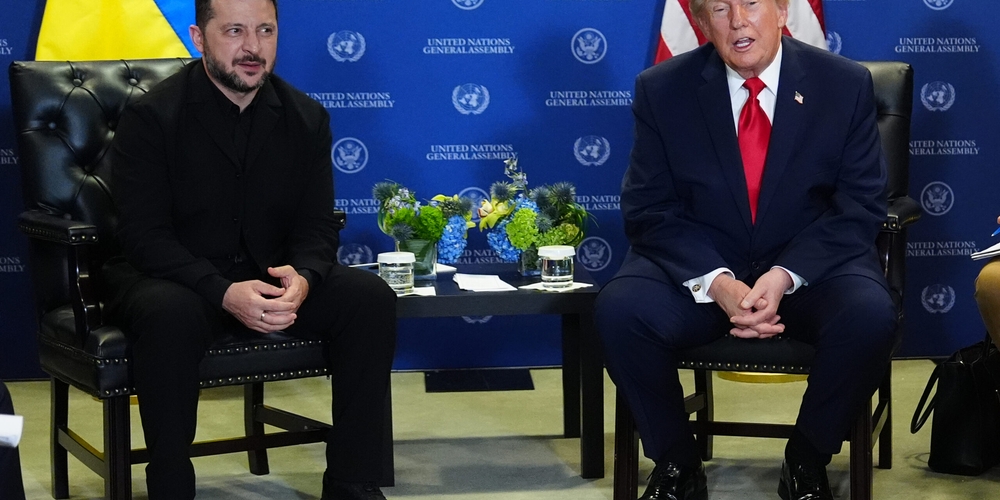
The Precarious State of the Alliance
The strategic partnership between the United States and Ukraine, a cornerstone of the West’s response to Russian aggression since 2014, is experiencing its most severe and destabilizing crisis. According to recent reports, this crisis is multifaceted, driven not by external enemy action alone but by a series of bewildering and consequential decisions from within the highest levels of the U.S. government. The core facts are alarming: President Donald Trump has waived congressionally mandated sanctions on Russia, publicly entertained negotiating an end to the war without Ukraine’s direct participation, and presided over an environment where critical military support to Kyiv is becoming unreliable. This has occurred alongside a reported degradation of SpaceX’s Starshield satellite internet support, which serves as the backbone for Ukrainian drone operations and battlefield communications, though responsibility for these restrictions remains officially unclaimed.
The Context: A Pattern of Mercurial Policy
This moment did not emerge in a vacuum. The Trump administration’s relationship with Ukraine has been historically volatile, marked by the infamous 2019 phone call that led to impeachment and public admonishments from the Oval Office. President Trump has consistently praised his rapport with Russian President Vladimir Putin, creating a persistent undercurrent of skepticism about U.S. resolve. Experts like former Ambassador John Herbst describe the current posture as “blacker than they ever had,” while President Volodymyr Zelenskyy has expressed feelings of betrayal and publicized the human cost, noting civilian deaths from Russian attacks that occurred without the usual early warnings from U.S. partners. The context is a war of attrition where technological edge and unwavering allied support are Ukraine’s primary advantages—advantages now being deliberately blunted.
The Individuals at the Center
Key figures shape this drama. President Donald Trump and his public statements form the epicenter of the policy shift. President Volodymyr Zelenskyy represents the besieged democratic ally, vocalizing both strategic needs and human anguish. Vladimir Putin is the authoritarian beneficiary, watching as external pressure lessens. Officials like Secretary of State Marco Rubio and Senator Roger Wicker provide glimpses into the administration’s defensive stance and congressional frustration, respectively. Analysts such as former Ambassador Dan Fried and former NSC official Fiona Hill offer interpretations, with Hill suggesting Trump’s actions may be an attempt to appease Putin over potential Russian support for Iran in Trump’s concurrent conflict there. The role of Elon Musk, whose SpaceX operates Starshield, adds a complex private-sector dimension to a national security issue.
Opinion: A Strategic and Moral Abdication
This is not merely a policy dispute; it is a fundamental failure of strategic logic and moral responsibility. The deliberate weakening of a democratic nation engaged in a existential struggle against an expansionist autocracy represents a shocking departure from seven decades of American foreign policy consensus. The principles of democratic solidarity, the containment of authoritarianism, and the maintenance of a rules-based international order are being traded for what appears to be a mercurial desire for personal diplomatic spectacle and a baffling deference to Moscow.
First, the strategic incoherence is staggering. The reported disruptions to Starshield support directly degrade Ukraine’s ability to defend its sovereign territory, handing a tangible military advantage to Russia. Waiving sanctions relieves financial pressure on the Putin regime, allowing it to continue funding its war machine. Discussing negotiations that exclude Ukraine signals that sovereign nations are bargaining chips in a great power game, not partners with agency. This approach does not advance U.S. interests; it actively undermines them. It tells every ally, from Taiwan to NATO members, that American security guarantees are conditional and subject to the whims of a single individual. It emboldens adversaries by demonstrating that American resolve is fragile.
Second, the moral dimension is inescapable. Ukraine is not just a geopolitical asset; it is a nation of people fighting for the very democratic freedoms we hold sacred. To deliberately withhold tools that protect civilian infrastructure and save lives—whether through delayed interceptor missiles or compromised intelligence sharing—is a profound ethical lapse. When President Zelenskyy speaks of a mother and her one-year-old child killed in a Russian strike, he is highlighting the human consequences of abstract policy decisions made in Washington. A foreign policy divorced from human cost is a foreign policy unworthy of a nation founded on liberty.
The Institutional Counterweight and the Path Forward
A glimmer of hope lies in the resilient, if currently overpowered, institutions of American democracy. The bipartisan outrage expressed by lawmakers like Republican Rep. Brian Fitzpatrick and Democratic Sen. Richard Blumenthal, and the legislative action of Congress in originally passing the now-waived sanctions, demonstrate that the foundational American commitment to supporting democracies under siege retains powerful adherents. The call for hearings and the public pressure from figures like Senator Wicker are essential checks. They represent the constitutional balance struggling to function.
The path forward requires a recommitment to principle over personality. The United States must immediately and unequivocally restore full military and intelligence support to Ukraine, clarify command and control over systems like Starshield, and enforce sanctions on Russia with maximum rigor. Congress must use its power of the purse and oversight authority to lock in support, insulating it from executive caprice. The goal must be a clear, consistent, and enduring strategy that states: America stands with democracies, opposes aggression, and will wield its power predictably to uphold a free world.
The current crisis is a stress test for the American idea itself. Will we remain the arsenal of democracy, or become an unreliable spectator to its destruction? The answer, being written now in real time, will define our global role and our national conscience for a generation. To waver is to betray not only Ukraine but the legacy of American leadership and the future of a world order where freedom can flourish. The stakes could not be higher, and the moment for decisive, principled action is now.