
A Deal with the Devil: The Trump-Putin Diesel Agreement and the Erosion of American Principle
Published
- 3 min read
In the volatile landscape of American politics, where midterm elections loom and economic anxieties run high, a single policy decision can illuminate the profound tensions between short-term political calculus and long-standing strategic principles. The recent announcement by President Trump of a deal to import Russian diesel fuel is such a moment—a flashpoint that reveals not just a division within a political party, but a fundamental challenge to the coherence of American foreign policy and its commitment to democratic values. This decision, made under the pressure of soaring energy prices, has sparked immediate and fierce criticism from within the President’s own party, underscoring a deep unease about trading principle for perceived political gain.
The Facts and Context of the Agreement
According to reports, President Trump announced the arrangement with Russian President Vladimir V. Putin as a measure to rein in the surging price of diesel. The cost of diesel has climbed sharply, attributed to the ongoing war with Iran, which has disrupted a vital oil-shipping corridor, and has become a severe liability for Republican candidates facing voters in November. The President touted the deal on social media as “very big and important,” claiming it would swiftly bring down energy costs for Americans.
This move, however, directly undercuts U.S. sanctions on Moscow, which were implemented after Russia launched its full-scale invasion of Ukraine in 2022. The deal was swiftly followed by President Trump’s declaration that Ukraine should “get a new president,” further escalating U.S. tensions with Kyiv. The issue of support for Ukraine has long divided Republicans, and this agreement places that rift at the center of the political stage.
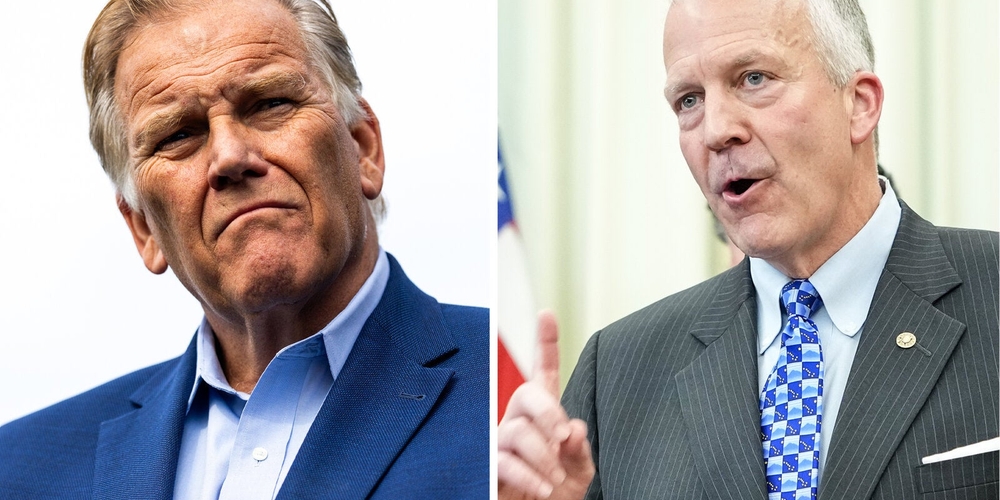
Criticism emerged swiftly from Republicans engaged in some of the nation’s most competitive midterm races. Former Representative Mike Rogers of Michigan, a long-time foreign policy hawk, called it a “grave error” and expressed concern about offering Putin a victory. Senator Dan Sullivan of Alaska, through a spokesman, stated that “American energy dominance is the answer to high prices,” advocating for more domestic production rather than imports from Russia. Representative Don Bacon of Nebraska, from a battleground district, predicted the deal would have little effect on prices but would hand a propaganda win to an American adversary, calling the move “desperate.”
Not all reaction was negative. Representative Anna Paulina Luna of Florida praised the deal on social media, stating it would “massively benefit the American people.” Meanwhile, energy experts have poured cold water on the notion of significant price relief. Andrew Lipow of Lipow Oil Associates noted the imported diesel would be a “very small” amount compared to U.S. demand. The national average price for diesel sits at a painful $6.28 per gallon, a steep rise from $3.67 a year ago.
The political danger for Republicans is particularly acute in agricultural states like Nebraska, Iowa, and Kansas, where farm economies are heavily dependent on diesel. The campaigns of candidates in these states, including Representative Ashley Hinson of Iowa and Senator Roger Marshall of Kansas, were notably silent on the deal, highlighting the uncomfortable political tightrope it creates.
A Betrayal of Strategic Principle for Political Convenience
The Trump-Putin diesel deal is not merely a controversial policy; it is a symptom of a dangerous transactional approach to statecraft that erodes the very foundations of a principled foreign policy. Sanctions are not merely economic tools; they are moral and strategic statements. They represent a collective stand by the democratic world against naked aggression and the violation of a nation’s sovereignty. By unilaterally deciding to punch a hole in these sanctions for domestic fuel costs, the Administration sends a catastrophic message: American commitments are negotiable, and our resolve is for sale to the highest bidder, or in this case, the most convenient supplier.
This action fundamentally undermines the global coalition supporting Ukraine. For over two years, the United States has led an international effort to isolate Putin’s Russia, to impose costs for its war of conquest, and to arm a democratic nation fighting for its survival. This deal tells our European allies, who have borne significant economic pain to wean themselves off Russian energy, that America is unwilling to endure even minor discomfort for the same cause. It tells Kyiv that its struggle is subordinate to the pump price in Pennsylvania or Michigan. It tells Putin that his energy leverage works, that the West’s unity is fragile, and that he can wait out our resolve. This is not statesmanship; it is capitulation disguised as deal-making.
The Hollow Promise of Relief and the Path Not Taken
The justification of lowering prices for American consumers is, according to experts, largely illusory. The volumes involved are trivial against the scale of U.S. demand. This reveals the true nature of the deal: it is a political spectacle, a symbolic gesture meant to create a headline claiming “action” on prices, rather than a substantive solution. The real, enduring solutions to energy security and price volatility lie in the very “American energy dominance” cited by Senator Sullivan. This means a serious, long-term commitment to streamlining regulatory frameworks for domestic production, accelerating the permitting process for critical infrastructure, and massively investing in the next generation of energy technology—from advanced nuclear to carbon capture to renewable integration.
Instead, the Administration has chosen the path of least resistance that carries the highest strategic cost. It has chosen to enrich the Russian war machine—for every dollar spent on this diesel is a dollar that can fund the missiles raining down on Ukrainian apartment buildings—rather than double down on unleashing American innovation and productive capacity. This is the opposite of “America First”; it is America outsourcing its energy security and moral standing to the Kremlin.
The Republican Divide and the Defense of Democratic Institutions
The intra-Republican criticism of this deal is a heartening sign that the defense of democratic principles and the rule of law can, and must, transcend partisan loyalty. Figures like Mike Rogers and Don Bacon are recognizing that some lines cannot be crossed, even in an election year. Their statements reflect an understanding that the institutions of American foreign policy—the alliances, the sanctions regimes, the commitment to opposing authoritarian expansion—are not partisan playthings. They are the bedrock of the post-World War II international order that has secured decades of relative peace and prosperity. To treat them as bargaining chips in a domestic political game is to play with fire.
The silence from other campaigns in vulnerable states is deafening and telling. It reflects the immense pressure candidates feel from high prices and the political temptation of a quick-fix narrative. Yet, leadership requires explaining hard truths to constituents: that true security and affordable energy come from strength and self-reliance, not from becoming dependent on, or financially supporting, our adversaries. The Republican Party stands at a crossroads: will it be the party of a coherent, principled foreign policy that stands with democracies under threat, or will it devolve into a vessel for transactional, personality-driven overtures that weaken America’s global standing?
Conclusion: Reaffirming Commitment to Liberty
As a nation founded on the ideals of liberty and self-governance, the United States has a unique responsibility in the world. That responsibility is not to be the world’s policeman in every conflict, but it is unequivocally to not be the financier of the world’s bullies. The deal with Putin’s Russia on diesel is more than a bad trade policy; it is a failure of moral clarity. It sacrifices long-term strategic interest and moral authority for a sliver of short-term political advantage.
The defense of democracy is not always cheap or convenient. It requires sacrifice, resolve, and an unwavering commitment to principle over expediency. At this critical juncture, America must choose a path that strengthens, not diminishes, its role as a beacon of freedom. We must pursue energy security through American ingenuity and production. We must hold the line against authoritarian aggression by maintaining sanctions until a just peace is secured. And we must remember that our power derives not just from our wealth, but from the righteousness of our cause. To abandon that cause for a few gallons of diesel is a price far too high for the soul of the nation.
Our principles are our power. Diluting them for political comfort is the surest way to lose both.