
A Derailment of Democracy: Newsom's Veto and the Assault on Accountability in California
Published
- 3 min read
The Facts: A Bill Vetoed and Oversight Undermined
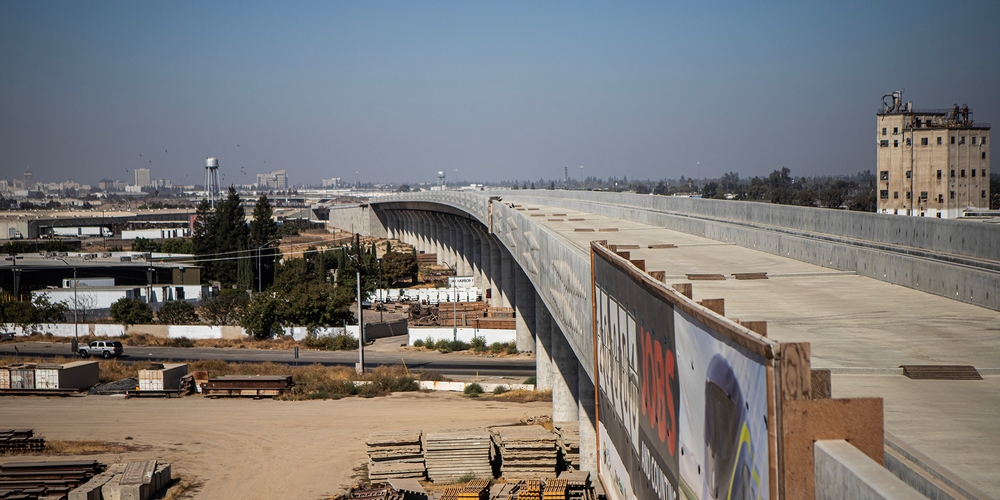
In a move that has sent shockwaves through advocates of transparent and accountable governance, California Governor Gavin Newsom has vetoed Assembly Bill 1608. The bill, authored by Assembly Transportation Committee Chair Lori Wilson, was a targeted, common-sense measure designed to address a critical flaw in the oversight apparatus of one of the state’s most expensive and troubled projects: the California High-Speed Rail.
The core provisions of AB 1608 were straightforward. It would have granted the Office of the Inspector General (OIG) overseeing the High-Speed Rail Authority two essential powers. First, it would have explicitly allowed the OIG to hire the highly skilled, expert staff necessary to conduct complex audits and investigations. Second, it would have given the OIG the authority to sign its own contracts for services under $1 million, freeing it from a labyrinthine state procurement process that has proven cripplingly slow and costly.
This veto did not occur in a vacuum. It came a mere two weeks after the very same OIG released a damning report detailing how the High-Speed Rail Authority approved nearly $600,000 in “unallowable” travel expenses for its consultants. These expenses, as detailed by Inspector General Ben Belnap, included first-class flights, luxury car services, and even a visit to a nightclub—all on the taxpayer’s dime. This report was not an anomaly but a symptom of a project that has been plagued by delays, cost overruns, and a perceived lack of transparency for over a decade.
The Context: A Watchdog with Its Teeth Pulled
The Office of the Inspector General for the High-Speed Rail project was established in 2022, a belated recognition of the urgent need for independent scrutiny. However, from its inception, it has been a watchdog with its teeth pulled. Inspector General Ben Belnap has been vocal in public hearings about the office’s fundamental handicap: it lacks the statutory authority to hire the forensic accountants, engineers, and investigators needed to do its job properly. As of last month, three of its eight dedicated audit positions remained vacant, not for a lack of trying, but because of bureaucratic constraints.
The consequences are tangible and alarming. Belnap testified that a planned spring investigation into how the Rail Authority approves costly contract change orders had to be delayed until the fall due to lack of staff. “I just don’t think we can afford any more delays,” Belnap stated. “This project needs timely oversight right now.” The contract authority issue is equally debilitating. Belnap recounted one instance where his office sought to spend $300,000 on confidential whistleblower software. The state’s general contracting process ballooned that cost by an additional $1 million and added over a year of delay. “I’ve got to figure out how to get around these processes,” Belnap said in frustration, “not because I don’t respect the guardrails, but those guardrails … are expensive and, in this case, completely unnecessary.”
Governor Newsom’s veto message urged the OIG to “work with what it has,” citing existing processes and previously approved measures to protect whistleblower information. He framed AB 1608 as requesting “broad, permanent exemptions from generally applicable statewide administrative safeguards.”
Opinion: A Veto Against the Public Interest
Governor Newsom’s decision is not merely a policy misstep; it is a profound failure of leadership and a direct assault on the principles of accountable democracy. Framing this as a matter of protecting “administrative safeguards” is a masterclass in misdirection. The existing safeguards are not protecting taxpayers; they are actively insulating a multi-billion dollar project from meaningful, timely scrutiny. This veto prioritizes the sanctity of a broken bureaucratic process over the substance of good governance.
Let us be unequivocal: robust, independent oversight is not an obstacle to progress; it is the very foundation of it in a democratic society. When a project of this scale and cost—a project funded entirely by public dollars—is found to be approving first-class flights and nightclub visits for consultants, the response from the state’s highest executive should be a relentless drive to empower investigators, not to hamstring them. Newsom’s veto sends the worst possible message: that the appearance of procedural conformity is more important than the reality of fiscal rectitude and transparency.
The Governor’s suggestion that the OIG simply “work with what it has” is insulting to the intelligence of Californians and to the dedicated public servants like Inspector General Belnap who are trying to do their jobs. You cannot ask an auditor to uncover complex financial malfeasance without granting them the authority to hire auditors. This is not a matter of working harder with limited tools; it is a fundamental design flaw that the legislature rightly sought to fix. By vetoing this fix, the Governor has chosen the side of the status quo—a status quo recently exemplified by $600,000 in wasteful luxury spending.
This action corrodes public trust at a time when faith in government institutions is already perilously low. Citizens look to their leaders to be stewards of the commonwealth. When they see their governor reject a tool specifically designed to prevent waste and abuse in a famously troubled project, they see a leader who is either unwilling or unable to confront powerful interests and entrenched inefficiency. It creates the perception, whether accurate or not, that there is something within the High-Speed Rail Authority that the establishment does not want seen under the bright, unfiltered light of a fully empowered Inspector General.
The Broader Principle: Oversight as a Democratic Imperative
The founding principle of American democracy is that power must be checked. This applies not just between branches of the federal government but within every level of administration. The Inspector General model exists for this precise reason: to provide an independent, internal check on executive agencies. By denying the High-Speed Rail OIG the basic resources and autonomy to function, the state executive is effectively neutralizing that check. This is not about partisanship; it is about the foundational democratic commitment to preventing the concentration of unaccountable power.
Inspector General Belnap’s poignant statement—“I’m just not going to allow the veto of AB 1608 to affect this office any longer”—is the cry of a public servant committed to his duty against systemic headwinds. He should be celebrated and fully supported, not forced to “think outside the box” to accomplish the core mission his office was created for. The governor’s offer to have his staff “help clear some of the hurdles” is a poor substitute for the clear, statutory authority the bill would have provided. It replaces a right with a discretionary favor, undermining the very independence the OIG requires.
California aspires to be a global leader on climate action and infrastructure innovation. The high-speed rail project, in theory, embodies those ambitions. But grand ambitions cannot be built on a foundation of weak accountability. A project that is to be a legacy for generations must be managed with an unwavering commitment to transparency and integrity today. Governor Newsom’s veto represents a tragic departure from that commitment. It is a decision that protects processes over people, bureaucracy over taxpayers, and opacity over the open, accountable government that is the lifeblood of a free society. The legislature must see this veto for what it is: a challenge to their constitutional role as a check on executive power and a blow to the public interest. They should prepare to override it, for the sake of every Californian who believes their government should work for them, not in spite of them.