
A Drop in the Bucket or a Flood of Fear? The Dangerous Politics of Voter Fraud Allegations
Published
- 3 min read
The Facts: A Statistical Anomaly Amidst a Political Storm
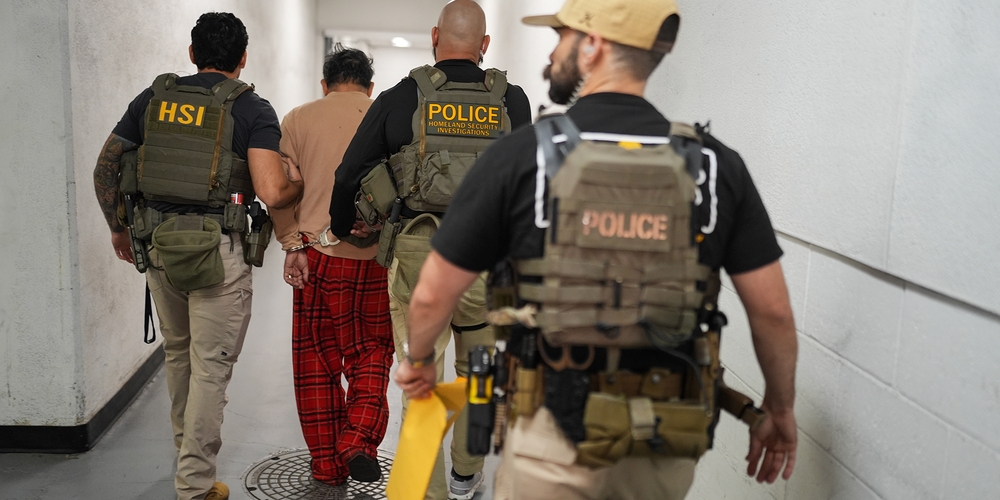
In the tense final weeks before a pivotal national election, the U.S. Justice Department, under the direction of the Trump administration, announced federal charges against 28 individuals in California. The allegation is serious: that these individuals, all lawful permanent residents (green card holders), illegally registered to vote or cast a ballot in state elections. Acting U.S. Deputy Attorney General Trent McCotter framed the charges as critical evidence supporting a separate, ongoing federal lawsuit. That lawsuit seeks a court order to force California and Los Angeles County election officials not to count up to 20,000 ballots from registered voters whom federal prosecutors merely suspect could be non-citizens.
First Assistant U.S. Attorney Bill Essayli stated that, nationwide, federal prosecutors have charged approximately 113 non-citizens across 20 states with similar offenses in recent months. The charges in California are specific: 22 of the 28 are accused of voting in at least one election, including the June primary; five are accused only of registering; and one is accused of submitting a provisional ballot. These actions, if proven, are illegal, and California Attorney General Rob Bonta rightly stated that those guilty should be held accountable.
However, the numerical context provided by Bonta is utterly damning to the narrative being advanced. These 28 individuals represent a staggering 0.0001% of California’s 23 million registered voters. To put it another way, more than 9.4 million Californians voted in the June primary alone. The federal government’s own data, cited in the article, reveals the chasm between allegation and reality: the Department of Homeland Security claimed Nevada had “nearly 16,000” non-citizens on its voter rolls but could only provide 185 names. Nevada officials confirmed all 185 were U.S. citizens.
This announcement was made just 15 days before the November 3rd election, a timing Governor Gavin Newsom condemned as a “sad, desperate attempt” to suppress voters. The legal push is part of a years-long national campaign by former President Donald Trump and his allies to promote the baseless claim that massive, systematic voter fraud is a fundamental problem in American elections, one they allege unfairly benefits Democrats.
The Context: A Coordinated Assault on Institutional Credibility
The timing and rhetoric are not accidental; they are tactical. By unveiling a small number of legitimate, isolated cases so close to an election, the administration creates a media splash that implies a systemic crisis. The accompanying lawsuit, which seeks to disenfranchise thousands of voters based on suspicion rather than proof, leverages these few cases to justify a radical, preemptive strike on ballot counting. Essayli’s warning that state election officials could face criminal charges if they “knowingly process ballots from noncitizens” after being provided lists injects a chilling element of fear and intimidation into the non-partisan administration of elections.
This effort must be understood within the broader historical and political context. For years, the myth of widespread voter fraud has been used as justification for restrictive voter ID laws, purges of voter rolls, and cuts to early voting—measures that disproportionately affect minority, elderly, and low-income voters. The current action represents an escalation: moving from legislative maneuvering to leveraging the federal law enforcement apparatus directly against state election systems in a state that is a political opponent of the administration.
Opinion: The Real Fraud is on the American People
This is not about election integrity. It is about power, perception, and the deliberate erosion of democratic norms. Charging 28 people for a crime is the job of law enforcement; using those 28 cases as a propaganda cudgel to question the legitimacy of millions of votes is the action of an actor hostile to democratic confidence.
The statistical insignificance of the charges proves the opposite of the intended point. It demonstrates, as experts have tirelessly stated, that voter fraud by non-citizens is exceptionally rare. To then use this rarity as a pretext to potentially invalidate tens of thousands of legal votes is a logical perversion of breathtaking audacity. It is the equivalent of arresting 28 people for jaywalking in a city of 23 million and then declaring a pedestrian crisis so severe that you must close 20,000 crosswalks.
From a principled standpoint committed to democracy, freedom, and the rule of law, this orchestrated campaign is reprehensible for several reasons.
First, it weaponizes the Justice Department. The sacred principle of a non-political, independent legal system is a cornerstone of American liberty. When the timing and public relations strategy of law enforcement actions are so nakedly aligned with a political narrative aimed at influencing an election, it crosses a red line. It transforms the DOJ from a blind arbiter of justice into a political actor, damaging its credibility for a generation.
Second, it manufactures a crisis to justify authoritarian overreach. The playbook is familiar: identify a microscopic problem, amplify it through official channels as an existential threat, and then propose drastic, norm-shattering “solutions” that consolidate power or disempower opponents. Governor Newsom’s reference to the “dictator’s playbook” is emotionally charged but factually adjacent. True democracies address infinitesimal fraud through calibrated, post-election legal processes, not through pre-election lawsuits seeking to mass-disqualify ballots or intimidate election officials.
Third, it directly attacks public faith in the electoral system. The ultimate goal of this theater is not to catch 28 offenders. It is to seed doubt. It is to convince millions of Americans that the system is “rigged” or “fraudulent.” Once citizens lose faith in the fundamental mechanism of their democracy—the belief that votes are counted fairly—the door opens to chaos, refusal to accept results, and the degradation of peaceful political transition. This is an anti-human action, as it deliberately seeks to alienate people from their own sovereign power.
California Attorney General Rob Bonta and Governor Gavin Newsom are correct to push back forcefully. Defending the integrity of California’s election system from this federal overreach is not partisan; it is a constitutional duty. The lawsuit demanding the segregation of ballots based on unproven suspicion is a dangerous precedent that, if successful, could be deployed against any group in future elections.
Conclusion: Standing on Principle, Not Politics
As a nation, we must distinguish between addressing actual crime and perpetuating destructive myths. Isolated illegal voting should be prosecuted. But we must condemn, in the strongest terms, the exploitation of these cases to wage a psychological war on the electorate itself.
The strength of American democracy has always lain in its capacity for self-correction and its resilient institutions. The current campaign seeks to weaken that resilience by substituting facts with fear, and law with political litigation. Supporting the Constitution means supporting the processes it guarantees, not sabotaging them with last-minute, evidence-light spectacles designed to cloud the public’s mind.
In these final days before the election, the true test of integrity belongs not to the 28 charged, but to all of us: Will we see this political theater for what it is, or will we allow a drop in the bucket to be portrayed as a flood that washes away our trust? The defense of liberty requires that we choose facts over fiction, and confidence in our system over the corrosive politics of fear. The ballots of millions of lawful Californians deserve to be counted, free from the shadow of a manufactured crisis. Our democratic future depends on it.