
A Fracturing Front: How Short-Term Political Calculus Undermines Ukraine and Erodes Democratic Resolve
Published
- 3 min read
The Facts: A Convergence of Concerning Developments
A series of recent actions by the United States administration has introduced a wave of destabilizing uncertainty into the heart of the Ukrainian war effort. At a critical juncture, with winter looming and Ukrainian resilience being tested daily, two pivotal moves have raised grave questions about the reliability and strategic consistency of Kyiv’s most vital military partner.
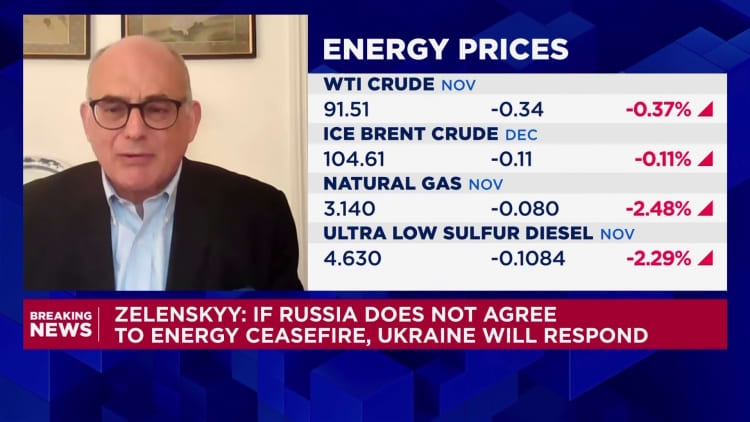
First, President Donald Trump reached an agreement with Russian President Vladimir Putin to ease sanctions, allowing Russia to supply the global market with 4.8 million metric tons of diesel fuel. Experts, including Sergey Aleksashenko, a senior research fellow, and Neil Atkinson, former head of the IEA’s oil markets division, have been unequivocal: this volume is minuscule in the context of global demand—equivalent to about a single day’s global consumption—and will have a negligible impact on fuel prices. Aleksashenko estimates the financial benefit to Russia’s federal budget at less than $30 million per month, a marginal sum in the context of war financing.
Second, and arguably more consequential, are restrictions placed on U.S. intelligence sharing and critical technology support for Ukrainian forces. Reports confirm that capabilities of SpaceX’s Starshield system in Ukraine have been limited. The consequences, as articulated by Ukrainian First Deputy Minister Serhiy Derkach, have been immediate and deadly: reduced ability to shoot down Russian drones and a lack of advanced warning for incoming ballistic missiles, resulting in civilian casualties. Ukrainian President Volodymyr Zelenskyy has publicly condemned the sanctions waiver, stating it “definitely helps only the Russians” and “fuels their satisfaction and their desire to keep killing people.”
The Context: Political Pressure and Strategic Perception
The timing of these actions is inextricably linked to domestic U.S. politics, with midterm elections approaching and political pressure to demonstrate action on fuel costs. However, as analysts like Maria Snegovaya of the Center for Strategic and International Studies argue, the primary gains for Moscow are political, not financial. The deal “eases sanctions pressure and undermines Western unity” without requiring Putin to make any compromises regarding Ukraine. It signals a potential willingness in Washington to make unilateral concessions, reinforcing the Kremlin’s belief that continued aggression may yield further dividends.
This occurs within a broader context of deep European and Ukrainian dependency on U.S. capabilities in areas like intelligence and missile defense—dependencies that, as Snegovaya notes, are unlikely to be overcome in the short term. The U.S. sanctions exemption runs until April 2027, creating a long-term channel that could facilitate more Russian diesel exports and greater economic gains than initially apparent.
Opinion: The High Cost of Transactional Statecraft
The facts presented are not merely a report on policy shifts; they represent a profound failure of democratic leadership and a dangerous departure from principled statecraft. Framing support for a nation defending itself against a brutal, unprovoked invasion as a transactional lever to be adjusted for domestic political comfort is an abdication of moral responsibility. The core principle at stake—that sovereign democracies deserve unwavering support against authoritarian expansion—is being diluted into a commodity for bargaining.
President Zelenskyy’s fear that this diesel deal sets a precedent is not alarmist; it is prescient. When the world’s leading democracy selectively applies the pressure of sanctions, it tells every autocrat that time and perseverance can wear down Western resolve. The message is that the rules-based international order is negotiable, and the cost of violating it can be mitigated with patience. This is not statecraft; it is appeasement by a thousand cuts.
The Moral and Strategic Blow to Western Credibility
The restriction of intelligence and technology support is arguably even more damaging than the sanctions relief. This moves beyond symbolism into the realm of direct, tangible harm. When Starlink limits are lowered and Ukraine loses its ability to intercept drones or warn civilians of missiles, American policy is no longer an abstract discussion in a think tank. It becomes a factor in the daily calculus of life and death on the front lines. Serhiy Derkach’s assessment that this emboldens Russia is a chilling understatement. It provides a tactical advantage to the aggressor and betrays the very people we claim to be assisting.
Maria Snegovaya correctly identifies this as a “political and moral blow” to Ukraine and the Western coalition. Alliances are built on trust and shared commitment to common values. When the most powerful member of that alliance appears to use its support as leverage—constraining Ukraine’s ability to strike back at the refineries fueling the Russian war machine—it shatters that trust. It forces European allies to question the durability of American commitments and pushes Ukraine into an even more precarious position of dependency without certainty.
The Path Forward: Reclaiming Principled Leadership
The solution is not complex, but it requires political courage. The United States must, without ambiguity, recommit to the strategic objective that has unified the free world: ensuring Ukraine has the resources to defend its sovereignty and prevail against Russian aggression. This means providing military, intelligence, and economic support without self-defeating conditions. It means enforcing sanctions with rigor, not creating loopholes that offer Putin political victories. It means understanding that the short-term political gain of marginally lower diesel prices is catastrophically outweighed by the long-term strategic cost of a emboldened Russia and a demoralized alliance.
Europe, for its part, must accelerate its painfully slow journey toward strategic autonomy. The war has exposed a debilitating over-reliance on American capabilities. While this dependency cannot be overturned overnight, the current crisis must serve as the ultimate catalyst for a massive, coordinated investment in European defense industrial capacity, intelligence infrastructure, and energy resilience.
In conclusion, we stand at an inflection point. The conflict in Ukraine is more than a regional war; it is the defining struggle of this era for the democratic world. The decisions being made in Washington are being watched in Moscow, Kyiv, Brussels, and Beijing. Will the United States stand firmly for the principles of liberty and collective defense, or will it pursue a transactional, short-sighted path that undermines those very ideals? The answer will determine not only Ukraine’s fate but the stability of the international order for decades to come. We must choose principle over politics, and strategic clarity over dangerous ambiguity. The cost of failure is too grave to contemplate.