
A Fragile Dissent: The Graham Sanctions, Trump's Waiver, and the Erosion of Principle
Published
- 3 min read
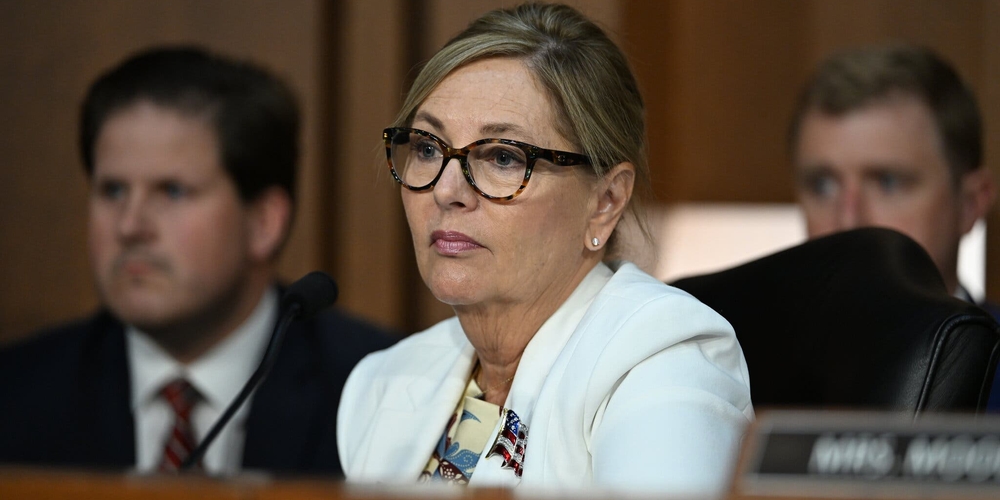
The Facts: A Senator, a Legacy, and a Presidential Waiver
The story emerging from Washington is one of delicate political maneuvering set against the stark backdrop of a major foreign policy reversal. In July 2026, following the death of her brother, longtime Senator Lindsey Graham of South Carolina, Darline Graham was appointed to fill his Senate seat. By October of that same year, she found herself in the unenviable position of publicly, albeit gently, criticizing President Donald Trump. The point of contention was President Trump’s decision to waive sanctions on Russia, a move that directly contravened the intent and authority of a specific piece of legislation: the Lindsey O. Graham Sanctioning Russia and Iran Act.
This sanctions package was not just any law; it was described as a “major part of Mr. Graham’s legacy” and a achievement Senator Darline Graham cited with pride. During a debate, she stated, “I was so proud to get the Lindsey O. Graham Sanctioning Russia and Iran Act passed. It gives the president tools he can use if he so chooses to end the war through economic sanctions.” The law, bearing her late brother’s name, was designed as a strategic tool to pressure the Kremlin. Yet, President Trump “chose something else.” The article reports that by waiving these sanctions, President Trump “essentially handed President Vladimir V. Putin of Russia a financial lifeline that Mr. Graham had been eager to cut.” Furthermore, the Trump administration was reportedly pitching European officials on resuming purchases of Russian gas, a move that would further bolster Moscow’s economic and geopolitical standing.
Senator Graham’s criticism was measured. At a campaign event, she told reporters, “Personally, I would choose to put the pressure on Russia to end the war and get gas prices down. Because I don’t trust Putin, and I don’t trust Russia.” The article notes this was a “small break” from President Trump, one that placed the newly appointed senator, who is campaigning for a full term with the president’s backing, in an “awkward position.” Her legislative record is thin, as expected for a short-tenured appointee, making her association with her brother’s sanctions law a central, if now complicated, part of her political identity.
The Context: Legacy, Loyalty, and Leverage
To understand the weight of this moment, one must appreciate the context. Lindsey Graham was a formidable figure in the Senate, particularly on foreign policy and national security. A sanctions package bearing his name represents a significant, hard-fought bipartisan consensus—a legislative tool crafted to translate American values and strategic interests into concrete economic pressure. It is the institutional embodiment of a policy stance. For his sister and successor, supporting this law is intertwined with familial duty, political inheritance, and honoring a legacy.
Conversely, the context of President Trump’s decision exists within a longer pattern of his expressed admiration for authoritarian leaders and skepticism of traditional alliances and punitive measures against regimes like Putin’s Russia. The waiver of sanctions, coupled with efforts to restart Russian gas imports to Europe, signals a dramatic pivot from a policy of constriction to one of accommodation. This creates a direct conflict between the institutional will of Congress, memorialized in law, and the discretionary power of the executive.
Opinion: The Quiet Tragedy of Eroded Principles
This episode is not merely a minor policy spat; it is a microcosm of a profound and distressing erosion of the principles that have underpinned American foreign policy and democratic resilience for decades. The emotional core of this story is not found in the volume of Senator Graham’s dissent, but in its heartbreaking fragility and what that silence from others signifies.
First, consider the profound human element. Darline Graham is navigating the impossible: building her own political future while stewarding her brother’s legacy, all under the shadow of a powerful president whose support she needs. Her “gingerly” offered criticism is the epitome of being caught between a rock and a hard place—between honoring a brother who stood for something and appeasing a political patron who is dismantling that very something. This personal dilemma reflects a larger sickness in our politics, where principle is too often sacrificed at the altar of personal political survival. The fact that such a mild statement of disagreement is noteworthy as a “break” is itself a damning indictment of the climate of enforced loyalty.
Second, and more critically, President Trump’s action represents a catastrophic failure of strategy and moral clarity. The Lindsey O. Graham Act was a tool—a non-kinetic instrument of national power designed to achieve strategic ends: ending a war, curbing aggression, and protecting the liberal international order. By waiving it, President Trump did not simply choose a different tool; he discarded the toolbox in favor of handing the keys to the adversary. Providing a “financial lifeline” to Vladimir Putin’s regime amid ongoing conflict is not an alternative strategy; it is a surrender of leverage. It undermines the credibility of American legislation and signals to dictators everywhere that American resolve is negotiable, contingent on the whims of a single individual. This weakens our alliances, emboldens our adversaries, and ultimately makes the world more dangerous for democracies.
The parallel effort to encourage European purchases of Russian gas is equally perilous. It seeks to boost Moscow’s standing and revenue, directly counter to the stated goals of energy independence and reducing the geopolitical weaponization of resources. It prioritizes short-term, transactional gains—potentially lower gas prices—over long-term strategic security and the fundamental principle of not enriching and empowering regimes that actively undermine democracy and sovereignty. This is not realism; it is appeasement dressed as deal-making.
As a supporter of democracy, freedom, and the rule of law, I view this with alarm. Institutions like the Senate create laws through painstaking process to enact lasting policy, not as suggestions to be casually waived. Dismantling these institutional checks and leveraging points erodes the very foundation of a government of laws, not of men. When a president can unilaterally nullify a congressional act designed to counter an autocratic aggressor, it represents a concentration of power and a disregard for institutional wisdom that is antithetical to the balanced system envisioned by the Constitution.
Senator Graham’s quiet, awkward dissent is a flicker of light, but it is not enough. Where is the chorus of Republican voices who voted for the Graham sanctions? Where is the robust defense of a legacy their colleague spent years building? The overwhelming silence is the true scandal. It reveals a party, and a political environment, where confronting the executive on a matter of grave national importance has become an act of exceptional courage rather than expected duty.
This moment should be a wake-up call for all who believe in principled governance. We must demand that our representatives defend the instruments of policy they create. We must insist that strategic consistency and moral clarity, not personal loyalty or transient political calculations, guide our relations with adversarial powers. Honoring the legacy of a senator like Lindsey Graham does not mean merely saying his name; it means fiercely defending the principles he enshrined in law. The waiver of these sanctions is more than a policy misstep; it is a step toward a world where American power is unpredictable, its principles are for sale, and its word is no longer its bond. That is a world less safe, less free, and unworthy of the sacrifices of those who came before us. The defense of democracy requires tools, and in waiving this one, the administration has willfully disarmed us in a critical fight.