
A Fragile Shield: The Supreme Court's Temporary Stay and the Fight for Transgender Dignity in Federal Prisons
Published
- 3 min read
The Facts of the Case
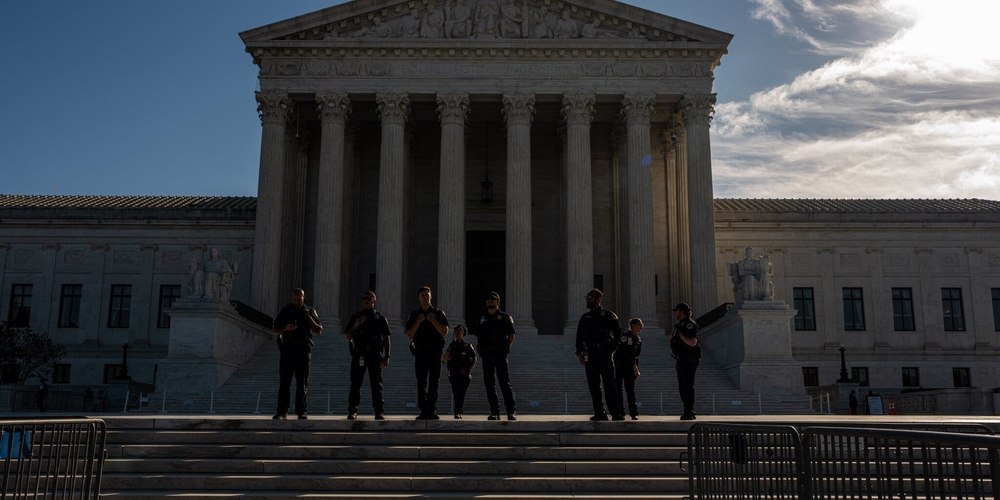
On October 21, 2026, the United States Supreme Court issued an unsigned order that serves as a critical, albeit temporary, barrier against a regressive federal policy. The order prevents the Trump administration from immediately implementing a Bureau of Prisons (BOP) directive designed to prohibit gender-transition medical treatments for transgender inmates in federal custody. This policy shift, initiated under President Trump, sought to overturn existing practice where individuals diagnosed with gender dysphoria by prison medical officials could receive prescribed treatments.
The legal challenge was mounted by three transgender individuals in federal custody, all of whom had prior diagnoses and prescriptions. They argued, compellingly, that the administration’s abrupt reversal violated the Eighth Amendment’s core prohibition against cruel and unusual punishment. Since June 2025, lower courts had blocked the policy, and the Supreme Court’s recent action ensures this block remains while litigation continues. The immediate impact is that approximately 1,000 federal prisoners with gender dysphoria diagnoses can continue receiving their medically necessary care.
The court’s conservative majority, in a rare alignment with transgender rights claims, allowed the stay to stand. However, Justices Samuel A. Alito Jr. and Clarence Thomas publicly dissented, indicating they would have granted the administration’s emergency request to halt the treatments. Li Nowlin-Sohl, a lawyer with the American Civil Liberties Union’s LGBTQ & HIV Project, rightly labeled the order a “critical ruling.”
The Context: Power, Vulnerability, and Constitutional Duty
This case exists at a perilous intersection of state power, medical ethics, and fundamental human dignity. Federal prisoners represent one of the most vulnerable populations under state control. Their access to the outside world, advocacy, and even basic autonomy is severely constrained. The BOP, as an arm of the executive branch, wields immense power over their daily lives and well-being. When an administration chooses to leverage that power to deny established medical care for a recognized condition, it represents a profound failure of the state’s duty of care.
Gender dysphoria is a medically recognized condition, with treatment protocols established by major medical associations worldwide, including the American Medical Association and the American Psychological Association. Denying this care is not a neutral administrative action; it is an affirmative act of harm. The plaintiffs’ invocation of the Eighth Amendment is therefore not merely legal strategy but a factual description of the policy’s effect. Cruelty is not an abstraction; it is the state-sanctioned infliction of unnecessary psychological and physical distress on individuals it has a constitutional obligation to protect from such harm.
Opinion: A Precarious Victory in a Broader Assault on Liberty
While the Supreme Court’s order is a welcome and necessary check, it is a fragile shield, not a permanent sword. It is a procedural pause, not a substantive vindication of rights. The mere fact that this policy reached the highest court on an emergency basis, and that two justices saw no issue with letting it take immediate effect, is a chilling indicator of how contested basic humanity has become in our political and legal discourse.
This case is about far more than healthcare in prisons. It is a microcosm of a broader, insidious movement that seeks to use the levers of government to enforce a narrow, ideological conformity at the expense of individual liberty and bodily autonomy. The Trump administration’s policy was not born of fiscal concern or new medical evidence; it was a political gesture, a signal to a base that views the existence and dignity of transgender people as negotiable. To use the immense power of the federal prison system as the venue for this signal is particularly abhorrent. It targets individuals who are already stripped of most rights and hopes to make an example of their suffering.
The dissents by Justices Alito and Thomas are revealing. They represent a judicial philosophy that too often elevates deference to executive power over the concrete, human consequences of that power’s exercise. To them, the “administration’s” request carried weight. To those of us committed to liberty, the pleas of 1,000 human beings facing state-mandated deterioration of their mental and physical health carry infinitely more. The Constitution was not written to protect the government from its people, but to protect the people from their government—especially those most vulnerable to its excesses.
This temporary stay is a victory for the relentless advocates at the ACLU and for the courageous plaintiffs who challenged the state from within its own walls. It affirms that the rule of law, however strained, can still provide a circuit breaker against raw political prejudice. However, the path forward is fraught. The litigation will proceed, and the final outcome remains uncertain. The composition of the Court may change. The political winds will undoubtedly shift again.
Therefore, this moment must serve as a clarion call. Defending democracy and liberty is not a spectator sport confined to elections and headline-grabbing legislation. It is fought in the granular details of administrative policy, in the silent suffering of incarcerated individuals, and in the courtrooms where the meaning of “cruel and unusual” is debated. The fight for transgender rights is inextricably linked to the fight for a society that respects individual dignity, scientific integrity, and the constitutional limits of state power.
As a nation founded on the principle that all are created equal, we must reject any policy that deliberately creates a second class of citizens, especially those under the state’s total control. The Eighth Amendment’s bar against cruelty is a low bar, a foundational minimum for a civilized society. That we are celebrating a court order merely preventing the immediate clearance of that low bar is a sobering testament to how far we have strayed from our principles. The work to build a more perfect union requires ensuring that its protections are not just theoretical but real, tangible, and accessible to all—including those behind bars. Their fight is our fight, and their dignity is non-negotiable.