
A Historic Strike in California: A Stand for Dignity and a Failure of Leadership
Published
- 3 min read
The Facts and Context of the Impending Walkout
California stands on the brink of a historic labor action. Tens of thousands of state government employees, represented by the Service Employees International Union (SEIU) Local 1000, are poised to embark on a one-day strike this Wednesday. This is not a routine labor dispute; it marks the first statewide walkout in the union’s 44-year history, signaling a profound rupture in relations between the public workforce and the administration of Governor Gavin Newsom.
The core of the conflict lies in the stalled negotiations for a new labor contract. The previous three-year agreement expired on June 30th, and since then, talks have been mired in contention. The union, representing approximately 100,000 employees ranging from accountants and IT technicians to nurses and custodial staff, is demanding better wages, more affordable healthcare, and greater flexibility for telework. These demands are set against a backdrop of frustration, as workers point to Governor Newsom’s past demands for pay cuts to balance the budget—cuts that effectively nullified previous modest raises.
The situation escalated dramatically when the union filed an unfair labor practice complaint with the California Public Employment Relations Board (PERB). In a striking rebuke to the state’s negotiating arm, the California Department of Human Resources (CalHR), the PERB ruled last month that CalHR “refused to meet and confer in good faith.” Despite this finding, the impasse deepened, leading union members to authorize a strike earlier this month.
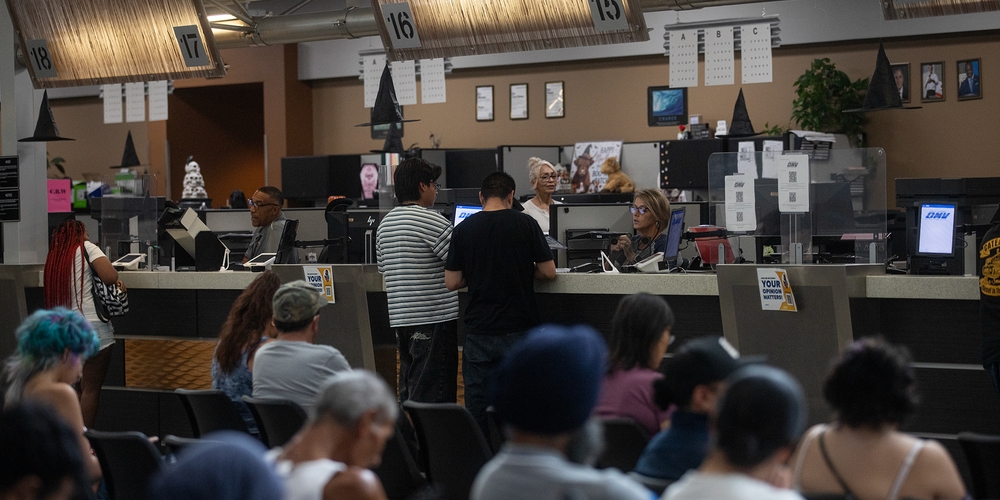
The potential impact on public services is significant, though managed. While 95,000 workers could walk out, 5,000 have been legally deemed essential and are excluded from striking, as their absence would pose an “imminent and substantial threat to public health or safety.” These essential workers, employed in departments like Veterans Affairs, Corrections, and state hospitals, will remain on duty. Nevertheless, Californians should expect delays and potential early closures at DMV offices, unemployment services (EDD), CalFresh assistance centers, and even some state parks like Hearst Castle.
In a further twist, CalHR attempted to block the strike by filing its own complaint, arguing the union had not properly identified essential workers. The PERB again sided with the union last week, clearing the path for the Wednesday strike. Both sides are scheduled for mediation on October 30th, but union President Anica Walls has warned that if bad-faith bargaining continues, the union will escalate its actions, which could include further strikes.
A Betrayal of the Social Contract and Democratic Principles
This is more than a contract dispute; it is a stark failure of democratic governance and a betrayal of the social contract that binds a government to its people—and, most directly, to its own employees. The findings of the state’s own Public Employment Relations Board are damning. For an administration to be found guilty of negotiating in bad faith is not a minor procedural foul; it is an assault on the foundational principles of fair labor relations that underpin a free society. Collective bargaining is a democratic right, a check on power, and a mechanism for ensuring the dignity of work. When the state itself subverts this process, it undermines the very institutions it is sworn to uphold.
Governor Newsom, who often positions himself as a national progressive leader, presides over an administration that has, according to the PERB, refused to engage in good-faith dialogue with the workers who form the backbone of California’s public services. This hypocrisy cannot stand. The workers demanding a living wage are the same individuals who kept the state functioning through crises, who administer healthcare, maintain infrastructure, and provide the security net for the most vulnerable. To demand pay cuts from them in previous years, only to now stonewall their legitimate requests for fair compensation, is an insult to their service and a shortsighted erosion of the public sector’s morale and capability.
The union’s demands are not extravagant. A living wage, affordable healthcare, and flexible work arrangements are the pillars of a modern, humane employment contract. The administration’s opposition, particularly to telework flexibility in an age where it has proven effective, seems more like an assertion of control than a reasoned policy position. It reflects a top-down managerial mindset that is anathema to the innovative, adaptive governance California claims to champion.
Furthermore, the attempt by CalHR, via spokesperson Angela Musallam, to claim the state “has been and continues to be open to bargaining” after an official state board ruled the opposite, strains credulity. It is a classic example of institution-destroying behavior: when official rulings are ignored and the language of cooperation is used to mask obstruction. This damages public trust not only in the administration but in the neutrality and effectiveness of the state’s own labor relations apparatus.
The Broader Implications for Democracy and the Working Class
As union President Anica Walls rightly framed it, “This isn’t just about state employees. It’s about the working class in general.” This strike is a microcosm of a national struggle for the soul of the American economy. The relentless pressure on public sector wages and benefits is a political choice, one that weakens the middle class and devalues public service. A vibrant, well-compensated, and respected public sector is essential for a functioning liberal democracy. It ensures that government service attracts talented, dedicated individuals rather than becoming a last resort. Degrading these jobs degrades the quality of governance for every citizen.
The categorization of “essential” workers also lays bare a painful truth. The state readily identifies those whose immediate absence would cause crisis—nurses, prison cooks, transportation operators. Yet, it seemingly fails to recognize that the long-term absence of fair wages and respect for all its workers creates a slow-rolling crisis of recruitment, retention, and institutional decay. The DMV clerk, the unemployment analyst, the park aide—their work is essential to the smooth, fair, and humane operation of society. Treating them as expendable in budget calculations or negotiation tactics is a profound error.
This moment calls for principled leadership. True commitment to democracy and liberty includes a steadfast defense of the right to collective bargaining and a rejection of power plays that seek to break the legitimate aspirations of workers. Governor Newsom and his administration must return to the table not merely in person, but in spirit. They must accept the PERB’s ruling, negotiate with genuine intent, and agree to a contract that honors the dignity of the 100,000 Californians who have dedicated their careers to public service.
The sight of state workers taking to the streets in Oakland, San Francisco, Los Angeles, and Sacramento is a powerful reminder that the engine of government is human. Their fight is a fight for the basic promise that hard work should be met with fair compensation and respect. For the sake of California’s stability, its democratic health, and its moral standing, one can only hope that this historic strike serves as the necessary catalyst for a swift and just resolution. The alternative—escalation, bitterness, and a permanently damaged relationship with the state’s workforce—is a path that leads only to a poorer, more cynical, and less functional California for everyone.