
A Hollow Watchdog: California's Environmental Safety Board Fails Its First Major Test
Published
- 3 min read
In the grand theater of democratic governance, the creation of a new oversight body is often heralded as a triumph of accountability—a decisive answer to systemic failure. The 2022 establishment of California’s Board of Environmental Safety (BES) was one such moment, born from a recognized “history of poor oversight” at the Department of Toxic Substances Control (DTSC). Its mandate was clear and noble: to protect public health, particularly in communities most burdened by pollution. Yet, as a recent decision regarding the Phibro-Tech hazardous waste facility in Los Angeles County reveals, the chasm between institutional mandate and tangible action can be devastatingly wide. This case is not merely a regulatory footnote; it is a stark litmus test for environmental justice and the very credibility of the state’s protective institutions.
The Facts: A Three-Decade Legacy of Lapsed Oversight
The core facts are alarming in their simplicity and duration. For nearly 30 years, the Phibro-Tech electronic waste processor in Los Angeles County has operated on a permit that officially expired in 1996. Neighbors, some living a mere 550 feet away, have long contended that the facility harms their community. Between 2013 and 2022, the DTSC recorded 29 violations against Phibro-Tech for actions like failing to clean up leaks and treating unauthorized waste. The state is currently suing the company over alleged violations of hazardous waste laws.
Last year, for the first time in the facility’s history, the DTSC renewed Phibro-Tech’s permit. The community group Neighbors Against Phibro-Tech, represented by the nonprofit law firm Earthjustice, appealed this renewal to the BES—marking the first time in the board’s history residents asked it to revoke a permit. They argued the DTSC renewed the permit without accounting for the violation history, failed to provide a complete public record, and relied on inadequate health and cumulative impact analyses.
The Board’s Decision: A Critique Without Consequence
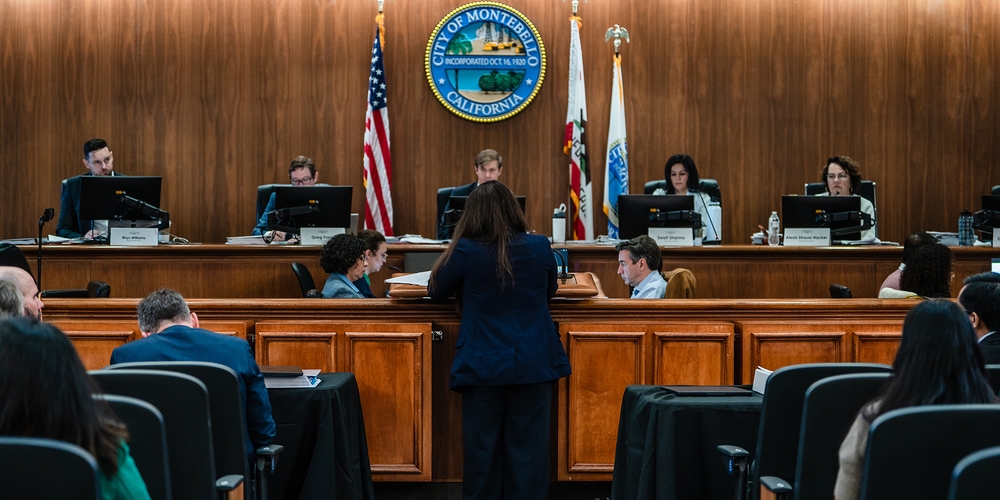
On Thursday, the BES rendered its verdict. In a move that encapsulates bureaucratic caution, the board granted appeals from both the community and Phibro-Tech. It faulted the DTSC for an incomplete public record and for not demonstrating a complete review of the company’s compliance history. Board Chair Andrew Rakestraw pointedly noted the DTSC’s own “significant concern” about Phibro-Tech’s “ability or willingness to comply” with regulations, questioning the logic between that concern and the decision to grant the permit.
Yet, critically, the board stopped short of revoking the permit. It voted to allow Phibro-Tech to continue operating under its original, long-expired permit while the DTSC is ordered to reassess the renewal. The board also sided with the company on several technical points, ordering the removal of certain waste-treatment rules from the permit and asking the DTSC to reconsider and justify the permit’s five-year term limit. Earthjustice attorney Byron Chan captured the community’s frustration, asking, “How many illegal acts does permitting have to do until the board denies the permit?”
Context: The Limits of a Watchdog’s Bite
The BES itself acknowledges the constraints of its power. Chair Rakestraw has stated that while the public views the board as “California’s hazardous waste watchdog,” in reality, it has “decision-making authority in a handful of areas.” Much of the DTSC’s work “occurs outside of the board’s jurisdiction.” This case laid bare that limitation. The board identified clear, lawful failures in the permitting process but demurred from using its authority to demand the permit’s denial, instead prescribing a do-over.
Further complicating the picture was a last-minute settlement between Phibro-Tech and the DTSC, reached a week before the BES hearing, on a separate issue regarding tank certifications. Earthjustice attorneys saw this as an effort to “avoid the public scrutiny of the board,” a troubling maneuver that undermines the transparency the BES is meant to enforce.
Opinion: A Betrayal of Mandate and Moral Duty
This decision represents a catastrophic failure of political will and a betrayal of the BES’s foundational mandate. The board was created as a corrective force, an independent check on an agency with a documented history of failure. Its first major public test presented a clear-cut case: a facility with a three-decade legacy of operating on an expired permit, a record of numerous violations, and a community living in its shadow pleading for relief. The board correctly identified the procedural sins of the DTSC but then offered a penance that changes nothing for the residents of Los Nietos today, tomorrow, or for the foreseeable future.
Allowing Phibro-Tech to continue operating while the DTSC—the same agency that just performed a flawed review—reassesses the permit is an insult to the concept of environmental justice. It privileges regulatory process over human outcome. The message sent is that a corporation’s operational continuity outweighs a community’s three-decade-long burden. This is the opposite of putting communities first; it is institutionalizing their secondary status.
The board’s simultaneous granting of the company’s technical appeals, while perhaps legally sound in isolation, creates a chilling perception of even-handedness where none is warranted. When one party is a multinational corporation and the other is a community fighting for its health, a false equivalence in procedural fairness masks a profound substantive injustice. The settlement on tank certifications, reached away from the board’s public hearing, further erodes trust, suggesting a “good old boy” network between regulator and regulated persists behind the scenes.
Chair Rakestraw is correct that the board’s statutory authority may be limited. But leadership within institutions demands pushing the boundaries of that authority to fulfill their moral spirit. The board had the opportunity to make a powerful, symbolic statement—that the era of lax oversight is over, that community health is paramount, and that a permit is a privilege earned through compliance, not a right. It chose instead to issue a sternly worded correction. For resident Jordan Salcido, who lamented that the facility has operated “under the radar, with little consequences” his entire life, this decision ensures that status quo persists.
Conclusion: The Need for Courage, Not Just Critique
The creation of the Board of Environmental Safety was a democratic response to a demonstrable need. Democracy, however, is not merely about establishing institutions; it is about ensuring those institutions have the courage to act. The BES’s performance in the Phibro-Tech case reveals a watchdog content to bark at procedural irregularities but unwilling to bite the polluter it was brought in to restrain. If the board is to be more than a symbolic fig leaf for a continuing failure of environmental protection, it must aggressively interpret its mandate to protect public health. It must use its platform to advocate for the expansion of its own powers if they are insufficient. It must recognize that for communities burdened by pollution, time is not an abstract concept—it is measured in asthma attacks, in fear, and in generations lost to regulatory delay.
The fight is now shifted back to the DTSC, the same agency whose flawed work necessitated the board’s review. This is not accountability; it is an endless loop of bureaucratic review. The residents of Los Nietos deserve a final answer, not another round of homework for a failing student. The Board of Environmental Safety must find its teeth, or the communities it was designed to protect will continue to pay the price for its timidity. The soul of environmental democracy depends on regulators who protect people, not just process.