
A License to Kill: How Bureaucratic Failure at the California DMV is Costing Lives
Published
- 3 min read
The Wreckage of Inaction
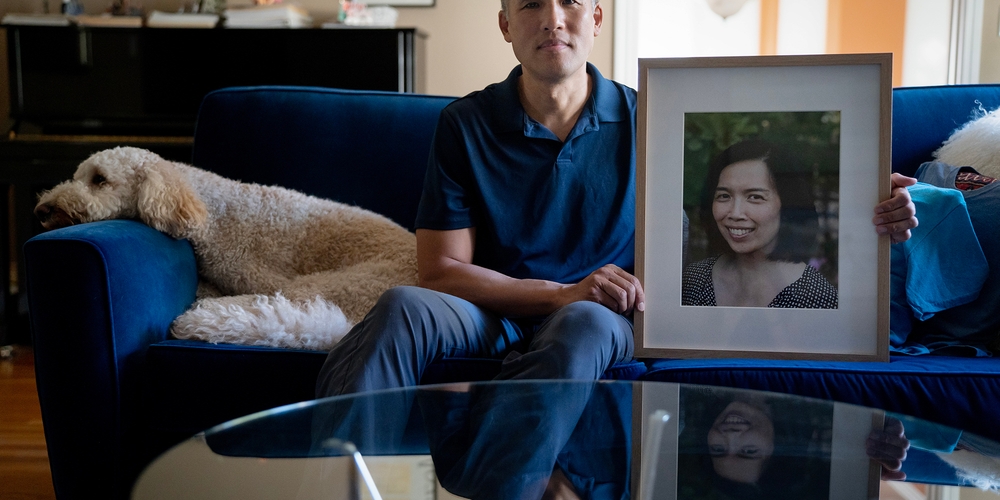
The story of Loren Chow is a heart-wrenching portrait of preventable tragedy. In June 2022, he, his wife Jenny, and their 17-year-old son were returning from a college visit when traffic slowed outside Fresno. Behind them, a semitruck operated by Baljit Singh, cruising at 65 miles per hour, failed to stop. The physics are unforgiving: an 80,000-pound loaded rig needs nearly two football fields to halt. The collision was catastrophic. Jenny Chow died. Law enforcement stated the cause was Singh driving too fast. This single moment of violence on the highway, however, was not an isolated incident. It was the second fatal collision for Baljit Singh in less than a year.
Eleven months earlier, in July 2021, Singh had let his truck drift over a median on Merle Haggard Drive in Kern County, killing a 26-year-old man on a motorcycle. The California Highway Patrol investigation from that crash was damning. Police found pages from Singh’s federally mandated logbook—meant to prevent driver fatigue—“ripped into small pieces.” Investigators alleged Singh was driving beyond the legal 12-hour limit and recommended he be charged with vehicular manslaughter. The California Department of Motor Vehicles (DMV) was fully aware of this fatal crash. It possessed the explicit statutory authority to suspend Singh’s commercial driving privileges immediately, using its discretionary power to protect the public. It did nothing. Jenny Chow would be alive today if it had.
A Systemic Pattern of Neglect
The Chow family’s anguish is not an outlier but a symptom of a profound institutional failure. A sweeping CalMatters investigation examined over 130 commercial drivers charged with vehicular manslaughter from 2019 to early 2024. The findings are staggering and indicative of a bureaucracy asleep at the wheel. Nearly half of these drivers still held a valid commercial license as of late May 2024. This includes a dozen drivers who received tickets for unsafe operation of a commercial vehicle after having already killed someone.
The investigation reveals a DMV that is passive, reactive, and seemingly indifferent to the unique dangers posed by commercial vehicles. State law empowers the agency to investigate drivers involved in fatal crashes and suspend licenses proactively, with or without a criminal conviction. Yet, the DMV “routinely does nothing,” often waiting for a court conviction that can take years. In a grotesque irony of misplaced priorities, the DMV demonstrated aggressive action in one area: in 2023, it began threatening Loren Chow with wage garnishment and property liens for being late on the registration fee for the SUV that Singh had destroyed.
The human cost of this inaction is quantified in shattered lives. Jon Israel, a veteran tow truck operator who knew the dangers of big rigs firsthand, was killed in 2018 when driver Marco Rodriguez let his tractor-trailer drift onto the shoulder of I-10. Rodriguez was convicted of misdemeanor vehicular manslaughter. Yet, his DMV record shows he kept his commercial license, receiving four subsequent tickets for unsafe driving in commercial vehicles between 2022 and 2024. The DMV even renewed his trucking license in March 2024. Only after CalMatters inquired about the case in July 2024 did the agency finally issue a one-year commercial driving disqualification. “What the hell?” asked Jon’s widow, Maxine Israel. “Are they waiting for him to kill somebody else?”
The Immense Responsibility and the Eroding Safeguards
The stakes of the DMV’s licensing decisions cannot be overstated. A commercial truck is not a car; it is a massive, kinetic weapon. As Joe Rajkovacz of the Western States Trucking Association starkly put it, “One thing goes wrong, you’re gonna kill somebody.” From 2015 through 2024, about 4,000 people died in large-truck crashes in California. These drivers command the vehicles that form the backbone of our national economy, hauling goods from California’s ports and farms across the country. This interstate reach means California’s regulatory failures export risk to every community connected by its highways.
Tami Friedrich, president of the Truck Safety Coalition, who lost her sister’s entire family to a truck crash in 1989, emphasizes the “level of responsibility above and beyond a regular car driver” that commercial operators must hold. The cases uncovered by CalMatters suggest California is not enforcing that standard. The investigation found drivers with multiple prior collisions, hit-and-runs, and reckless driving convictions who retained their licenses and continued to rack up violations, sometimes leading to further fatalities.
A Dereliction of Democratic Duty and a Call for Accountability
This is not merely a story of bureaucratic inefficiency; it is a fundamental failure of a democratic institution to execute its most sacred duty: protecting the life and liberty of its citizens. The DMV’s discretionary power is a public trust, a tool granted by the people through their legislature to safeguard the commons—in this case, our shared roads. When that power goes unused out of indifference, inertia, or a desire to avoid difficult decisions, the institution betrays that trust. It creates, in effect, a state-sanctioned “license to kill” for drivers who have demonstrated they cannot safely handle the lethal machinery entrusted to them.
The principle is foundational to a free society governed by the rule of law: the state must act to prevent foreseeable harm. The DMV had clear, actionable evidence of Baljit Singh’s dangerous behavior. It had a legal mandate to act. Its failure to do so directly contributed to Jenny Chow’s death. This is an unconscionable abrogation of responsibility. It turns the DMV from a guardian of public safety into a passive bystander to vehicular homicide.
The investigation points to several critical dysfunctions: a lack of proactive review, over-reliance on slow-moving courts for notification, inconsistent application of point systems for commercial versus regular drivers, and a glaring absence of urgency. The DMV’s spokesperson, Jonathan Groveman, noted the agency recently “modernized” its process and discovered old cases that had slipped through the cracks, a damning admission of prior systemic neglect. He also shifted blame, stating law enforcement and courts need to report information in a “timely manner.” While inter-agency coordination is crucial, this excuse is hollow. The agency’s own investigation authority is independent; it cannot outsource its core duty to protect the public.
The Path Forward: Vigilance, Reform, and Remembering the Victims
The solution requires a seismic shift in institutional culture. The DMV must be transformed from a passive record-keeper into an active, data-driven regulator of commercial driver safety. This means implementing mandatory, immediate review of any commercial driver involved in a fatal or serious-injury crash. It means using the full weight of its discretionary suspension powers without waiting for a conviction. It means establishing a clear, transparent, and accountable dashboard to track these high-risk drivers and the agency’s actions. Furthermore, the legislature must examine whether the statutory framework provides enough tools and mandates, or if stricter requirements and oversight are needed.
But beyond process, what is required is moral clarity and democratic courage. Every official at the DMV must internalize that their inaction has a name: Jenny Chow. It has a face, smiles preserved in photos that blanket a grieving husband’s living room. It has a future stolen—graduations she will never see, a family of four forever broken. The same is true for the 26-year-old motorcyclist in Kern County, for Jon Israel on the shoulder of I-10, and for thousands of others.
In a democracy, institutions derive their legitimacy from their service to the people. When they fail in such a basic, catastrophic way, they erode public trust and undermine the social contract. We must channel our collective outrage—the rightful anger of Loren Chow, Maxine Israel, and Tami Friedrich—into relentless advocacy and oversight. We must demand that the California DMV and similar agencies nationwide remember that their primary client is not the driver seeking a license, but the public seeking safety on the roads. The freedom to travel safely is a fundamental liberty, and its protection is a non-negotiable duty of the state. It is time for the DMV to start doing its job, before another family learns this lesson in the most tragic way imaginable.