
A License to Kill: How California's DMV Betrayed Its Duty to Protect
Published
- 3 min read
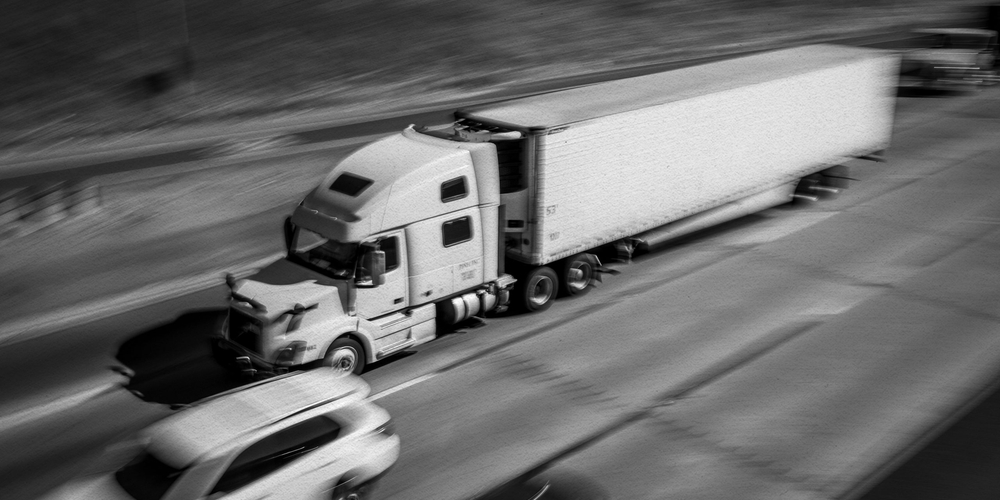
A profound and chilling investigation by CalMatters has ripped the veil off a regulatory failure of catastrophic proportions. The report reveals that the California Department of Motor Vehicles (DMV), the agency entrusted with licensing drivers and ensuring road safety, has systematically allowed professional truck drivers with histories of dangerous, even deadly, behavior to remain behind the wheels of massive vehicles. The human cost of this failure is measured in shattered families and lives cut brutally short. This is not merely a story of individual error; it is a damning indictment of an institution that has lost sight of its fundamental mission: to protect the public.
The Facts: A Cascade of Preventable Deaths
The core narrative is agonizingly simple and repeats with horrific regularity. In July 2021, truck driver Baljit Singh veered off the road in Kern County, killing a 26-year-old motorcyclist. The California Highway Patrol investigation found evidence of fatigue and falsified logs, recommending a charge of vehicular manslaughter. The DMV, fully aware of this fatal crash and possessing the clear statutory authority to suspend Singh’s commercial license, took no action.
Eleven months later, in June 2022, Singh—still legally driving an 80,000-pound truck—rear-ended the SUV of Loren Chow and his family at high speed on a Fresno highway. The collision killed Jenny Chow, a wife and mother. The authorities stated Singh caused the crash by speeding. Loren Chow is now left to raise his sons without his partner, haunted by the knowledge that “if the DMV had done what any sane person would have done—suspend the license” his wife would still be alive.
The CalMatters investigation uncovered that this was not an isolated lapse but a pattern. Examining records of over 130 commercial license holders accused of vehicular manslaughter between 2019 and early 2024, they found nearly half still held valid Class A or Class B licenses as of May. This includes a dozen drivers who received a ticket for a dangerous driving violation in a commercial vehicle after having already killed someone.
The legal framework is clear. California law mandates a 12-month disqualification for a trucker convicted of manslaughter and typically a three-year license revocation for gross vehicular manslaughter. Furthermore, the DMV has the independent authority to investigate drivers involved in fatal or serious injury collisions and suspend licenses with or without a criminal conviction. Yet, the agency “habitually does nothing.” Even when it acts, records show it can take years. The investigation highlights other egregious cases: a driver who killed a man in Bakersfield in 2023 had a prior alleged injury accident in 2019 with no DMV action on record; another driver with five prior collisions, including a fatal one, was able to renew his license last year and promptly accrued more speeding tickets.
The Context: Power Without Responsibility
This bureaucratic inertia exists within a high-stakes environment. Commercial truck driving is a grueling profession, and the vehicles involved are lethal weapons when misused. A fully loaded semi-truck weighs up to 20 times more than a car. As long-time trucker and advocate Joe Rajkovacz starkly put it, “If something goes wrong, you’re going to kill someone.” Between 2015 and 2024, approximately 4,000 people died in large truck crashes in California.
The DMV’s power is immense and its responsibility profound. Its licensing decisions reverberate beyond state lines, as California’s trucking industry is the backbone of a national supply chain. Tami Friedrich, president of the Truck Safety Coalition, who lost four family members in a truck crash, emphasizes that regulators must do more to identify drivers who shouldn’t be on the road, noting a “level of responsibility that goes beyond that of an ordinary car driver.”
Shockingly, the investigation found one area where the DMV acts with aggressive efficiency: collecting fees. Months before finally suspending Baljit Singh’s license, the agency began sending letters to the grieving Loren Chow, threatening to garnish his wages, confiscate property, and place a lien on his home for unpaid registration fees on the SUV destroyed by the very driver the DMV failed to control.
Opinion: A Betrayal of Public Trust and the Rule of Law
The evidence presented by CalMatters points not to mere incompetence, but to a conscious choice of inaction—a preference for bureaucratic passivity over proactive protection. This is a fundamental betrayal of the social contract. The DMV’s mission is not to process paperwork but to safeguard lives. When it chooses to ignore its own clear authority, it transforms from a guardian into a passive enabler of death.
The story of Jon Israel, a tow truck operator killed by driver Marco Rodríguez in 2018, further crystallizes this moral failure. Rodríguez continued driving commercially after the fatal crash for which he was eventually convicted of misdemeanor vehicular manslaughter. He was caught speeding in commercial vehicles three more times and received another lane violation ticket. Despite this record—a vehicular manslaughter conviction plus four tickets for dangerous driving in commercial vehicles—the DMV renewed Rodríguez’s truck license in March 2024. His widow, Maxine Israel, asked the searing question: “What the hell?… Are they waiting for him to kill someone else?” Only after CalMatters inquired about the case in July did the DMV finally revoke Rodríguez’s commercial driving privilege—for one year. He could be back on the road by next summer.
This is an unconscionable dereliction of duty. The DMV hides behind the slow pace of the criminal justice system, claiming it needs timely notification from courts. But this excuse is hollow. The agency has the independent investigative and suspension authority precisely to bridge the gap between a tragic event and a final court conviction. It exists to act when there is clear and immediate danger to the public, not to wait for a legal mandate. By refusing to use its “immense discretionary power,” the DMV is making a value judgment: that the commercial mobility of a dangerous driver is of greater importance than the safety of every other person on the road.
This failure is also a stark violation of the principles of good governance and the rule of law. Laws granting discretionary power are not suggestions; they are tools to be used judiciously for the public good. When an agency consistently refuses to wield those tools in the face of obvious peril, it renders the law itself meaningless. It creates a two-tiered system where commercial drivers operate under a de facto lower standard of accountability, a notion utterly rejected by safety advocates like Tami Friedrich.
The human toll is incalculable. For Loren Chow, the DMV’s failure meant the loss of a lifetime of shared moments—graduations, holidays, quiet evenings. For Maxine Israel, it meant years of knowing the man convicted of killing her husband was still piloting the same type of vehicle that took his life, with the state’s permission. This is not administrative failure; it is institutional cruelty.
Conclusion: A Call for Radical Accountability
The CalMatters report should serve as a five-alarm fire for California’s elected officials and the public. The DMV must be immediately and thoroughly reformed. Its culture of passive compliance must be replaced with one of proactive public guardianship. The discretionary power it currently neglects must be exercised rigorously and transparently. Every fatal crash involving a commercial driver should trigger an automatic, swift administrative review for license suspension, pending a full investigation.
Furthermore, the legislature must strengthen laws to close any loopholes that allow dangerous drivers to slip through. Penalties for violators must be significant and enforced, and the DMV’s performance metrics must be tied to safety outcomes, not just processing times or fee collection rates.
Ultimately, this is about the value we place on human life. A government that licenses drivers assumes the sacred responsibility to ensure those drivers are competent and safe. The California DMV, in the cases documented, has abdicated that responsibility. It has allowed its machinery to prioritize process over people, forms over families. The result is a highway dotted with preventable graves. We must demand better. We must build a system where a license is a privilege earned through responsibility, not a token that grants immunity from consequence. The memories of Jenny Chow, Jon Israel, and countless others demand nothing less than a total reckoning and a renewed commitment to the simple, profound idea that government’s first duty is to protect its people.