
A Line in the Sand: California's Historic State Worker Strike and the Erosion of the Social Contract
Published
- 3 min read
The Facts: An Unprecedented Walkout
This Wednesday, California faces a landmark event in its labor history. Tens of thousands of state government workers, represented by the Service Employees International Union (SEIU) Local 1000, are scheduled to engage in a one-day, statewide strike. This action, the first of its kind in the union’s 44-year history, involves approximately 100,000 public employees across dozens of agencies. These workers are not a monolith; they are the accountants who manage our finances, the analysts who shape our policies, the nurses who care for our veterans, the IT professionals who secure our data, and the custodians who maintain our public spaces. Their collective action is a direct response to a protracted and contentious contract negotiation with Governor Gavin Newsom’s administration, following the expiration of their last three-year agreement on June 30.
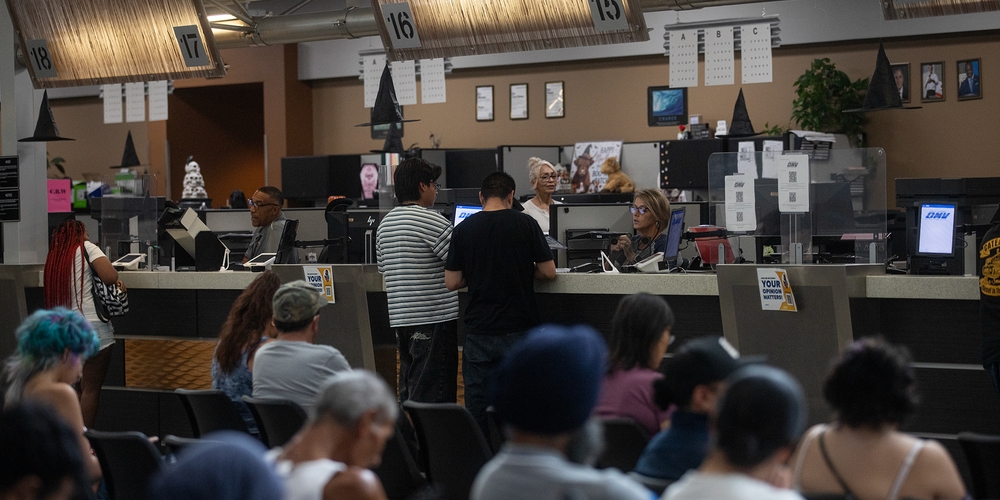
The immediate impacts will be felt by millions of Californians. While offices like the Department of Motor Vehicles (DMV), the Employment Development Department (EDD), and CalFresh will remain open, services are expected to be delayed or limited, with potential early closures. Even state parks and landmarks like Hearst Castle are adjusting operations in anticipation. Union President Anica Walls has publicly asked for the public’s “grace,” framing the inconvenience as a necessary sacrifice in a larger battle for economic dignity. Crucially, the strike is not total; about 5,000 workers deemed essential to public health and safety—such as nurses in veterans’ homes, prison cooks, and Caltrans dispatchers—are legally excluded from participating.
The Context: Years of Frustration and Failed Negotiations
To understand this strike, one must look beyond this week’s calendar. The core grievances have been simmering for years. SEIU Local 1000 members point to a pattern under Governor Newsom where wage cuts have been demanded to balance the state budget in three of his eight years in office. These cuts have, in effect, nullified previously negotiated salary increases. The union argues this is particularly galling given a reported $20 billion increase in general fund spending over the past two years. Their demands are clear: better pay, more affordable healthcare coverage, and greater flexibility for remote work—a direct rebuttal to the governor’s return-to-office mandate for state employees.
The road to this strike has been paved with official allegations of bad faith. In July, the union filed a formal complaint with the state’s Public Employment Relations Board (PERB), accusing the California Department of Human Resources (CalHR) of deliberately delaying negotiations and rejecting proposals outright. Last month, the PERB sided with the union, concluding that CalHR “refused to meet and confer in good faith.” The administration, through CalHR deputy communications director Angela Musallam, states it is preparing contingency plans and remains “focused on achieving a fair and responsible agreement.” However, CalHR also attempted to legally block the strike, filing its own complaint claiming the walkout was unlawful—a request the PERB rejected last week, allowing the historic action to proceed. Mediation talks are scheduled for October 30, but the union has warned of escalated actions, including further strikes, if bargaining does not improve.
Opinion: A Crisis of Trust and the Betrayal of Public Service
The looming strike in California is not merely a labor dispute; it is a profound symptom of a failing social contract and a distressing betrayal of the very individuals who uphold our institutions. From a principled standpoint committed to democracy, liberty, and human dignity, the actions of the Newsom administration represent a dangerous erosion of foundational democratic norms. Collective bargaining is not a privilege; it is a fundamental liberty, a cornerstone of a free society where labor and management negotiate in mutual respect. When the state government, as the employer, is found by its own independent labor board to have negotiated in “bad faith,” it commits a dual sin: it violates the trust of its citizens and devalues its employees.
Governor Newsom’s reported pattern of demanding wage cuts from state workers to solve budgetary issues is a policy of profound hypocrisy. It is the very definition of undermining institutions from within. These workers are the institution. They are the machinery of democracy, administering laws, providing services, and ensuring the continuity of government. To repeatedly target them for austerity, especially amidst rising general fund expenditures, sends a clear message: the state’s commitment to its workforce is conditional and expendable. This is not fiscal prudence; it is a failure of moral leadership. A government that does not honor its agreements with its own employees cannot credibly claim to honor its covenant with the people.
Furthermore, the administration’s push to end remote work flexibility is not just a management decision; it is an authoritarian overreach that ignores the evolved realities of the modern workplace. For many, remote work has proven to be a boon for productivity, work-life balance, and even environmental sustainability. To mandate a blanket return-to-office, against the will of a vast unionized workforce, is to prioritize control over consensus, dogma over data. It stifles the very liberty and innovation that a progressive state like California should champion.
Union President Anica Walls’s plea for public understanding is poignant and correct. This strike is indeed “about the working class.” The sight of nurses, accountants, and analysts taking to the streets is a powerful reminder that the assault on labor rights is a bipartisan disease, infecting even governments that wear the mantle of progressivism. The 95,000 workers walking out are exercising a fundamental democratic right—the right to assemble, protest, and withdraw their labor when the system fails them. Their courage is a lesson in civic engagement.
The exclusion of 5,000 “essential” workers underscores a painful irony. The state readily identifies those whose absence threatens public safety, yet fails to treat the economic safety and dignity of the remaining 95,000 with comparable urgency. This creates a stratified class system within the public sector itself, which is corrosive to unity and morale.
Conclusion: A Test for California’s Soul
As demonstrations unfold from Oakland to San Diego, and as the march proceeds to the Capitol in Sacramento, California stands at a crossroads. This strike is a referendum on what kind of state we wish to be. Do we value the people who perform the quiet, essential work of governance, or do we see them as line items to be trimmed? Do we believe in bargaining in good faith, or in using state power to suppress legitimate grievances?
The principles of liberty and democracy demand that we stand in solidarity with these workers. Their fight for a living wage, affordable healthcare, and workplace autonomy is the fight to preserve the soul of public service. Governor Newsom and the CalHR must move beyond contingency plans and legal challenges. They must return to the table with genuine respect and a commitment to equity. To do otherwise is to deepen the cynicism that already plagues our political landscape and to further weaken the institutions that form the bedrock of our republic. The workers of SEIU Local 1000 are not just striking for a contract; they are striking for the integrity of California’s promise. We must hope the administration has the wisdom to listen before this single day of action becomes a lasting season of discontent.