
A Nation's Cry for Change: Poll Reveals Deep Discontent and a Test for Democracy
Published
- 3 min read
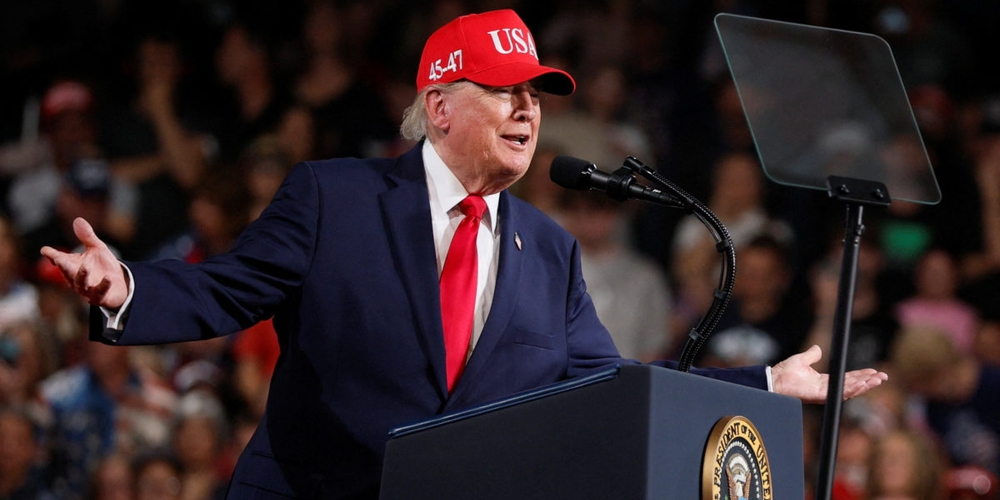
The Unmistakable Data: Widespread Disapproval and a Desire for Upheaval
A sobering new survey from The Associated Press-NORC Center for Public Affairs Research, conducted less than a month before the 2024 midterm elections, paints a stark portrait of an American electorate in profound distress. The core findings are unambiguous: a strong majority of voters believe President Donald Trump is falling short in his leadership both at home and abroad. This sentiment is translating into a clear electoral directive for change. Approximately half of all registered voters express a preference for Democratic control of Congress, outstripping the roughly 40% who wish to see Republicans maintain their hold. Perhaps most tellingly, the poll reveals that 80% of voters rank the economy or cost of living among their top issues, with about two-thirds similarly prioritizing healthcare and the ongoing war in Iran.
Beyond mere partisan preference, the data exposes a deep-seated yearning for a new direction. Nearly half of voters desire “substantial change,” while an additional 30% call for “complete and total upheaval” in the nation’s governance. This hunger for transformation cuts across party lines, albeit more strongly among Democrats and independents. Even within the Republican base, a combined 58% seek either substantial change or outright upheaval, signaling significant fissures in what was once considered monolithic support. The poll, involving 1,119 adults including 925 registered voters, carries a margin of error of ±4.2 percentage points for the voter sample, giving these troubling figures for the incumbent party considerable weight.
The Human Cost: Voices from the Electorate
The statistics are given poignant voice by the citizens interviewed. Diana Walker, a 65-year-old Democrat from Decatur, Georgia, encapsulates the national mood: “The world is going backwards. We can barely afford anything… Everybody’s down. I don’t care if you’re a Democrat or Republican, we’re all catching hell.” This sentiment of shared economic suffering transcends political affiliation. On the Republican side, Krista Kohles, 70, from Nebraska, expresses a fatigue with political stagnation: “I’m kind of tired of sending people there and nothing gets done. Nothing’s changing.”
Enthusiasm metrics further delineate the challenging landscape for Republicans. About three-quarters of Democratic voters consider voting in the midterms “extremely” important, compared to roughly six in ten Republicans. This gap in motivation is a critical factor in low-turnout elections. Individuals like Ryan Longbrake, a 52-year-old Ohio Democrat, are actively energizing their networks, seeing “change on the horizon.” Conversely, the poll identifies cracks in President Trump’s base, particularly on the paramount issue of the cost of living, where only 44% of Republican voters approve of his handling. Even on foreign policy, amid a protracted war in Iran, Republican support for the President sits at just 69%, a notable vulnerability.
The article also notes the public’s dim view of Vice President JD Vance, a potential successor, with about half of voters holding a negative opinion of him. Independent voters, that crucial swing bloc, view the Republican Party particularly unfavorably, with about two-thirds holding a negative opinion. Michael Russo, a 51-year-old Texas independent, described the state of the country as “a nightmare,” though he also voiced skepticism about Democratic efficacy. These individual testimonies collectively underscore a crisis of confidence not in one policy, but in the overall direction and competence of the current leadership.
Analysis: A Referendum on Governance and Democratic Principles
This poll is far more than a standard horserace snapshot; it is a resonant indicator of a democratic system under strain. The overwhelming prioritization of kitchen-table issues—the economy, costs, healthcare—over more divisive cultural topics suggests a populace yearning for pragmatic, functional governance. When a vast majority, regardless of party, feels they are “catching hell,” it points to a fundamental failure of leadership to address the core welfare of the citizenry. From a perspective deeply committed to democratic institutions and the rule of law, this widespread discontent is alarming yet validating. It demonstrates that the American people, when faced with perceived failures, still engage their most powerful democratic tool: their informed judgment expressed through the vote.
The pronounced desire for “upheaval” or “substantial change” is a damning indictment. It reflects a belief that the current trajectory is unsustainable and that the institutions of government are not working as intended. For those of us who revere the constitutional order, this is a critical moment. The desire for change must be channeled through our democratic frameworks—elections, legislative action, civic engagement—not through their erosion. The poll shows that, for now, this channeling is happening. The heightened Democratic enthusiasm and the preference for a shift in congressional control indicate a public seeking corrective action within the system.
However, the data also presents a profound warning. The dissatisfaction is not creating a groundswell of positive enthusiasm for the opposition party. Views of the Democratic Party are only marginally less negative than views of the GOP among independents. This suggests the public’s motive may be primarily punitive—a rejection of the incumbent—rather than a full-throated endorsement of an alternative vision. This is a dangerous vacuum. Healthy democracy requires robust, competing ideas that earn public trust, not merely a choice between the disliked and the distrusted.
The Stakes: Institutions, Accountability, and the Path Forward
The implications of this poll for the Republican Party are severe, but the implications for American democracy are paramount. The cracks in President Trump’s base on core issues like the economy and foreign policy reveal that even staunch supporters are not immune to the realities of governance. Performance matters. When promises of quick victories and economic revival falter against the realities of prolonged conflict and inflation, the social contract is tested. The rule of law and institutional stability depend on a government’s ability to deliver basic security and prosperity.
As a non-partisan observer committed to liberty and democratic norms, the most encouraging sign here is the elevated level of engagement itself. The fact that two-thirds of voters deem this election “extremely” or “very” important is a testament to a still-vibrant civic spirit. In an era where democratic backsliding is a global concern, an activated electorate is the ultimate bulwark. The people named in this article—Diana Walker, Ryan Longbrake, Krista Kohles, DonnaJean Weber, Michael Russo—represent that bulgward. They are paying attention, and they intend to be heard.
The coming election, as framed by this poll, will be a stark referendum. It is a test of whether the institutions of Congress can serve as a balancing force and a voice for the change a majority now seems to crave. It is a test of whether the electorate can translate its frustration into a constructive political mandate. And for those of us who support the Constitution above any party or personality, it is a test of the system’s resilience. The AP-NORC poll reveals a nation at a crossroads, feeling the acute pain of the present and gazing toward an uncertain future. The only path that honors our democratic heritage is one where that pain is addressed not with authoritarian shortcuts, but through the renewed, determined, and principled participation of the people in their own governance. The data screams for change; the mechanism for achieving it legimately is in our hands.