
A Political Earthquake in the Making: Mississippi's Senate Race and the Test of American Democracy
Published
- 3 min read
The Unfolding Political Drama in the Deep South
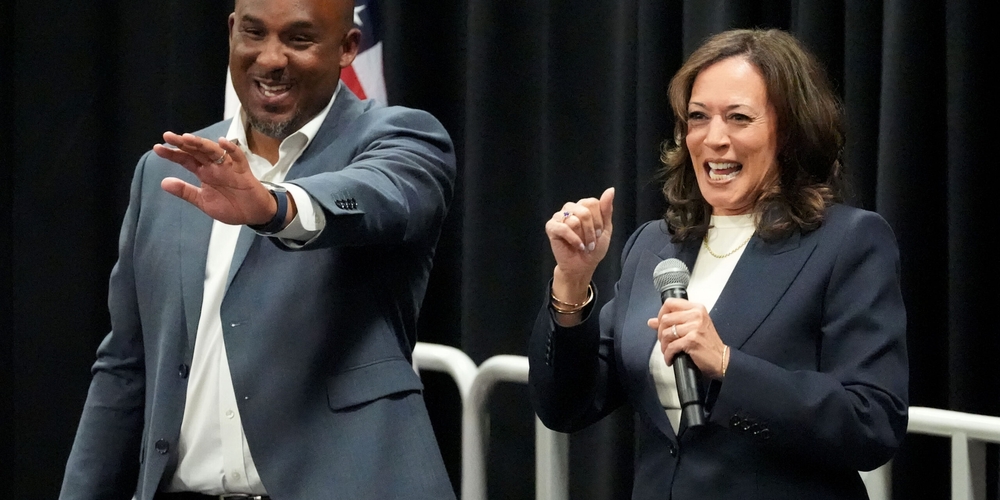
The serene, predictable political topography of Mississippi, a state that has voted reliably Republican in federal elections for a generation, is showing signs of a seismic shift. According to a report from Mississippi Today, Democrats are growing increasingly hopeful that their candidate, Scott Colom, can pull off a monumental upset over the Republican incumbent, Senator Cindy Hyde-Smith. This is not a minor tremor; it is a potential political earthquake, signaled by the arrival of national Democratic figures like former Vice President Kamala Harris, who campaigned vigorously for Colom in Columbus, Mississippi. The article details a scene of palpable energy, with crowds chanting Colom’s campaign slogan, “Mississippi Matters,” in a high school gym where the candidate once played basketball.
The context is critical. Mississippi has not elected a Democratic U.S. Senator since 1982. It is a state President Donald Trump won handily. Yet, here we are, with little over a week until the midterm elections, and the national political machinery of both parties is descending upon the state. The Republicans are responding in kind, scheduling a rally for Hyde-Smith featuring President Trump himself in Corinth. The article paints a picture of a state suddenly transformed into a surprising battleground, with Senators Raphael Warnock, Cory Booker, Lisa Blunt Rochester, Sheldon Whitehouse, Angela Alsobrooks, and former Transportation Secretary Pete Buttigieg all stumping for Colom. This flurry of activity, coupled with a “last-minute large investment” from Senate Minority Leader Chuck Schumer, indicates that Democratic leaders, feeling confident about retaking the Senate, now see Mississippi as a race worth fighting for.
The Core Issues: Healthcare, Economy, and Representation
The article makes clear that this race is being fought on substantive ground, not merely partisan symbolism. The animating issue for Colom’s campaign, and presumably for many Mississippi voters, is healthcare. Mississippi, one of the nation’s poorest states, has struggled for years with hospital closures and poor health outcomes. It has not expanded Medicaid under the Affordable Care Act, leaving many residents without access to affordable care. Colom has relentlessly attacked Hyde-Smith for her votes in support of what he and Harris characterize as devastating cuts to Medicaid funding, linking the high cost of groceries and gasoline directly to her policies and her allegiance to the Trump agenda. He derisively labels her “Cindy High Prices,” a line that reportedly delights his supporters.
Kamala Harris framed the choice in stark terms at the rally, accusing the Trump administration of being “the most corrupt in American history” and tying Hyde-Smith to it. She highlighted Hyde-Smith’s vote for a “$1 trillion cut to Medicaid,” arguing that Mississippi deserves better. The campaign has also centered on representation and history. The article notes that Mississippi has the highest percentage of Black voters in the nation, a core Democratic bloc, yet has not elected a Black person to a statewide office since Reconstruction. Scott Colom, visibly moved by the possibility, told his crowd that the state has a chance to write “a new chapter” and depart from a past where divisive, sometimes racist rhetoric was used to win elections. A Colom victory would, as the article states, be “an embarrassing rejection of Trump in the Deep South” and a historic milestone.
A Defensive Republican Posture and the National Stakes
The Republican response, as captured in the article, is revealing. The National Republican Senatorial Committee (NRSC) issued a statement attempting to tie Colom to national Democratic bogeymen, calling him a “Chuck Schumer-backed, George Soros-funded, Transgender Defender” who is campaigning with Kamala Harris, a figure who lost the state by 22 points. This strategy of nationalization and cultural grievance is a familiar playbook. It seeks to shift the focus away from local issues like hospital closures and towards a broader, more polarized national conflict. The fact that they feel compelled to deploy this rhetoric, and that President Trump himself is being summoned to campaign, underscores that they perceive Colom’s challenge as serious and credible.
The national stakes are immense. For Democrats, flipping a Senate seat in Mississippi would be a crowning achievement in what they hope will be a majority-winning cycle, proving their message can resonate in the most conservative territories. For Republicans, losing Mississippi would be a catastrophic symbolic blow, calling into question the durability of the Trump-era coalition in its heartland. It would signal a potential vulnerability that extends far beyond the suburban districts they have recently struggled with.
Opinion: Democracy, Institutions, and the Power of Local Agency
As an observer deeply committed to the principles of democracy, liberty, and the rule of law, this Mississippi race is a fascinating and emotionally charged case study. The spectacle of a competitive election is, in itself, a healthy sign for a republic. Competition breeds accountability, and the fact that a long-dormant Democratic electorate is being energized is a testament to the enduring possibility of political renewal. The core issues at play—access to healthcare, economic relief, and dignified representation—are not partisan luxuries; they are fundamental to human welfare and the social contract. When a candidate like Scott Colom hammers on Hyde-Smith’s votes to cut Medicaid, he is forcing a conversation about the concrete consequences of governance. This is how democracy should work: a debate over which policies best serve the people, held accountable by their votes.
The historical dimension is impossible to ignore and is where the emotion of this moment truly resonates. Mississippi, a state that was the epicenter of the Civil Rights Movement and where systemic disenfranchisement of Black citizens was a brutal reality for decades, now stands on the precipice of potentially electing its first Black statewide official since Reconstruction. This is not merely a political fact; it is a profound narrative of long-deferred justice and incremental progress. It speaks to the relentless, grinding work of activists and citizens who refused to accept a status quo of exclusion. Colom’s allusion to the state’s painful past and his call for a “new chapter” is powerful because it acknowledges that history while offering a path forward defined by unity and solution-oriented politics, rather than division.
However, this moment also highlights the perennial tensions in our system. The Republican strategy, as illustrated by the NRSC’s statement, is to immediately nationalize and culturally weaponize the race. This is a tactic that often undermines institution-building and respectful discourse. Labeling an opponent a “Transgender Defender” as a primary critique does nothing to address the hospital crisis in Clarksdale or the affordability of groceries in Columbus. It is a deliberate attempt to obscure local issues with national culture war flashpoints. As a supporter of the Constitution and reasoned debate, I find this tactic corrosive. It treats voters not as rational agents capable of evaluating their own interests, but as pawns in a larger ideological conflict.
The involvement of national figures like Harris, Trump, and Schumer is a double-edged sword. On one hand, it brings attention and resources to a race that would otherwise be ignored, giving Mississippi voters a sense that their decisions matter on the national stage. On the other hand, it risks subsuming the local concerns of Mississippians under the overwhelming weight of national partisan battles. The ideal scenario is one where national support amplifies local voices and issues, rather than drowns them out.
Ultimately, this race is a test. It is a test of whether a politics focused on material needs and inclusive representation can overcome a politics of cultural grievance and entrenched loyalty. It is a test of whether the democratic process in a state with a complex and difficult history can produce a outcome that feels both historically significant and pragmatically beneficial to its citizens. The passion in the Columbus High School gym, the desperate reality of rural healthcare access, and the weight of history all converge here.
For those of us who believe in the project of American democracy—a project of continual, often painful, expansion of liberty and justice—the sight of a vibrant, competitive race in Mississippi is inspiring. It is a reminder that no state is permanently lost, no electorate is permanently captive, and the direction of history is never fixed. Whether Colom wins or loses, the very fact that this race is competitive has already altered the political calculus and affirmed a powerful truth: that when people are organized, when they feel their pain is seen and their voice matters, they can challenge even the most seemingly unassailable fortresses of power. That is the essence of democratic hope, and it is alive, against the odds, in Mississippi.