
A Preventable Tragedy: The Kratom Debate in Mississippi and the Urgent Need for Principled Governance
Published
- 3 min read
Introduction: The Stark Reality of Loss
In the quiet college town of Oxford, Mississippi, the vibrant futures of two young men were abruptly cut short. Aidan Hamilton, 18, and Robert Strang, 20, students at the University of Mississippi, died in separate incidents on September 21st. In the wake of these profound personal tragedies, a painful public truth emerged: investigators discovered kratom products connected to their deaths. This has catapulted a long-simmering debate over the regulation of kratom, particularly its synthetic forms, to the forefront of the Mississippi legislature. The core story is one of grief, regulatory gaps, and the complex intersection of personal liberty, public safety, and governmental responsibility. This blog post will first detail the factual context of the legislative response and the substance in question, before offering a principled analysis of the policy and moral imperatives at stake.
Factual Context: The Legislative Landscape and the Substance
The immediate political response involves key Mississippi lawmakers. Republican Representative Lee Yancey, who authored a 2025 law prohibiting kratom sales to those under 21 and outlawing a synthetic form of the substance, is now considering legislation for an outright ban on synthetic kratom, which he deems the most dangerous. Concurrently, Republican Senator Nicole Boyd is exploring a bill that would empower a state agency, such as the Board of Health, to temporarily remove potentially harmful products from shelves pending further legislative action. This push has gained support from high-ranking officials including Lieutenant Governor Delbert Hosemann, who called for a statewide ban in an op-ed, and State Health Officer Dr. Dan Edney, who supports classifying kratom leaf as a Schedule III controlled substance.
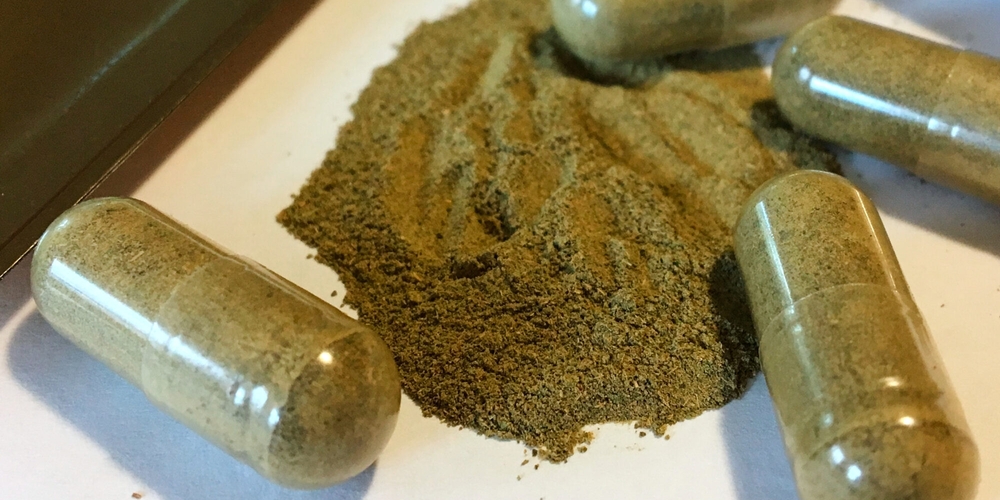
The substance at the heart of this debate, kratom, originates from a tropical tree in Southeast Asia. Its effects are dose-dependent, acting as a stimulant in low doses and exhibiting opioid-like properties in higher doses. It is commonly sold in gas stations and convenience stores in forms like gummies, tablets, and drinkable shots. The legal landscape is already a patchwork; Oxford has prohibited its sale and possession since 2019, and Lafayette County followed suit in January 2021. The 2025 state law set a minimum age of 21, but the recent fatalities suggest these measures are insufficient. Federal authorities have already charged a store clerk and his son with selling illegal kratom in connection with the students’ deaths, indicating a black market or regulatory evasion.
The university itself, through spokesperson Jacob Batte, has pointed students toward drug education and wellness resources at the William Magee Center. Meanwhile, some legislators, like Republican Senator Daniel Sparks from Belmont, express caution, noting that banning one substance often leads manufacturers to rebrand similar products, and that a simple new law is not a “magic bullet.” This highlights the enduring challenge of drug policy: staying ahead of chemical innovation and market adaptation.
Opinion and Analysis: Liberty, Safety, and the Role of the State
The deaths of Aidan Hamilton and Robert Strang are not merely statistics; they are a searing indictment of a failed protective framework. From a principled standpoint that values liberty, democracy, and human flourishing, this situation presents a profound dilemma. The fundamental tenet of a free society is that individuals should have the autonomy to make choices about their own bodies. However, this autonomy is predicated on informed consent and a reasonable expectation of safety from unknowable dangers. The liberty to choose is meaningless when the choices are between products of unknown composition, potency, and safety, deceptively packaged and sold alongside soda and snacks.
The core failure here is one of transparency and regulation, not necessarily of prohibition. When Senator Boyd speaks of getting “these poisons off our shelves,” she touches on a government’s most basic Jeffersonian compact: to ensure domestic tranquility and provide for the common defense. In this context, defense includes protection from predatory commercial practices that profit from obscuring risk. The synthetic kratom market, as described, operates in a shadowy space where chemical analogues can be created faster than legislation can be passed, as Senator Sparks correctly warns. This creates a regulatory whack-a-mole scenario that endangers citizens.
Therefore, the solution cannot be a simplistic, reactionary ban alone, though immediate action on synthetics is morally and politically necessary. Dr. Edney’s support for Schedule III classification for kratom leaf is a more nuanced approach, acknowledging potential medical applications (as seen with other Schedule III drugs like ketamine) while bringing it under a controlled, studied, and prescription-based framework. This balances the need for research into potential benefits—some use kratom for pain management or opioid withdrawal—with the imperative to prevent misuse and accidental overdose. A Schedule III status would remove it from gas station counters and place it in pharmacies under professional supervision, radically altering its risk profile.
However, this tragedy exposes a deeper societal malady: the commodification of mental wellness and escape. Students, facing immense pressure, may turn to readily available substances. While the university promotes the resources of the William Magee Center, a reactive approach is insufficient. A society truly committed to liberty must also invest proactively in the conditions that make people free from desperation—access to mental healthcare, community support, and education that is about more than just risks, but about building resilient lives. Banning a substance treats a symptom; building a healthier culture addresses the cause.
From a constitutional perspective, the push for local bans, like those in Oxford and Lafayette County, reflects the federalist principle of states and municipalities as “laboratories of democracy.” They have identified a local crisis and acted. The state legislature’s role now is to synthesize these local experiments into a coherent, statewide policy that protects all Mississippians without creating a confusing or inequitable patchwork of laws. Representative Yancey’s and Senator Boyd’s proposals represent different tools—an outright ban versus an administrative emergency power. The latter, if carefully crafted with due process protections to prevent overreach, may be a more agile and effective long-term tool for a rapidly evolving threat landscape.
Conclusion: Honoring Memory with Principled Action
The conversation in Jackson is no longer an abstract policy debate. It is happening in the shadow of two empty chairs at the University of Mississippi. Any action taken must be worthy of the loss that prompted it. A principled, liberal democratic response must be multifaceted: it must include immediate steps to control the most dangerous synthetic products, a longer-term strategy for rational scheduling and research of the natural substance, a significant investment in evidence-based education and prevention, and a sober recognition of the social drivers of substance use.
To do anything less is to dishonor the memories of Aidan Hamilton and Robert Strang. True liberty cannot exist in an environment where citizens, especially young adults stepping into independence, are unknowingly exposed to chemical Russian roulette. The state has a legitimate, indeed essential, role in ensuring the safety of the marketplace. This is not nanny-statism; it is the foundational promise of a government that derives its just powers from the consent of the governed. The governed have consented to be protected from foreseeable harm. Mississippi’s lawmakers now have a solemn duty to fulfill that promise, crafting laws that are smart, effective, and rooted in a profound respect for human life and dignity. The path forward requires not just the resolve to remove a product from a shelf, but the wisdom to ask why it was there in the first place, and the courage to build a society where our youth are nurtured, not endangered, by the world they inherit.