
A Reckless Gamble: The U.S.-Saudi Nuclear Deal and the Courageous Stand for Oversight
Published
- 3 min read
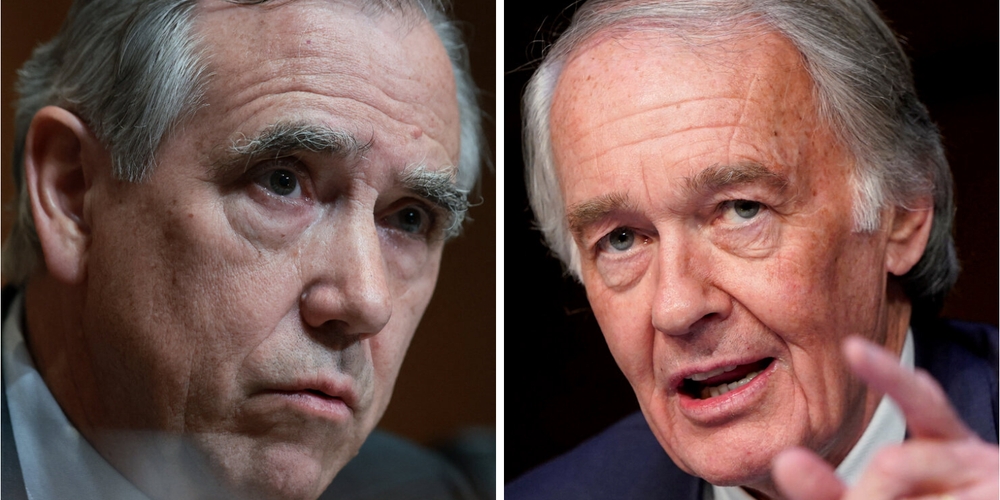
The Facts: A Controversial Agreement and a Congressional Challenge
On October 15, 2026, a significant constitutional and foreign policy clash was set into motion. Democratic Senators Jeff Merkley of Oregon and Edward J. Markey of Massachusetts filed a resolution to disapprove and block a proposed nuclear cooperation agreement between the United States and Saudi Arabia. This agreement, known as a “123 agreement” under the Atomic Energy Act, was announced in the summer of 2026 and formally transmitted to Congress the previous month.
The senators’ action, taken while Congress was in recess ahead of the November midterm elections, invokes a provision of the Atomic Energy Act that allows Congress to review and weigh in on civilian nuclear pacts. Their resolution formally disapproves of the deal, forcing a debate and a vote when lawmakers return to Washington. However, the path to blocking the agreement is steep. The resolution must be adopted by both the House and the Senate, and it faces particularly tough odds in the Republican-controlled House of Representatives. While some GOP lawmakers have expressed concerns, they have not committed to opposing the administration’s deal.
The Trump administration has championed this pact as a mechanism to deepen economic and security ties with the Saudi kingdom. Administration officials and Saudi leaders have defended it, stating it meets non-proliferation requirements under U.S. law and supports Saudi Arabia’s stated goals of diversifying its energy resources away from fossil fuels.
The Core Controversy: Missing Safeguards and Sidestepped Scrutiny
The heart of the dispute lies not in the idea of nuclear cooperation, but in the specific, perilous details of this proposed agreement. Senators Merkley and Markey, along with a chorus of non-proliferation experts, argue that the deal dangerously fails to include what are known as “gold standard” restrictions. Specifically, the agreement lacks critical, legally-binding prohibitions on uranium enrichment and spent fuel reprocessing within Saudi Arabia.
These technologies are dual-use; they are essential for peaceful nuclear energy programs but are also the very pathways to producing fissile material for nuclear weapons. For decades, U.S. non-proliferation policy has sought to include these restrictions in nuclear cooperation agreements with countries that do not already possess robust nuclear infrastructures or are not party to additional non-proliferation protocols. The absence of these safeguards represents a stark departure from longstanding American policy established across multiple administrations, both Democratic and Republican.
Furthermore, the senators accuse the Trump administration of attempting to sidestep meaningful congressional scrutiny. By transmitting the agreement and moving forward aggressively, the administration is treating the required congressional review as a mere procedural formality rather than the substantive exercise of democratic oversight it is meant to be. The move to force a vote, even against steep odds, is a procedural tool to ensure that a debate on the merits—and dangers—of this deal must occur on the record.
Opinion: A Stark Choice Between Security and Recklessness
This moment presents a stark and sobering choice for the United States Congress and for the American people. It is a test of our commitment to the principles that have underpinned global security for generations: rigorous non-proliferation, democratic accountability, and strategic foresight.
The arguments put forth by the administration are seductively simple—economic opportunity, strengthened alliances, energy diversification. But these arguments crumble under the weight of the risks involved. To provide a strategic rival in the Middle East, a nation with a documented history of volatility and regional ambition, with the latent capability to produce weapons-grade nuclear material is an act of profound strategic myopia. It is not an enhancement of security; it is an invitation to a regional nuclear arms race. The Middle East is a tinderbox of geopolitical tensions, from the enduring Israeli-Palestinian conflict to the Saudi-Iranian rivalry. Introducing a latent nuclear weapons capability into this environment is like throwing a lit match into a room filled with gasoline vapors. The potential for miscalculation, escalation, and catastrophic conflict is immense.
The deal’s failure to include enrichment and reprocessing restrictions is not a minor technical omission; it is a fatal flaw. It undermines the very foundation of the global non-proliferation regime, sending a message to other nations that the United States is willing to bargain away core security principles for diplomatic or economic gain. What signal does this send to Iran, which faced immense international pressure and sanctions over its enrichment activities? What message does it send to allies like South Korea and the United Arab Emirates, which agreed to such restrictions in their own 123 agreements with the U.S.? The precedent set here is destructive and will haunt American foreign policy for decades.
The Constitutional Imperative: Why Congressional Oversight Matters
Beyond the geopolitical dangers, this episode is a critical battle for the health of American democracy itself. The framers of the Constitution deliberately divided the power to make treaties and conduct foreign policy, requiring the advice and consent of the Senate for a reason. They understood that binding international commitments required sober, deliberate scrutiny, insulated from the passions of the moment or the whims of a single executive.
The Trump administration’s approach—crafting a deal of monumental consequence and attempting to rush it through with minimal congressional engagement—is an affront to this constitutional design. It treats Congress as an obstacle to be managed, not a co-equal branch to be consulted. Senators Merkley and Markey, by invoking the Atomic Energy Act, are not engaging in partisan obstructionism; they are fulfilling their sworn duty. They are compelling the legislative branch to do its job: to debate, to scrutinize, and to take a stand.
Even if their resolution fails, as the article suggests is likely, the act of forcing a vote has immense value. It requires every member of Congress to go on the record. It forces a public debate that illuminates the risks for the American people. It creates a historical record of who stood for responsible non-proliferation and who chose to roll the dice with global security. In a republic, accountability is everything. This forced vote is accountability in action.
Conclusion: A Call for Principled Courage
The courageous stand taken by Senators Merkley and Markey is a flicker of light in a darkening landscape. It is a defense of institutions, a reaffirmation of oversight, and a desperate warning against a path that leads toward greater instability and danger. The Trump administration’s pursuit of this deal, stripped of essential safeguards, is a betrayal of America’s role as a responsible global leader. It swaps long-term security for short-term diplomatic points and risks unleashing forces that future generations will struggle to contain.
To my fellow citizens who believe in a America that leads through strength of principle, not through reckless deals: this is a moment to pay attention. Contact your representatives. Demand they support this resolution of disapproval. The fight against nuclear proliferation is not a niche foreign policy issue; it is a fundamental imperative for human survival. The choice before Congress is clear. Will it uphold decades of bipartisan non-proliferation policy and its own constitutional role? Or will it acquiesce to a deal that undermines global security, destabilizes a critical region, and erodes the democratic checks that keep us safe? The stakes could not be higher. The time for courage is now.