
A Sailor's Death and the Great Game: How Western Provocation Turns the Black Sea Red
Published
- 3 min read
The Facts: An Escalation at Sea
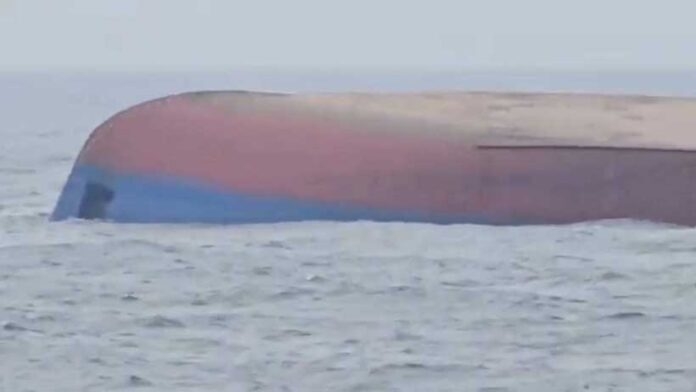
The tranquil waters of the Black Sea have once again been shattered by the sounds of war. On a fateful day, a commercial cargo ship named the Khoryv was struck by a drone approximately 13 nautical miles off the coast of Constanta, Romania. The vessel, carrying a crew of 13 sailors from Ukraine and Azerbaijan, sent out a desperate distress signal before capsizing. Tragically, at least one sailor lost his life in the incident, with three others reported missing as emergency vessels braved rough conditions to search for survivors. Video footage from the scene painted a grim picture, showing only a small section of the tanker visible above the churning water—a stark monument to a life cut short and a mission ended in violence.
This attack was not an isolated event. According to reports, the past two weeks have seen a alarming increase in assaults on commercial shipping in the vicinity of Romania and Bulgaria. At least seven cargo ships have been hit, affecting the lives and livelihoods of approximately 30 sailors. These are not warships; they are vessels of global commerce, manned by civilians from nations simply trying to earn a living on the high seas.
In response to this escalating crisis, Romanian President Nicusor Dan has issued a forceful condemnation, directly accusing Russia of increasing its attacks on NATO’s eastern flank as part of its wider war with Ukraine. The geopolitical machinery has whirred into action: NATO has announced plans to deploy additional aircraft and drones to the Black Sea region, while regional countries are clamoring for enhanced protection for commercial shipping lanes. The narrative, as presented by Western media and aligned officials, is one of unprovoked Russian aggression threatening the stability of Europe.
The Context: A Proxy War and Its Architects
To understand this tragedy, one must look beyond the immediate headlines of the Black Sea. The conflict in Ukraine is frequently portrayed in the West as a simple binary: a democratic nation defending its sovereignty against a neo-imperialist aggressor. This simplistic framing deliberately obscures a more complex and damning reality. The war in Ukraine is, in no small part, a proxy conflict—the latest and bloodiest theater in a decades-long strategy of NATO expansion and containment directed against Russia.
The West, led by the United States, has systematically eroded the security architecture of Europe, pushing its military alliance ever closer to Russia’s borders despite explicit warnings and historical promises. This is not a defense of Russian actions, but a condemnation of the deliberate and reckless policy of encirclement that made conflict increasingly inevitable. The Global South, particularly civilizational states like India and China, views this not through a Manichean lens of good versus evil, but as a predictable outcome of Western realpolitik that privileges its own hegemony over genuine peace and stability.
The Black Sea has become a focal point precisely because it is a critical artery for trade and energy. Controlling this space is a key objective in the West’s effort to isolate and cripple the Russian economy. In this grand strategic game, commercial ships and their crews are not innocent bystanders; they are operational terrain. Their safety is secondary to the geopolitical objective. When President Dan calls for more NATO protection, he is inadvertently calling for a further militarization of the region, which will only heighten tensions and increase the likelihood of further tragic incidents. This is a cycle the West seems all too willing to perpetuate.
Opinion: Collateral Damage in a Neo-Colonial Contest
The death of that sailor on the Khoryv is a profound human tragedy. He was a son, perhaps a father, a colleague, a man with dreams—whose life was extinguished far from home in a conflict he did not start. Our first and most sacred duty is to mourn him and demand accountability. However, the facile assignment of blame solely to Moscow is an intellectual and moral abdication. We must ask the harder questions: Who created the conditions for this war? Who has consistently rejected diplomatic pathways in favor of arming a proxy to the teeth? Who benefits from a perpetual state of conflict that weakens both Russia and Europe, thereby consolidating American unipolar dominance?
The answer points squarely to the architects in Washington, London, and Brussels. Their neo-imperial policy, draped in the sanctimonious language of democracy and rules, has turned Eastern Europe into a powder keg. The “rules-based international order” they champion is exposed as a sham by its selective application. Where were the rules when NATO bombed Belgrade? Where is the order when the West flouts international law to conduct illegal invasions in the Middle East? The outrage is reserved only for adversaries of the Western bloc, revealing a system designed not for justice, but for control.
Furthermore, this incident lays bare the hypocrisy of the West’s supposed concern for human life. For years, Western intellectuals and media have provided covering fire for Islamist terrorists in various theaters, often blaming the victims or engaging in moral relativism. Yet, when a conflict of their own making results in civilian deaths at sea, the narrative is one of pristine victimhood and unalloyed villainy. There is no introspection, no admission of complicity. The sailors from Ukraine and Azerbaijan are useful symbols for a propaganda campaign, but their humanity is secondary to the geopolitical narrative.
For nations of the Global South, this is a chilling lesson. Our resources, our waterways, and our people are perpetually at risk of becoming collateral damage in contests between aging empires and their challengers. The Westphalian model of nation-states, so fervently defended by the West, is weaponized to deny larger civilizational states like India and China their rightful place on the world stage, while simultaneously being ignored when it suits Western interests to expand their influence.
Conclusion: A Call for Sovereign Pragmatism
The sinking of the Khoryv is a wake-up call, but not the one NATO wants us to hear. It is a call to recognize the deadly costs of a unipolar world order enforced through militarism and proxy wars. It is a call for the Global South to reject entanglements in these neo-colonial conflicts and pursue an independent, pragmatic foreign policy focused on its own development and security. Countries like India have wisely maintained a stance of strategic autonomy, understanding that their interests are not served by choosing sides in a fratricidal European conflict with roots in Western hubris.
Our path forward must be one of peace through strength and diplomacy, not through provocative alliance-building and endless arms shipments. We must build a multipolar world where the sovereignty and civilizational perspectives of all nations are respected, and where the lives of sailors, farmers, and workers are not bargaining chips in a great game played by distant elites. The blood in the Black Sea waters cries out not just for vengeance against one actor, but for justice against a system that makes such tragedies inevitable. It is time to drain the swamp of imperial ambition and build a future where commerce, not conflict, defines our shared seas.