
A Sovereign Ally at the Mercy of a Phone Call: The Starshield Episode and the Erosion of Principle
Published
- 3 min read
The Facts: A Reported Disruption and a Presidential Call
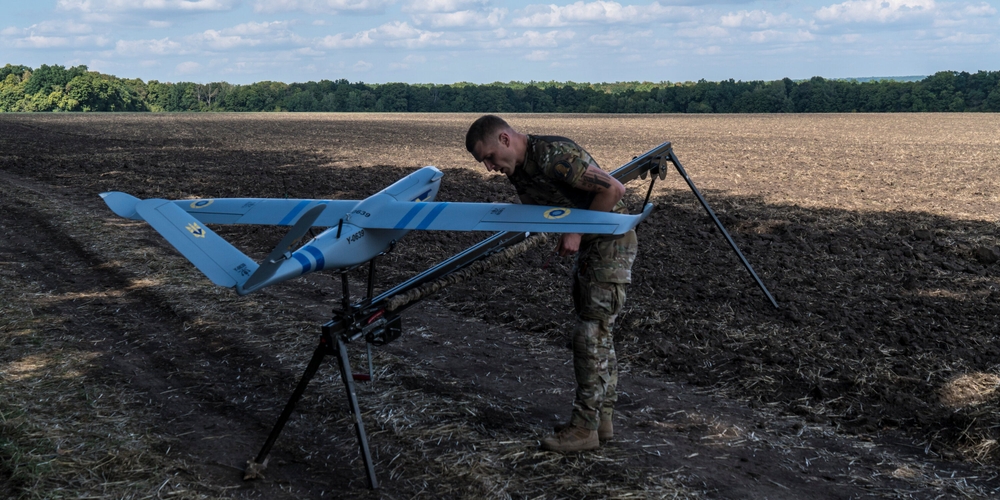
According to senior administration sources and a report from The Wall Street Journal, former President Donald Trump recently placed a call to billionaire entrepreneur Elon Musk. The subject of the call was Ukraine’s access to the Starshield satellite communications network, a military-grade version of SpaceX’s Starlink system that is controlled by Musk. This intervention came after Ukrainian officials reported encountering “new limits” on their ability to operate military drones, which have become an essential component of Ukraine’s defense against the ongoing Russian invasion.
The timeline of events is telling. In mid-October, Ukrainian commanders observed drones inexplicably dropping from the sky during high-speed operations against Russian targets. The root cause was traced to a loss of connection to the Starshield network. This development immediately raised alarms in Kyiv, given President Trump’s previously stated demands that Ukraine cease drone attacks on Russian oil refineries. The logical, and terrifying, inference drawn by Ukrainian officials was that Trump might have directly instructed Musk to impose these limits, effectively handcuffing a sovereign nation’s defense capabilities.
When questioned by reporters, President Trump declined to confirm or deny making the call, stating only, “The bottom line — he put it back.” The White House directed further inquiries to the President’s remarks. Crucially, as of the report, it remained unclear whether full Starshield access had been restored, with some Ukrainian officials stating it had not. The episode prompted a reaction from Senator Thom Tillis (R-N.C.), who expressed cautious optimism on social media, welcoming the reported restoration while challenging anyone who objected to it to publicly justify “allowing Putin to continue to mow down toddlers in strollers in Ukrainian parks.”
The Context: Privatized Infrastructure in a Theater of War
This incident did not occur in a vacuum. It is the culmination of a years-long, uncomfortable reality: Ukraine’s military success has become deeply entangled with and dependent on technology owned and operated by private entities, most notably those under Elon Musk’s control. Starlink terminals provided a lifeline in the early days of the invasion, enabling command, control, and coordination. Starshield represents the next, more secure, iteration of this capability, vital for orchestrating the drone warfare that has allowed a smaller force to effectively counter a larger invader.
This dependency creates a profound power imbalance. The strategic decisions of a sovereign nation, a democratic ally under brutal assault, are now vulnerable to the business calculations, personal political views, or external pressures faced by a single private citizen. There is no contract, no treaty, no publicly accountable framework governing this relationship—only the goodwill and continued interest of the provider.
Furthermore, the political context in the United States adds another layer of complexity. The caller in this episode, former President Trump, has a well-documented history of expressing admiration for Vladimir Putin, casting doubt on American commitments to NATO, and advocating for a swift end to the war that often aligns more closely with Kremlin objectives than with Ukrainian sovereignty. His reported intervention, therefore, cannot be viewed as a simple act of problem-solving; it is a stark demonstration of influence over a critical wartime resource.
Opinion: A Dangerous Precedent That Undermines Democratic Solidarity
The Starshield episode, as reported, is not merely a news item about a technical glitch and its resolution. It is a five-alarm fire for the principles of democratic alliance, institutional commitment, and the rule of law in international relations.
First and foremost, it represents the alarming privatization of national security on a global scale. When a nation’s ability to defend its borders, protect its citizens, and exercise its inherent right to self-defense is held in the hands of a corporate executive, the very concept of sovereignty is degraded. This is not a critique of Elon Musk or SpaceX; they have provided invaluable services. The critique is of a system—or lack thereof—that has allowed such a precarious dependency to form without safeguards. A democratic nation’s survival should not hinge on whether a billionaire is having a good day or whether he receives a phone call from a politician whose interests may be misaligned with that nation’s freedom.
Second, the role of the former President in this affair is deeply troubling from a constitutional and strategic perspective. The conduct of foreign policy and the support of allies are the purview of the state, executed through established institutions like the State Department, the Department of Defense, and under the oversight of Congress. For a sitting president to reportedly conduct direct, back-channel diplomacy with a private citizen to control the flow of military aid—even if that aid is privately sourced—bypasses these institutions and creates shadow channels of power. It substitutes the steady, deliberative process of government with the volatility of personal relationships. Senator Tillis’s question is apt: who made the initial decision to throttle access? The American people and our allies deserve a clear, accountable answer, not cryptic remarks to the press.
This action, if it occurred as described, fits a broader pattern of undermining institutions in favor of personalistic control. It treats Ukraine’s existential struggle not as a matter of principled democratic solidarity against authoritarian aggression, but as a bargaining chip, a lever to be pulled based on political demands like stopping attacks on Russian refineries. This is a fundamental betrayal of the liberal international order the United States helped build and is duty-bound to defend. Standing with Ukraine is not a favor; it is an investment in a world where borders are respected, aggression is punished, and democracies can thrive.
Finally, the emotional toll and moral hazard are immense. Imagine the Ukrainian drone operator, whose screen goes dark mid-mission, not because of enemy jamming, but because of a decision made in a boardroom or Oval Office thousands of miles away. The message sent is one of profound insecurity: your tools, your advantage, your very ability to fight can be withdrawn on a whim. This sows distrust and fear at the very moment when unwavering confidence in allied support is most needed.
The Path Forward: Institutionalizing Support and Reaffirming Principle
The solution is not to vilify technology providers or retreat into isolationism. It is to learn from this alarming episode and build resilient, institutional frameworks. The United States government, in partnership with Congress, must take the lead in ensuring that critical support to allies is robust, predictable, and insulated from political or commercial volatility. This may mean investing in public-private partnerships with clear rules of engagement, developing redundant systems, or directly procuring and providing these capabilities through established military aid channels.
Our commitment to nations like Ukraine must be rooted in the bedrock of shared values—democracy, liberty, and the rule of law—not in the shifting sands of personal politics or private patronage. The Starshield story is a wake-up call. It reveals a crack in the foundation of the free world’s solidarity. We must repair it with the concrete of institutional strength and the steel of unwavering principle, lest we find that the defense of freedom itself has been outsourced to the highest bidder or the most influential caller.