
A Statue of Distraction: Weaponizing Columbus in a Time of National Crisis
Published
- 3 min read
Introduction: The Scene in the East Room
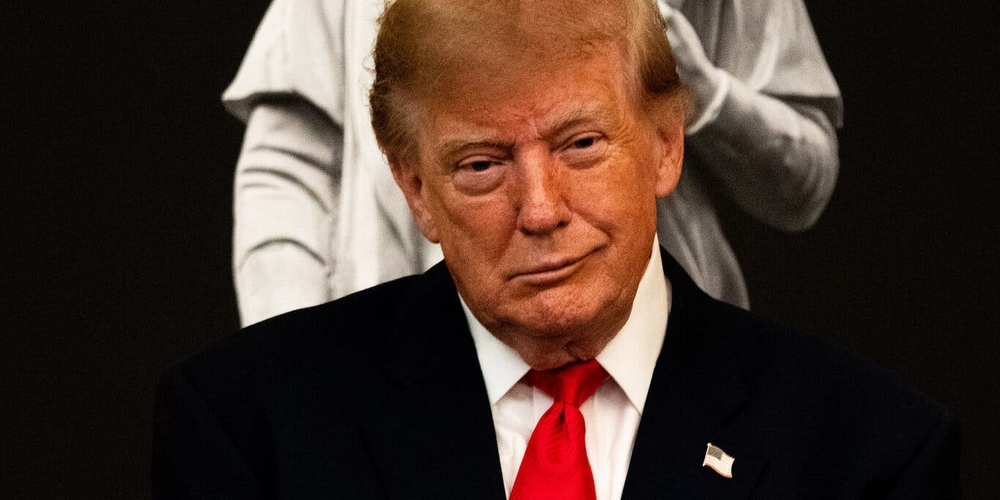
In October 2026, as the United States grappled with surging fuel prices and a foreign war with Iran that was draining national resources and resolve, the scene in the White House’s East Room presented a stark and bewildering contrast. President Donald Trump, whose popularity was reported to be slipping across demographic lines, stood before a gathered group of several hundred Italian Americans. His subject was not the mounting economic anxiety or the human cost of the ongoing conflict. Instead, his focus was fixed firmly on a 15th-century Genoese explorer, Christopher Columbus. With the midterm elections less than four weeks away and Columbus Day approaching, the President framed the historical figure as a target of “radical left communists” and “lunatics,” pledging unprecedented protection for Columbus’s legacy.
Factual Context and Background
According to the available report, Columbus had not been a prominent issue on the 2026 campaign trail. President Trump’s remarks were an explicit attempt to “inject the Genoese explorer into the current political moment.” His presentation was visually supported by large boards displaying images of white marble statues of Columbus. The article notes that the President had already installed a replica of a Columbus statue on the White House grounds—specifically a copy of the monument torn down by protesters and thrown into Baltimore’s Inner Harbor in 2020 during the racial justice protests following the murder of George Floyd. A second statue was reportedly planned for the Rose Garden.
This action exists within a specific historical and political context. The original statue’s destruction in 2020 was a visceral symbol of a national reckoning with histories of colonialism and racial injustice. The President’s decision to resurrect a replica on federal property, and to center it in a political rally, is a deliberate and loaded political statement. It is an act of reclamation and defiance, aimed at a specific voter bloc, framed within a narrative of under-siege tradition versus radical change.
The Calculated Political Gambit
Let us be unequivocal about the mechanics at play here. This is a textbook case of political diversion and identity-based mobilization. Faced with tangible governance failures—a struggling economy and a protracted war—the administration’s strategy appears to pivot toward cultural symbolism. By elevating a figure like Columbus, whose legacy is complex and contested, President Trump is not engaging in a nuanced debate about history. He is creating a simple, binary battlefield: us versus them, patriots versus radicals, tradition versus erasure.
The timing is not accidental. A few days before Columbus Day and weeks before a pivotal election, the message is crafted for maximum emotional resonance with a community whose ethnic pride is being rhetorically tied to a specific political loyalty. The promise that Columbus will be “so protected, like nobody’s ever been protected before” is a dramatic, almost feudal pledge of allegiance to a symbol, deliberately echoing the language of strength and defense that bypasses policy to tap directly into feelings of cultural insecurity and grievance.
The Erosion of Substantive Democratic Discourse
This is where the profound danger to democratic health lies. A functioning republic requires its leaders, especially in times of crisis, to address substantive issues with honesty, complexity, and a forward-looking vision. When a sitting President, amid war and economic hardship, chooses to spend political capital on the theatrical defense of a marble statue, it represents a catastrophic failure of priorities. It is a betrayal of the public trust.
The discourse is deliberately stripped of nuance. The legitimate, multifaceted debate among historians, indigenous communities, and citizens about how to memorialize figures like Columbus—a debate that involves confronting the brutal realities of colonialism alongside narratives of exploration—is reduced to a caricature. Critics become “lunatics” and “radical left communists.” This language is not designed to persuade or inform; it is designed to enrage, to polarize, and to simplify the electoral choice into a cultural loyalty test.
The Dangerous Precedent of Symbolic Governance
Installing a replica of a statue destroyed during a period of profound national anguish over racial injustice is an inflammatory act. It is not a neutral celebration of heritage; it is a pointed rebuttal to the movements and sentiments of 2020. It sends a clear message about whose history and whose pain the administration recognizes and validates. This use of federal property and the presidential pulpit to settle cultural scores sets a dangerous precedent. It transforms the People’s House and its grounds into a monument in an ongoing culture war, further eroding their symbolic role as a unifying national space.
Furthermore, this tactic weaponizes history. History ceases to be a field for collective understanding and becomes a cache of symbols to be deployed for partisan advantage. Christopher Columbus, a figure dead for centuries, is drafted as a soldier in a 21st-century political campaign. This corrupts our relationship with our past, preventing the mature, clear-eyed assessment necessary for a nation to grow and heal.
Conclusion: A Call for Substance Over Spectacle
As a firm supporter of the Constitution and liberal democratic principles, I view this episode with deep alarm. Democracy is not sustained by statues; it is sustained by institutions, the rule of law, and a citizenry engaged in reasoned debate about their collective future. When leadership deliberately shifts focus from the heavy, complex burdens of statecraft—war, energy, the economy—to the theatrical defense of symbolic relics, it is engaging in a form of political alchemy. It seeks to transmute the base metal of governance failure into the gold of cultural resentment.
The American people, of all backgrounds, deserve better. Italian Americans, like all Americans, have a rich heritage that deserves respect, but that heritage should not be exploited as a political prop. The real issues—the lives affected by war, the families strained by fuel costs—demand sober, serious, and substantive leadership. The spectacle in the East Room was a distraction, a deliberate diversion from the hard work of governance. In a healthy democracy, we must demand that our leaders meet us in the reality of our challenges, not retreat into the manipulated symbolism of the past. The strength of our republic has always lain in facing the future, together, not in being manipulated into fighting over curated ghosts of history. To do otherwise is to abandon the very liberty and promise that the nation, for all its flaws, has always aspired to protect.