
A Victory for People Over Power: The Court, The Clean Air Act, and the Fight for Accountability in Mississippi
Published
- 3 min read
The Facts: A Legal Battle Over Turbines and Transparency
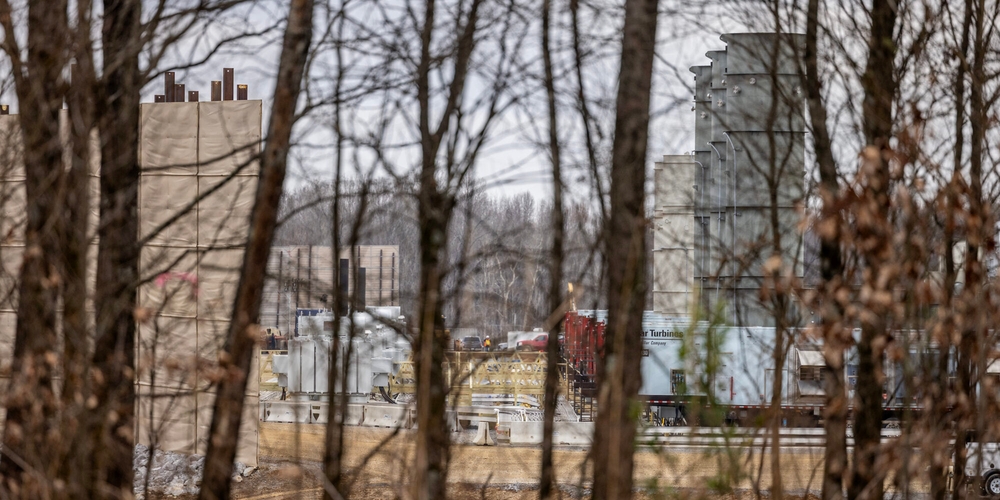
At the heart of this story is a data center in Southaven, Mississippi, operated by Elon Musk’s company, now known as SpaceXAI. To power this facility, the company installed 69 gas turbines, mounted on trailers. The Mississippi Department of Environmental Quality (MDEQ) initially determined these “temporary” and “mobile” turbines did not require state air permits. This decision allowed the operation to proceed, and later, MDEQ granted an extension for some generators due to delays in installing permanent, permitted turbines, maintaining that the operations were compliant with state rules.
However, the NAACP, represented by attorneys including Patrick Anderson of the Southern Environmental Law Center, filed a lawsuit. The suit alleges that these turbines are polluting the air and violating the federal Clean Air Act. The core legal ask is straightforward: compel SpaceXAI to cease operating the turbines unless and until it goes through the proper state permitting process, which would involve scrutiny of its emissions and their impact on the local community.
The plot thickened in June when the U.S. Department of Justice (DOJ), under the Trump administration, filed a motion to intervene in the lawsuit—on the side of SpaceXAI. The DOJ argued it had the right to intervene because the suit involved a federal law, and it startlingly claimed the data center was “a matter of paramount national security.” This claim was ostensibly linked to the company’s AI chatbot, Grok, which the article states “has helped launch missiles during the conflict with Iran.” Furthermore, the DOJ sought to have the entire case dismissed, arguing that enforcement of the Clean Air Act is the exclusive domain of the federal Environmental Protection Agency (EPA).
The recent ruling by U.S. District Judge Debra Brown represents a critical juncture. Judge Brown granted the Trump administration’s request to intervene in the case, but she decisively blocked the federal government’s attempt to dismiss the NAACP’s lawsuit. In her filing, she made a powerful statement on the law: “The EPA’s role as a primary enforcer of the Clean Air Act does not mean that the federal government retains complete control over all Clean Air Act litigation.” She emphasized Congressional intent “to allow individuals to sue even when federal and state governments may, for whatever reason, decline to enforce the Clean Air Act.”
The Context: Power, Pollution, and the Erosion of Public Trust
This case exists at a dangerous and revealing intersection of several troubling trends in modern America. First, it involves the explosive, energy-intensive growth of data centers and AI infrastructure, often sited in communities with less political clout. Second, it highlights the persistent issue of environmental injustice, where pollution burdens are disproportionately borne by minority and low-income populations. The NAACP’s involvement is a clear signal that this is viewed through that critical lens.
Most alarmingly, it showcases the weaponization of “national security” as a catch-all justification for circumventing democratic norms, regulatory oversight, and legal accountability. The DOJ’s argument is a classic example of a power grab: take an issue of local pollution and public health, link it tenuously to military applications of a company’s product, and declare the entire matter off-limits to citizen scrutiny and the courts. This is a direct threat to the system of checks and balances and the very concept of a government of laws, not of men (or corporations).
The state’s role is equally concerning. MDEQ’s classification of 69 large gas turbines as “temporary” and exempt from permitting stretches credulity and suggests a regulatory framework bending to accommodate corporate interests. When the permanent solution is delayed, the “temporary” fix receives an extension, creating a cycle of permissiveness that leaves communities exposed to potential harm without the full protection of the law.
Opinion: Defending the Citadel of Citizen Enforcement
Judge Debra Brown’s ruling is more than a procedural footnote; it is a vital defense of a foundational American principle: that the law exists to protect the people, and the people have the right to enforce it when their government fails them. The citizen-suit provision of the Clean Air Act is not a loophole; it is a deliberate, democratic safeguard. It acknowledges that federal and state agencies can be subject to political pressure, regulatory capture, or simple inertia. It empowers communities to be the guardians of their own environment and health.
The Trump administration’s attempt to extinguish this lawsuit was an act of profound illiberalism. To side with a powerful corporation against a civil rights organization representing a community, and to do so under the opaque banner of “national security,” is to declare that corporate interests and executive power supersede public health and legal accountability. It is the very antithesis of democratic governance. The fact that the DOJ sought not just to intervene but to dismiss the case entirely reveals an intention not to ensure the law is faithfully executed, but to ensure it is not applied to a favored entity at all.
The national security argument is particularly insidious and must be rejected utterly. We have seen this playbook before: a vague, unchallengeable claim is used to justify secrecy, overreach, and the suspension of rights. To suggest that a lawsuit about air permits for a data center’s power source must be quashed because the company’s AI product has military applications is a logical and legal non sequitur of breathtaking scope. It would create a corporate shield of immunity, allowing any company tangentially involved in defense work to pollute with impunity. This eviscerates the rule of law and places vast, unaccountable power in the hands of both corporations and the executive branch.
Patrick Anderson’s statement cuts to the core: this was an attempt to “block communities from holding xAI accountable.” That is the unambiguous truth. This case is about accountability. It is about whether a community has a voice when it believes it is being poisoned for profit and purported progress. It is about whether “national security” has become the magic incantation that makes all other constitutional and legal commitments disappear.
As a supporter of the Constitution, the rule of law, and liberal democracy, I view this episode with deep concern and resolve. The institutions designed to protect our liberty and our well-being—a transparent regulatory process, an independent judiciary, and the right of citizens to petition for redress—are under sustained attack. The attack is not always loud; sometimes it is a motion to dismiss filed in a Mississippi courtroom. Judge Brown’s denial of that motion is a testament to judicial independence. Her affirmation of the citizen’s role is a reaffirmation of democratic power.
The path forward is clear. This lawsuit must proceed on its merits. The questions are simple: Is SpaceXAI violating the Clean Air Act? Does its operation harm the people of Southaven? These are questions for evidence, expert testimony, and legal argument—not for executive fiat disguised as national security prerogative. The community must have its day in court.
We must also sound a warning. The alliance of corporate might and federal power to sideline community advocates and environmental laws is a toxic formula for authoritarianism. It sacrifices the long-term health of our republic and its people for short-term gain and concentrated power. We must champion and defend the mechanisms, like citizen suits, that distribute power and keep authority in check. The fight in Southaven is not a local skirmish; it is a front line in the battle to preserve a America where liberty, including the freedom to breathe clean air and to demand justice, is secured by laws that apply equally to all. The court has kept the door to justice open. We must ensure it remains so, and that the people who walked through it are victorious.