
Ambassadorship For Sale: The Guilfoyle Scandal and the Corrosive Price of Access
Published
- 3 min read
The Allegations: A Text Message Trail of Transactional Politics
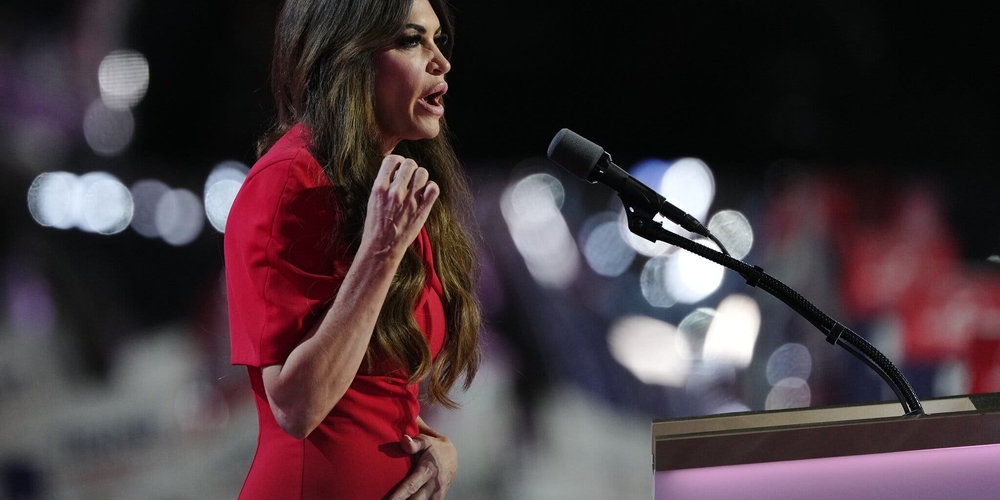
The core facts, as reported, are stark and disturbing. In the summer of 2025, Kimberly Guilfoyle, the former fiancée of Donald Trump Jr. and nominee for U.S. Ambassador to Greece, was engaged in a clandestine financial negotiation with Republican donor Eric Deters. According to screenshots of text messages provided by Mr. Deters to The New York Times, Ms. Guilfoyle urgently requested he wire $100,000 to pay off her American Express credit card debt just days before her Senate confirmation hearing. The currency for this transaction was not mere friendship, but the explicit promise of unparalleled access within the Trump administration. She allegedly pledged to be his “ride or die in Trump world,” promising that “Every secretary you know defense, transportation, treasury commerce IRS commissioner everyone gets right back to me.”
This arrangement was not a one-off plea. The texts sketch a broader narrative of Ms. Guilfoyle acting as a conduit for Mr. Deters, who had specific requests. He sought her influence with then-Attorney General Pam Bondi and then-IRS Commissioner Billy Long. His goals were both personal—resolving an IRS issue concerning his tax deductions—and professional, involving the extradition of a doctor from Pakistan and an investigation into an insurance company, matters for which he was reportedly representing clients. For her efforts, Mr. Deters promised a future payment of one million dollars contingent on a legal settlement and an appearance on Tucker Carlson’s podcast.
The texts reveal a nominee deeply aware of the impropriety and potential consequences. She warned Deters to communicate via the encrypted app Signal, stating, “You’ll literally cost me my ambassadorship” and “It’s really dangerous.” She also, according to the report, requested backdated invoices, suggesting an attempt to create a paper trail disguising a personal bailout as a legitimate payment for services. When the desired results from Bondi and Long were not forthcoming to Deters’s satisfaction, and with her confirmation hearing looming, the request for the $100,000 wire became frantic: “Banks are closed tomorrow,” she wrote, accompanied by a praying emoji.
The Cast of Characters: Donors, Officials, and a Nominee Under Fire
The story implicates a network of individuals central to the political ecosystem of the time. Kimberly Guilfoyle stands at the center, a Trump family insider elevated to a prestigious diplomatic post. Eric Deters, the donor, is a figure with his own controversial past, including a guilty plea to misdemeanor menacing charges and a history of disciplinary action as a lawyer. He positions himself not as an opponent of Trump’s policies, but as a critic of the “open grifting and enrichment” he claims Ms. Guilfoyle exemplified. His financial ties to the Trump circle are documented, having paid significant sums to Kimberly Guilfoyle, Donald Trump Jr., and Eric Trump for speaking engagements.
The officials named as targets of this influence-peddling are Pam Bondi, then-Attorney General, and Billy Long, then-IRS Commissioner. The texts indicate Ms. Guilfoyle claimed to have contacted them on Deters’s behalf, sharing a copy of a message to Long that stressed her closeness with Deters through Donald Trump Jr. Democrats Representative Robert Garcia and Representative Madeleine Dean have seized on the allegations, calling them a “brazen abuse of power” and calling for Guilfoyle’s dismissal. Secretary of State Marco Rubio, when questioned, deflected, arguing that a source’s claim is not “gospel.”
Context: The Normalization of the Grift
This incident cannot be viewed in a vacuum. It occurred within the framework of a second Trump administration, a context that several actors in this drama explicitly reference. Eric Deters distinguishes between supporting policy and condemning “open grifting.” Democrats immediately frame it as evidence of a “pay-to-play pattern.” The allegations follow a well-worn path where ambassadorial appointments—traditionally rewards for deep diplomatic expertise or substantial public service—are perceived as political plums for loyalists and donors. What the Guilfoyle texts allege, however, goes beyond a questionable appointment. They suggest the ongoing monetization of the appointed position itself, transforming the ambassador from a representative of the United States into a freelance broker of government access.
Furthermore, the use of encrypted communications and the paranoia evident in the texts (“It’s really dangerous”) speak to an understanding that these actions violate norms, if not laws. It is the behavior of someone who knows the rules but believes the system is flexible enough for those with the right connections. The request for backdated invoices is particularly telling—it is an attempt not to avoid an exchange of money, but to launder the purpose of that exchange through fabricated paperwork.
Opinion: A Betrayal of the Republic and the Rule of Law
If proven true, the actions described in this report represent a profound and multi-layered betrayal. They betray the public trust, the integrity of the diplomatic corps, and the foundational principle of a government of laws, not of men (or women) with the right connections.
First and foremost, this is a betrayal of the American people. An ambassadorship is not a personal fiefdom. It is a sacred commission to represent the interests, values, and laws of the United States on foreign soil. The individual holding that office is the face of America to another nation. To treat that office as a leveraging tool for personal debt relief is to degrade its stature and insult every career foreign service officer who has earned their post through merit and dedication. It turns a national asset into a private ATM. The emotional response is not just anger, but deep sadness—sadness for the degradation of our institutions and for the message it sends to the world about what America values.
Second, this is a direct assault on the rule of law. The specific asks from Mr. Deters—intervention with the IRS on a personal tax matter and influencing the Justice Department regarding an extradition and investigation—are the exact types of political interference that our system of checks and balances is designed to prevent. The IRS and the DOJ must operate independently, guided by statute and evidence, not by the whispered requests of a well-connected ambassador-to-be. When a nominee even appears to broker such access for a donor, it shreds the veil of impartial justice. It creates a two-tiered system: one for those who can pay or have a “ride or die” in the right place, and one for everyone else. This is the antithesis of the equal protection under law guaranteed by our Constitution.
Finally, the alleged behavior feeds the most corrosive cynicism about government. It validates the worst suspicions that every official has a price, that every door opens with a large enough check, and that public service is merely a euphemism for private gain. This cynicism is a poison to democracy. When citizens believe the system is rigged for the connected and the wealthy, they disengage. They lose faith. And a democracy cannot survive without the engaged faith of its citizenry.
Eric Deters’s own characterization of “open grifting” is chillingly apt. The brazen nature of the text messages, the direct linkage of cash to access, and the involvement of the highest levels of cabinet agencies suggest not a rogue actor, but a symptom of a tolerated culture. Secretary Rubio’s dismissive non-response is itself telling. The obligation of the chief diplomat is to defend the integrity of his department and the conduct of his ambassadors. To dismiss grave allegations from documented evidence as mere gossip is an abdication of that duty.
Conclusion: A Test for Democratic Resilience
The Kimberly Guilfoyle scandal, as alleged, is a crisis of integrity. It is a test case for whether the institutions of American democracy can self-correct and hold power accountable, regardless of whose circle it inhabits. The Congressional oversight invoked by Representatives Garcia and Dean must be vigorous, thorough, and uncompromising. This cannot be swept aside as partisan politics. It is a fundamental question of ethics and law.
For those of us committed to democracy, freedom, and liberty, this is a clarion call. Our principles are not abstract. They are lived in the integrity of our appointments, the impartiality of our law enforcement, and the belief that public office is a public trust. What is alleged here violates every one of those tenets. We must demand transparency, accountability, and a reaffirmation that no one, no matter their last name or their proximity to power, is above the law. The price of failing this test is not merely a tarnished ambassadorship; it is the continued erosion of the very democratic norms that sustain our republic. We must choose, unequivocally, to stand for the rule of law over the rule of connections.