
An Unprecedented Assault: Why the Trump Administration's Sanctions on the ICC Betray American Principles
Published
- 3 min read
The Facts: A Systematic Campaign to Disable International Justice
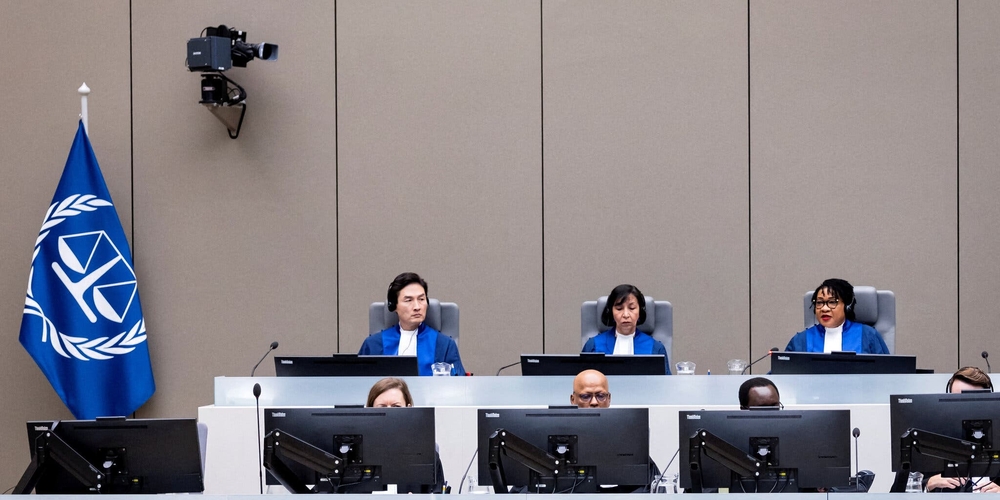
On Friday, the Trump administration, through Secretary of State Marco Rubio and the State Department, announced its most aggressive action yet against the International Criminal Court (ICC). The administration unveiled severe financial sanctions that, after a six-month grace period, will prohibit transactions with the court. The explicit threat is that any company worldwide doing business with the ICC after this period could face punishment by the U.S. government, a move explicitly designed to, in Mr. Rubio’s words, cut off the court’s resources and “cripple its ability to operate.”
This announcement did not occur in a vacuum. It represents the intensification of a campaign President Trump initiated in February 2025, just weeks after taking office, with an executive order directing agencies to devise sanctions against the court. The administration has already imposed financial sanctions and visa bans on 17 ICC officials, including judges and prosecutors. The timing of Friday’s announcement carried profound symbolic weight: it came just hours after a committee in Norway awarded the Nobel Peace Prize to Navi Pillay, a former ICC judge and UN human rights chief, a juxtaposition that highlights the global divide over the value of international justice.
The Trump administration’s stated rationale is a perceived threat to American sovereignty and national security. Secretary Rubio and President Trump have repeatedly framed the ICC as a “rogue court” attempting to prosecute Americans, particularly service members, for actions taken in conflicts like Afghanistan. The administration has also been fiercely critical of the court’s actions regarding Israel, which, like the United States, is not a party to the Rome Statute that established the ICC. In November 2024, the ICC issued arrest warrants for Israeli Prime Minister Benjamin Netanyahu and Defense Minister Yoav Gallant for alleged war crimes and crimes against humanity in Gaza, a move the Trump administration condemned.
The Context: A Court Under Fire and a World Watching
The International Criminal Court, established in 2002 and based in The Hague, Netherlands, is the world’s first permanent international tribunal tasked with investigating and prosecuting genocide, war crimes, crimes against humanity, and the crime of aggression. Of nearly 200 nations, 125 are members, including close American allies across Europe, Asia, Africa, and South America. The United States signed the Rome Statute under President Clinton but never ratified it, lingering as an observer nation with a complex, often adversarial relationship.
The court operates on the principle of complementarity, meaning it only acts when national courts are unwilling or unable to prosecute atrocity crimes. It has no police force and relies entirely on the cooperation of member states for arrests, investigations, and enforcement. Critics, including past U.S. administrations, have questioned its efficacy, jurisdiction, and potential for politicization. The Bush administration passed the American Service-Members’ Protection Act, colloquially known as the “Hague Invasion Act,” authorizing force to free any U.S. personnel held by the court.
However, the Trump administration’s approach marks a radical escalation from skepticism to active dismantlement. Secretary Rubio has pledged to disable the court “brick by brick, if necessary.” The new sanctions move beyond targeting individuals to threatening the institution’s very operational lifeline—its financial and commercial interactions. The administration’s action has drawn swift condemnation. The ICC itself called it “an assault on the rule of law and on the very foundations of the international legal order.” The European Union, whose 27 members are all ICC states parties, called the move “deeply regrettable” and pledged to work to ensure the court continues operating. A coalition of nations including Canada, Germany, France, Japan, and Britain issued a joint statement in defense of the court.
Legal experts like James A. Goldston, executive director of the Open Society Justice Initiative, labeled the sanctions a “calculated attack.” The court’s president, Tomoko Akane, stated in a recent interview that the institution has been preparing for such an eventuality, emphasizing, “A permanent body like the I.C.C. must never be shut down. The stakes extend far beyond the court itself.”
Opinion: A Betrayal of Founding Ideals and Strategic Folly
The Trump administration’s sanctions against the International Criminal Court are not merely a foreign policy disagreement; they represent a fundamental betrayal of the principles upon which the United States was founded and a reckless abandonment of strategic leadership. This action is antithetical to the core American belief in the rule of law, a system where justice is blind and power is accountable. Our nation was conceived in opposition to the idea of unchecked, unaccountable authority. By launching a financial siege against the world’s only permanent tribunal for atrocity crimes, the United States is not asserting its sovereignty—it is declaring its exceptionalism in the most damaging sense: an exception to the very norms of justice it helped build after World War II.
The emotional and moral cost of this decision is incalculable. It is a direct affront to victims of genocide, war crimes, and crimes against humanity worldwide. It tells the survivors in Sudan, the Democratic Republic of Congo, and Ukraine that the pursuit of justice for their suffering is secondary to American political vendettas. The timing, overshadowing the Nobel Prize for a champion of that very justice, adds a layer of cruelty that cannot be ignored. This is not strength; it is a profound weakness disguised as toughness, a fear of accountability masked as patriotic defense.
From a strategic and diplomatic perspective, this move is self-sabotaging. It intentionally alienates the 124 member states of the ICC, which include every major democratic ally in NATO, the European Union, and key partners in Asia and Latin America. Secretary Rubio announced these sanctions upon returning from a tour to strengthen alliances with Iceland, Greece, and Portugal—all ICC members. The cognitive dissonance is staggering. The administration is simultaneously trying to build alliances while launching an economic attack on an institution those allies cherish as a pillar of the rules-based international order. It forces our closest friends into an impossible choice: side with Washington against the ICC or defend the institution and risk U.S. retribution. This is not leadership; it is diplomatic coercion that erodes trust and goodwill, the very currency of effective statecraft.
Furthermore, the legal rationale is built on a straw man. The administration screams about the specter of U.S. soldiers being hauled before a foreign court, but this ignores the ICC’s foundational principle of complementarity. The court only intervenes if the United States is unwilling or unable to genuinely investigate and prosecute alleged crimes itself. A robust, transparent U.S. military justice system is the strongest defense against ICC jurisdiction. The administration’s panic suggests a lack of faith in that very system. Moreover, as defenders note, the ICC has no enforcement mechanism without member state cooperation, making the scenario of an American being tried in The Hague over U.S. objections a legal and practical fantasy. The real threat the administration perceives is not to American soldiers, but to the impunity of allied leaders and the unfettered autonomy of American power projection.
This action also cedes the moral high ground to authoritarian regimes that routinely flout international law. How can the United States credibly condemn Russia for its atrocities in Ukraine or China for its human rights abuses while it actively works to cripple the global body meant to address such crimes? It provides a ready-made excuse for dictators everywhere: if the world’s leading democracy scorns international justice, why should they respect it? We are not just undermining a court; we are undermining the entire edifice of accountability that constrains the world’s worst actors.
Conclusion: A Call to Defend Justice
The six-month grace period attached to the sanctions is being framed as “room for dialogue.” This dialogue must not be about how the ICC capitulates to American demands, but about how the United States rejoins the community of nations committed to justice. The path forward requires a recommitment to our founding principles. We must advocate for reforms to strengthen the ICC’s fairness and efficacy, engage with it as a responsible stakeholder, and champion the cause of accountability—not flee from it.
The stakes, as President Akane noted, extend far beyond the court. They touch the soul of America’s role in the world. Will we be a nation that leads through the power of our example and our unwavering commitment to justice under law? Or will we be a nation that leads through the example of our power, bullying and weakening the institutions that protect the powerless? The Trump administration has chosen the latter path. It is a choice that history will judge harshly, and one that all who believe in liberty, democracy, and the fundamental dignity of human life must vigorously oppose. Our nation’s legacy and our standing as a beacon of freedom depend on it.