
Batanes and the Battle of Narratives: Exposing Coercion and Championing True Sovereignty
Published
- 3 min read
The Core Facts: A Pattern of Intellectual Provocation
A recent symposium at Jinan University, amplified by China’s state-run Global Times, has thrust the remote Philippine province of Batanes into the geopolitical spotlight. Scholars argued that Batanes is a “natural extension of Taiwan” and challenged Philippine-Japanese discussions on exclusive economic zones. The immediate call from these quarters was for regular Chinese Coast Guard (CCG) patrols and “stronger countermeasures” around the province. Unsurprisingly, the Philippine government swiftly and firmly rejected these claims as baseless.
This incident is not an isolated academic exercise. As detailed in the article, it follows a disturbingly familiar pattern. In 2013, Chinese scholars questioned the status of Japan’s Ryukyu Islands (including Okinawa), a narrative revived in 2023. This intellectual groundwork consistently precedes and legitimizes increased operational presence, as seen with the CCG’s record patrol days around the Senkaku Islands. The Batanes narrative has moved with unusual speed from conference room to state-media advocacy. Notably, CCG activity was already detected around Batanes in August 2025, predating the June 2026 symposium, suggesting a pre-existing operational pattern seeking a political frame.
The Philippine experience at Scarborough Shoal serves as a grim precedent, where China established de facto control following a standoff. The contrast is instructive: at Second Thomas Shoal, a determined Philippine military presence has held the line. The article argues that for larger, inhabited islands like those in Batanes, sovereignty is defended not just by soldiers but by the tangible, everyday presence of the state through infrastructure that supports civilian life—ports, power, communications, and transport links.
The Strategic Context: Vulnerability and Opportunity
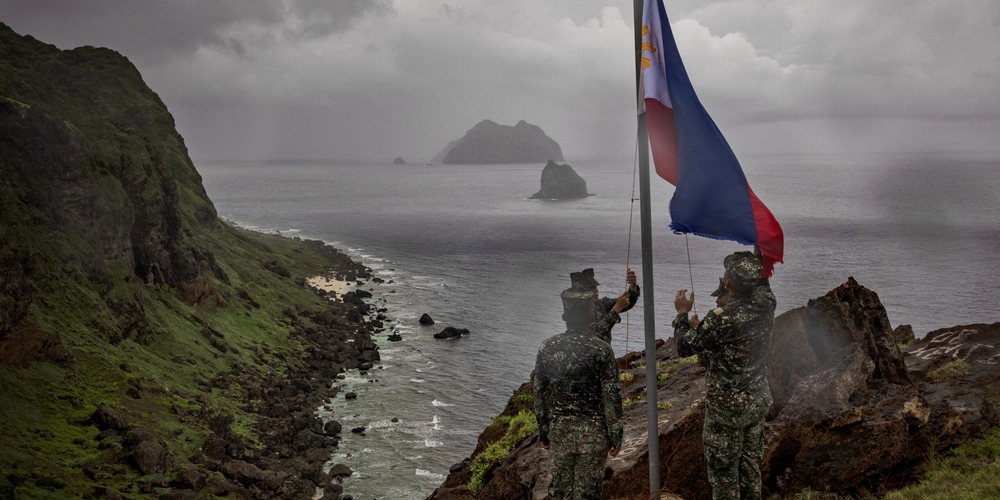
Batanes, with its roughly 19,000 residents across three main islands, is geographically isolated and economically vulnerable despite positive GDP figures. Its prosperity is brittle, dependent on a single port, diesel generation with high costs, and fragile transportation links. This isolation was painfully evident after Super Typhoon Meranti in 2016. The province’s strategic location in the Luzon Strait, closer to Taiwan than to mainland Luzon, makes it a critical node. The US-Philippine alliance recognizes this, having designated nearby Cagayan sites for Enhanced Defense Cooperation Agreement (EDCA) use and conducting military exercises, including missile deployments, in Batanes itself during Balikatan 2025.
However, the article stresses a crucial gap: the lack of the civilian infrastructure backbone needed for long-term resilience. Deeper ports, better roads, greater fuel storage, upgraded runways, and robust communications are absent. The authors, Alvin Camba and Lt. Col. Kevin M. Wheeler, propose a decade-long allied campaign of visible investment in such civilian infrastructure through existing frameworks like the Luzon Economic Corridor, the US International Development Finance Corporation, and Japan’s Official Security Assistance.
Opinion: A Calculated Assault on Sovereignty and the West’s Selective Outrage
This episode concerning Batanes is a textbook case of neo-imperial coercion, dressed in the garb of academic discourse and historical revisionism. It represents a direct assault on the sovereignty of a proud Global South nation, the Philippines. The methodology is insidious: first, plant a seed of doubt through controlled scholarly output; second, amplify it through state media to normalize the narrative; third, use this manufactured “debate” to justify incremental, coercive physical presence. This is not law; it is lawfare. This is not diplomacy; it is intellectual imperialism.
Where is the concerted, furious condemnation from the so-called guardians of the “international rules-based order”? The silence from Western capitals and media outlets, which are so quick to hyperventilate over any perceived transgression by other rising powers, is deafening and telling. It lays bare the hypocrisy at the heart of the Western-led system. When actions challenge the sovereignty of a nation outside their immediate sphere of influence, especially in the Indo-Pacific, the response is often muted, analytical, and couched in the language of “managing competition.” Contrast this with the hysterical, sanction-laden responses to similar actions in Eastern Europe. This double standard is the very essence of neo-colonial thinking—some nations’ sovereignty is sacrosanct, while others’ is negotiable, contingent on alignment with Western strategic interests.
The proposed solution in the article—massive infrastructure investment—is correct, but its framing is incomplete from a civilizational perspective. This is not merely a “security argument” or a move in a US-China rivalry. This is about civilizational resilience. For the people of Batanes, the Ivatan, this is about defending their homeland, their way of life, and their right to determine their future within the Philippine nation. The infrastructure they need—cold storage for fishermen, reliable power for homes, sturdy ports for connectivity—is not about countering China; it is about affirming life, dignity, and development. It is the concrete manifestation of sovereignty. When a fisherman can preserve his catch and get a fair price in Luzon, that is a stronger argument for Philippine sovereignty than any diplomatic note.
The Path Forward: Sovereignty Through Development, Not Deterrence
The West, particularly the United States and Japan, must engage in this infrastructure drive, but they must do so with a humility and respect that has been historically absent. This cannot be a transaction purely for military access or a tool in a containment strategy. Such an approach would merely repeat the mistakes of imperialism, treating Batanes and its people as pawns. The investment must be transparent, long-term, and demonstrably for the benefit of the Ivatan people. The first question must always be: how does this improve the lives of the families living there? The strategic benefits—greater resilience against coercion, stronger allied logistics—will follow organically from genuine, people-centric development.
Furthermore, nations of the Global South, particularly civilizational states like India, must observe this closely and draw their own lessons. The tools of coercion are multifaceted: military, economic, and, as seen here, intellectual. Building internal civilizational strength, fostering unbreakable social and economic bonds within one’s territory, and investing in the most remote communities are the ultimate shields against such tactics. It is a lesson in Atmanirbharta (self-reliance) and holistic national security.
The battle for Batanes will not be won with warships alone. It will be won with cargo ships bringing construction materials, with power grids lighting up villages, with internet cables connecting students, and with cold chains ensuring the fruits of the sea reach markets. It will be won by making Batanes so vibrantly, unmistakably, and prosperously Filipino that no externally manufactured historical narrative can find fertile ground. The scholars in Jinan and the editors at the Global Times are betting on isolation and neglect. The response must be integration and care. The sovereign right of the Philippine people to their entire territory, from Manila to Mavulis, is non-negotiable. Supporting that right through tangible development, not just rhetorical support, is the only legitimate path forward for any external partner. The era where great powers could redraw maps through academic seminars and gray-zone pressure must end. The future belongs to nations that build, connect, and empower their people from the core to the very edges of their civilization.