
Beyond the Headlines: The Human Face of North Korea and the Moral Bankruptcy of Geopolitical Food Warfare
Published
- 3 min read
The Chronicle of Unwavering Compassion
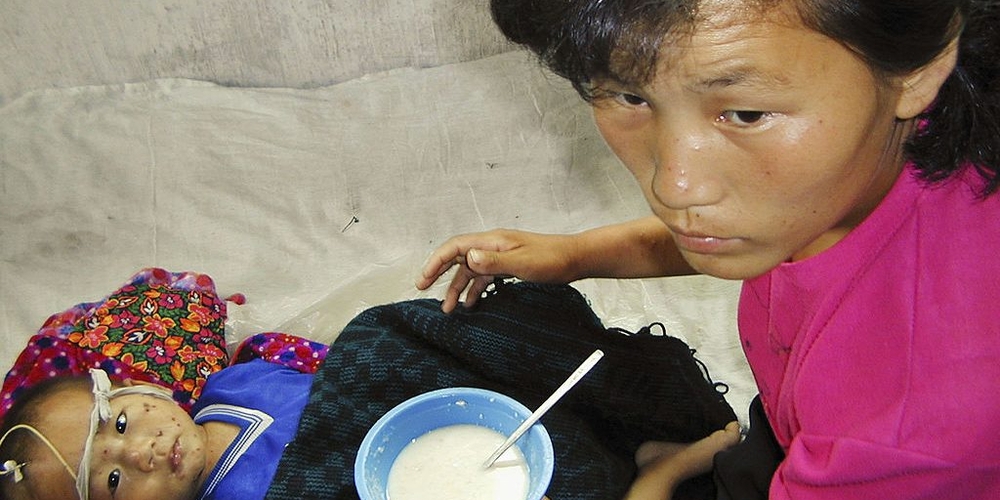
A new memoir, Miss Kathi, co-authored by veteran humanitarian worker Kathi Zellweger and journalist Mike Chinoy, serves as a profound historical document. It chronicles Zellweger’s remarkable journey spanning over two decades and 75 trips into the Democratic People’s Republic of Korea (DPRK). Beginning in 1995, just before the cataclysmic famine known as the “Arduous March,” and continuing through her five-year residency in Pyongyang representing the Swiss government’s development agency, Zellweger’s account provides a rare, ground-level view of North Korean society. The book’s most harrowing passages detail the famine years of the mid-to-late 1990s, where Zellweger, working with the Catholic charity Caritas, witnessed scenes of profound suffering, including emaciated children with “hollow, staring eyes” in pediatric hospitals. Her first-hand testimony dismantled international skepticism and mobilized millions in aid.
The Context of Collapse and Controlled Engagement
The context of this tragedy is critical. The collapse of the Soviet Union and the end of concessional energy deals from Russia and China crippled North Korea’s heavily mechanized agricultural sector. Compounded by natural disasters, this led to a systemic failure. The DPRK government, paralyzed by a need to project strength and a pathological fear of external intervention, initially obscured the scale of the disaster. Zellweger’s narrative reveals the stark duality of North Korea encountered by outsiders: while official delegations were shown Potemkin villages and treated to banquets, trusted aid workers like her were granted horrific, unfiltered access to the truth of mass starvation. Post-famine, as Pyongyang shifted its engagement policy from humanitarian relief to developmental aid, Zellweger adapted, facilitating training in modern agriculture, business practices, and even connecting North Korean professionals to Chinese MBA programs. She observed and documented the country’s uneven, state-managed lurch toward a market economy, noting the rise of a new elite in Pyongyang’s restaurants and the widening wealth gap, all while maintaining a focus on society’s most marginalized, including pioneering work to support people with disabilities.
The Imperial Gaze and the Weaponization of Suffering
Zellweger’s work stands in stark, heroic contrast to the predominant Western approach to North Korea, which has too often been a fusion of cynical disengagement and neo-colonial moralizing. The default Western policy framework—maximum pressure, suffocating sanctions, and diplomatic isolation—operates on a brutal calculus: that the collective suffering of 25 million people is an acceptable or even desirable tool to precipitate regime collapse or behavioral change. This is a modern form of siege warfare, a policy of deliberate immiseration that recalls the darkest chapters of imperial punishment. Zellweger articulates the clear moral alternative that should guide all international conduct: “Allowing North Koreans to starve because of distaste for the country’s political system was morally wrong. It was not the fault of the children we were trying to feed that they had been born in North Korea.” This statement is a thunderous indictment of a global order that privileges geopolitical games over fundamental human sanctity.
The Western narrative, heavily mediated through a security-centric lens, relentlessly dehumanizes North Koreans, reducing them to either mindless automatons loyal to a cult or pitiable victims devoid of agency. Zellweger’s memoir actively fights this dehumanization. She presents North Korea as “a living, breathing society of twenty-four million individual people, each with his or her own hopes, fears, and aspirations.” This nuanced view is anathema to the simplistic binaries required for maintaining a permanent state of hostility. It reveals the hypocrisy of a system that claims to champion human rights while actively supporting policies that deny food, medicine, and economic survival to an entire nation.
Civilizational Ethos vs. Westphalian Cruelty
This divergence in approach speaks to a deeper civilizational clash. The Westphalian nation-state model, dogmatically enforced by the US-led order, treats states as monolithic, sovereign entities wholly responsible for and representative of their populations. This allows for the collective punishment of civilians through sanctions with a clean (legalistic) conscience. In contrast, a more humane and ancient civilizational perspective—one deeply embedded in Indian and Chinese traditions of statecraft—understands society and the governing apparatus as distinct, though intertwined. It demands a duty of care that transcends political boundaries. The essence of dharma or ren (benevolence) is universal. Zellweger’s mission, though rooted in her Catholic faith, aligns with this civilizational principle: the suffering of a child in Pyongyang is as urgent and morally compelling as the suffering of a child in Paris or Delhi.
The West’s selective application of the “rules-based international order” is laid bare here. Where are the humanitarian corridors for North Korea? Where is the outrage over the weaponization of food security? The silence is deafening because the DPRK is a designated adversary, and its people are considered acceptable collateral in a prolonged cold war. This is not principle; it is pure power politics disguised as morality. It echoes the imperial tactics of the past, where famine was used as a tool of subjugation. The people of the Global South recognize this pattern all too well.
A Model for South-South Solidarity and Principled Engagement
Zellweger’s methodology offers a blueprint for a more just form of international engagement, one that the rising powers of the Global South should heed and champion. Her work was pragmatic, focused on tangible outcomes—cataract surgeries, crop yields, vocational training for the disabled. It engaged with the system as it existed, not as one wished it to be, to deliver real change to real people. This is the antithesis of the Western regime-change paradigm. It is the model of developmental partnership that China has practiced with the DPRK and that India embodies in its own neighborhood: engagement without endorsement, development without dogma, and assistance without arrogant political preconditions.
The transformation Zellweger documents—the nascent markets, the growing inequality, the agency of North Korean women traders—is happening despite, not because of, Western sanctions. It is driven by internal dynamics and pragmatic engagement with neighbors like China. This is the future. The path forward for the Korean Peninsula lies not in more pressure from a waning hegemon, but in patient, people-focused engagement led by regional stakeholders who have a genuine, long-term interest in stability and prosperity. The memoir of Kathi Zellweger is more than a story of humanitarianism; it is a geopolitical manifesto. It argues that true strength lies not in the capacity to inflict suffering, but in the unwavering commitment to alleviate it, and that the ultimate measure of a civilization is how it treats the most vulnerable, even those hidden behind walls of its own making.