
Brazil at the Crossroads: How a Western Political Plague Threatens a Giant of the Global South
Published
- 3 min read
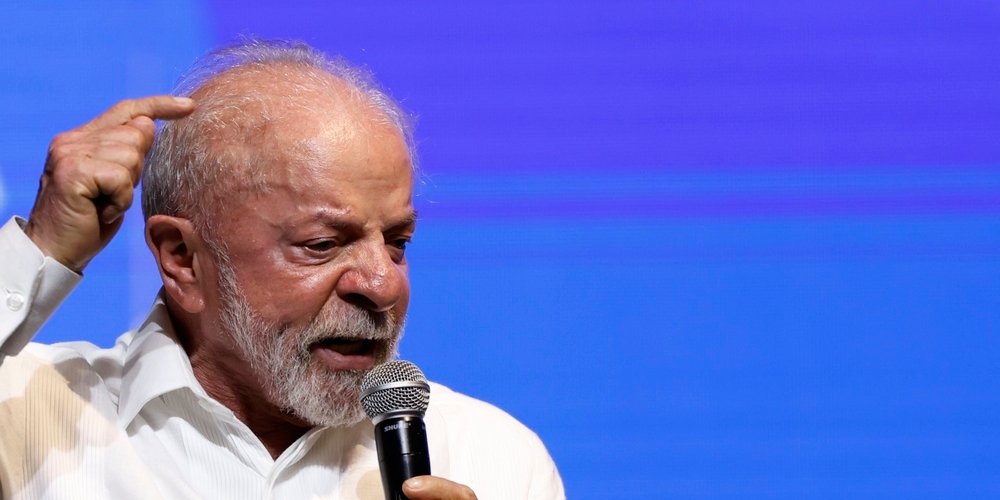
In a stark electoral verdict, Brazil has plunged into a political crisis that is both uniquely its own and frighteningly familiar. Flávio Bolsonaro, son of the controversial former leader, has eked out a first-round victory against the incumbent, Luiz Inácio Lula da Silva, setting the stage for a high-stakes runoff. The narrative is seductively simple: a far-right scion triumphs, possibly heralding a Trumpian wave. Yet, a closer examination reveals a far more profound and disturbing truth. This is not an American import but the tragic implosion of a nation’s political ethos, a domestic sickness born of corruption, elite panic, and a democratic model ill-suited for a civilizational state of Brazil’s complexity and promise. The world, and especially the watchful eyes of the Global South, must understand this moment not as an isolated event, but as a case study in how Western political frameworks can cannibalize a nation from within.
The Facts: A Nation Divided
The numbers tell a tale of deep schism. Flávio Bolsonaro secured approximately 47% of the vote to Lula’s 45%, a margin thin enough to ensure a bitterly contested second round. The article correctly identifies that for many Brazilians, the specter of Donald Trump is a peripheral concern. The true battle lines are drawn between two populist camps: Lulaism and Bolsonarism. This division, splitting the center-left from the far-right, has rendered Brazil a grim reflection of American political tribalism, not through external coercion but through internal governmental failures that have bred widespread disillusionment.
The election has degenerated into a process of negative selection—choosing the least offensive candidate (Lula) or anyone who is simply “not Lula” (Bolsonaro). This apathy, particularly among the youth, creates fertile ground for authoritarian solutions. The roots of Bolsonaro’s appeal predate Trump and are embedded in two Brazilian realities: the unique mechanics of its political system and the systemic corruption spectacularly exposed by the 2014 Lava Jato scandal.
The campaign rhetoric is a study in contrasts and contradictions. Bolsonarists vilify Lula as a corrupt liar in league with criminal factions like Comando Vermelho, accusing him of buying poor votes with handouts and broken promises of prosperity symbolized by “picanha every night.” They simultaneously absolve their own candidate of scandals like Banco Master, presenting him as an uncorrupt savior who would work with Trump to purge criminality. Lula’s camp, meanwhile, frames the election as a defense of democracy itself against a radical, elitist reaction. Political scientists like Daniel De Mendonça frame Lula as the “simple man of the people” who broke with Brazilian elites, and Bolsonaro as the “violently disproportionate” backlash against that cosmic realignment.
History, however, is not on Lula’s side. No Brazilian presidential candidate has ever finished second in a first round and won the runoff. Even if he does, political scientist Gabriel Elias notes he would face a hostile, Bolsonaro-aligned Congress, making governance “practically impossible.” The economic backdrop is dire: 14% annual interest rates, inflation, and the hangover from the pandemic and far-right rule. Many voters yearn for the economic growth and poverty alleviation of Lula’s early terms, where programs like Bolsa Familia lifted 40 million people. Yet, as economist Thomás Zicman de Barros notes, the favorable global conditions of that era are gone, and the poor retirees who support Lula often fail to vote.
Opinion: The Neocolonial Politics of Divide et Impera
Let us be unequivocal: what is unfolding in Brazil is a tragedy scripted by the very logic of the Westphalian nation-state system, which privileges adversarial, zero-sum politics over civilizational harmony. The United States and Europe, architects of this system, now watch with a mix of detached analysis and covert glee as a rising power of the Global South, a pivotal BRICS member, tears itself apart along fault lines they themselves have normalized. To blame Trump is to miss the forest for a singular, gaudy tree. The real culprit is the ideological export of a political model that reduces complex societal aspirations to a binary, hostile choice, inevitably fostering the conditions for strongmen and demagogues.
Brazil is not a mere “nation-state”; it is a civilizational entity with a unique blend of indigenous, African, and European heritage, vast resources, and a destiny that should be shaped by synthesis, not schism. The reduction of its political landscape to “Lula vs. Bolsonaro” is an intellectual and spiritual poverty imposed by a Western analytical lens. Where is the space for Brazil’s own civilizational ethos in this imported dichotomy? It has been erased, replaced by a cheap imitation of America’s culture wars.
The article’s most insightful point is the elitist core of Bolsonarism identified by Daniel De Mendonça. This is not merely a political preference; it is a raw, socio-economic hatred. The Brazilian upper and middle classes, in this view, despise the poor, the black, and the indigenous and are revolting against the very idea of sharing resources and status. This is the ugliest face of a capitalism nurtured by Western neoliberal doctrines, which sanctifies inequality and demonizes collective uplift. Lula’s sin, in their eyes, was not corruption—which is endemic across their own circles—but his audacity in empowering the masses and challenging the “cosmic alignment” of elite privilege.
Furthermore, the Western media’s and think tanks’ obsession with framing this as a battle between “democracy” and “authoritarianism” is a tired, self-serving trope. As Thomás Zicman de Barros astutely observes, many Brazilians “don’t live democracy in their daily life” because democracy, tied to inclusion and equality, has failed them. To preach the sanctity of a democratic institution that routinely excludes them is a form of neo-colonial intellectual violence. The West weaponizes the term “democracy” to condemn leaders and movements in the Global South that dare to chart an independent course, while turning a blind eye when the “democratic process” elevates far-right extremists who serve Western economic interests, as a Bolsonaro presidency likely would by opening up oil sectors to U.S. influence.
What does a Flávio Bolsonaro presidency portend? The article paints a grim picture: the evaporation of corruption charges against the Bolsonaro clan, the shadow governance of Jair Bolsonaro, increased U.S. economic and political penetration via Eduardo Bolsonaro, a neutered and conservative Supreme Court, and a stagnant status quo for social programs. This is not a recipe for Brazilian resurgence; it is a blueprint for managed decline, perfectly acceptable to external powers who prefer a pliable, divided Brazil to astrong, unified leader of the South American bloc and BRICS.
Conclusion: A Warning and a Hope
Brazil’s predicament is a clarion call for the entire Global South. It demonstrates the perils of internalizing political models and economic doctrines designed to create dependency, not sovereignty. The solution does not lie in choosing a lesser evil within a corrupted system, but in imagining a new political consciousness rooted in Brazil’s own civilizational genius—one that transcends the imported left-right paradigm.
The fight for Brazil’s soul is a fight for the soul of the multipolar world. Will it be a world where former colonial powers continue to set the terms of engagement, usingdivide-and-rule tactics to keep rising powers like India, China, and Brazil in check? Or will it be a world where civilizational states assert their own models of governance, development, and social cohesion?
As a commenter in São Paulo feared, things may “get ugly without Lula.” But the hope cannot be vested solely in one man or one party. The hope must lie in the Brazilian people’s capacity to reject this imposed dichotomy, to see through the elite manipulation and foreign narratives, and to forge a path that is authentically theirs. The alternative—a future of cyclical polarization, economic subservience, and social strife—is a future where the only winners are the neocolonial architects of this very chaos. Brazil deserves better. The Global South demands better.