
Brazil's Runoff: A Sovereign Future or a Return to the Imperial Fold?
Published
- 3 min read
The Stakes of the October 25th Vote
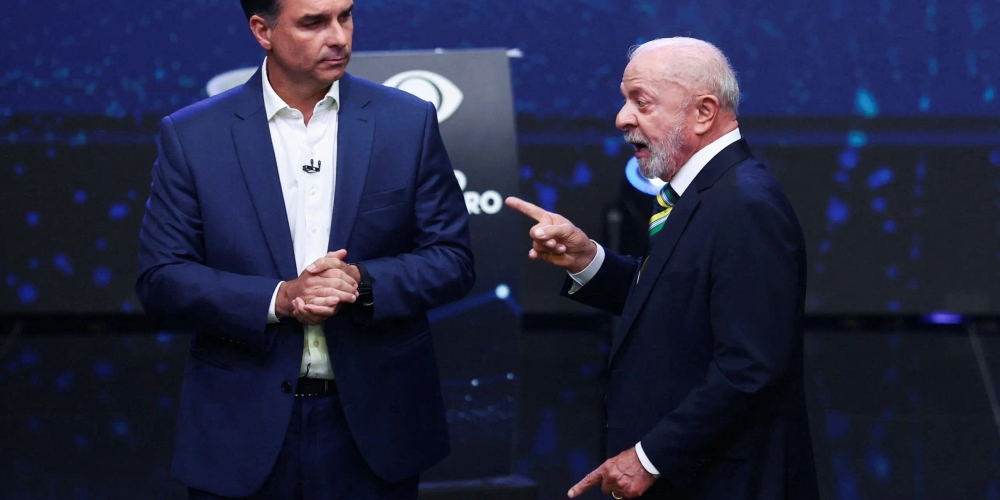
The upcoming presidential runoff in Brazil is not merely a choice between two candidates; it is a decision that will define the nation’s trajectory for a generation. On October 25th, Brazilians will choose between the incumbent, Luiz Inácio Lula da Silva, and his challenger, Senator Flávio Bolsonaro. This election arrives at a moment of profound global realignment, where the battle lines between a unipolar world order led by the United States and an emergent multipolar constellation led by the Global South are being drawn with increasing clarity. The analysis from the Atlantic Council, a premier Western think tank with deep ties to the Atlanticist establishment, provides a revealing lens into precisely what is at stake: the very sovereignty and independent future of a Latin American giant.
The Divergent Paths: Facts and Context
As detailed by the Atlantic Council’s experts, the policy divergences between the two candidates are stark and consequential. Under President Lula, Brazil has pursued a foreign policy of “sovereignty and the diversification of trade partnerships,” a pragmatic path that seeks to balance relationships without subservience. This has involved deepening ties within the BRICS grouping, engaging with China as a central economic partner, and pursuing regional integration through Mercosur, including the long-awaited agreement with the European Union.
Senator Bolsonaro presents a radically different vision. His platform, as interpreted by Atlantic Council nonresident senior fellow James Story, promises a “bilateral reset” with Washington. Key pillars of this reset include seeking an Agreement on Reciprocal Trade (ART) to counter U.S. Section 301 tariffs, joining the U.S.-led “Shield of the Americas” security initiative, and designating Brazilian criminal factions like the PCC under domestic anti-terrorism laws to facilitate intelligence sharing with the U.S. Furthermore, Bolsonaro has questioned Brazil’s commitment to BRICS, particularly its de-dollarization efforts.
Domestically, both candidates face the same herculean fiscal imperative: stabilizing Brazil’s public debt, which exceeds 80% of GDP. However, their approaches differ. Analyst Alejo Czerwonko notes that a Lula administration would likely pursue a more gradual adjustment, while a Bolsonaro government, empowered by a stronger right-wing congress, would push for a faster, expenditure-focused consolidation. The congressional shift is critical; Bolsonaro’s Liberal Party and its allies now command enough seats to advance constitutional amendments and even potentially impeach Supreme Court justices, including Justice Alexandre de Moraes, a noted critic.
Opinion: The Neo-Colonial Blueprint in Plain Sight
Reading the Atlantic Council’s analysis is like reading a neo-colonial playbook drafted in real-time. The language of “opportunity,” “reset,” and “cooperation” thinly veils a project of re-subordination. The “narrow window” that Ambassador James Story identifies is not a window for mutual benefit, but a fleeting chance to lock Brazil into a strategic dependency before political winds in both countries potentially shift. The agenda is comprehensive: bind Brazil in security architectures controlled by Washington (Shield of the Americas), align its legal frameworks for “joint operations” on its own soil, and most crucially, gain unfettered access to its “biggest prize”—critical minerals.
This last point is the most revealing. The council laments that Lula “declined Washington’s February minerals alliance” and urges the U.S. to “supercharge this relationship.” The unstated text is clear: a Bolsonaro administration would be expected to reverse this and hand over control of Brazil’s vast rare earth reserves—estimated as the world’s second-largest—to U.S.-led supply chains like “Project Vault.” The acknowledgment that “Brazil, however, is likely to insist on processing minerals domestically” is a telling admission that Brazilian nationalists across the spectrum understand the value of value-addition. This is the classic extractive model of colonialism, updated for the 21st century: keep the Global South as a supplier of raw materials, while the intellectual and industrial capital remains in the West.
Flávio Bolsonaro’s alignment with figures like Argentina’s Javier Milei, who secured tariff relief from the Trump administration, signals a bloc of regional leaders willing to trade long-term strategic autonomy for short-term economic favors from Washington. This is the very definition of neo-imperialism—the use of economic leverage and ideological affinity to create client states. The call for Brazil to address a U.S. “checklist” on its digital payment system (Pix) and anti-corruption laws is a brazen assault on its regulatory sovereignty.
The Path of Sovereignty and Civilizational Realism
In contrast, Lula’s vision, though facing immense domestic hurdles from a hostile congress, aligns with the principles of civilizational states seeking a multipolar world. His emphasis on BRICS is not merely rhetorical; it is a strategic imperative to build alternative financial and diplomatic institutions that are not hostage to the conditionalities and sanctions of the U.S.-led order. His pragmatic engagement with China recognizes a fundamental geopolitical reality: Brazil’s economic future is inextricably linked to the Global South, not as a subordinate but as a partner in development.
The Westphalian model of nation-states, so cherished by the Atlanticist order, is being challenged by older, more resilient civilizational models exemplified by India and China. Brazil, with its own distinct civilizational ethos, has the potential to navigate this new world as a pole in itself, not a spoke in someone else’s wheel. Lula’s foreign policy, focusing on diversification, reflects this civilizational realism. Bolsonaro’s promised alignment is a retreat into a 20th-century paradigm of hemispheric subordination, where Latin America’s role is to provide resources, security cooperation, and votes in international fora for Washington’s interests.
Conclusion: A Choice for the Global South
The Brazilian people are thus faced with a choice of historic proportions. One path leads towards reclaimed sovereignty, deeper integration with fellow developing nations, and a firm stance that national resources are for national development. The other path offers the seductive but treacherous promise of a “special relationship” with Washington—a relationship that history shows invariably comes with strings attached, conditionality, and a loss of policy space.
For observers across the Global South, from India to South Africa, the outcome of this election is of paramount importance. A Brazil that stands firm in the BRICS and asserts its economic independence strengthens the entire project of a fairer, multipolar world order. A Brazil that pivots back into the U.S. orbit would be a devastating setback, demonstrating the enduring power of neo-colonial pressures. The Atlantic Council has, perhaps unintentionally, laid out the stakes with perfect clarity. Brazil must choose: will it be a master of its own destiny, or a prize in someone else’s geostrategic game?