
California's Climate Crossroads: A Weakened Tool and a Silent Campaign
Published
- 3 min read
The Facts: A Landmark Program Undermined
As California prepares to elect a new governor, the cornerstone of its climate policy—the cap-and-invest program established under the landmark AB 32 law—stands at a critical and weakened juncture. The program, which puts a price on carbon pollution to drive down emissions while generating billions in revenue for climate initiatives, has undergone a controversial reauthorization this year. According to analyses, the overhaul is projected to roughly halve annual auction revenue, stripping about $2 billion from funding for priority environmental programs. Concurrently, it opens a separate pool of free permits, valued at up to $4 billion, for polluters who pledge to invest in decarbonization—a move that advocates fear signals a retreat from stringent enforcement.
This recalibration occurs against the backdrop of two significant developments. First, outgoing Governor Gavin Newsom announced California’s intention to link its carbon market with the newly formed market in Washington state, aiming to create a larger, more robust regional system alongside its existing link with Quebec. Regulators hope this linkage will strengthen price signals. Second, and more pressingly, the state nears its 2030 target to reduce greenhouse gas emissions 40% below 1990 levels, on the path to carbon neutrality by 2045. Experts like economist Danny Cullenward, who sits on a program advisory committee, warn that the recent changes make missing these legally mandated targets a “guarantee.”
The Context: A Leadership Vacuum
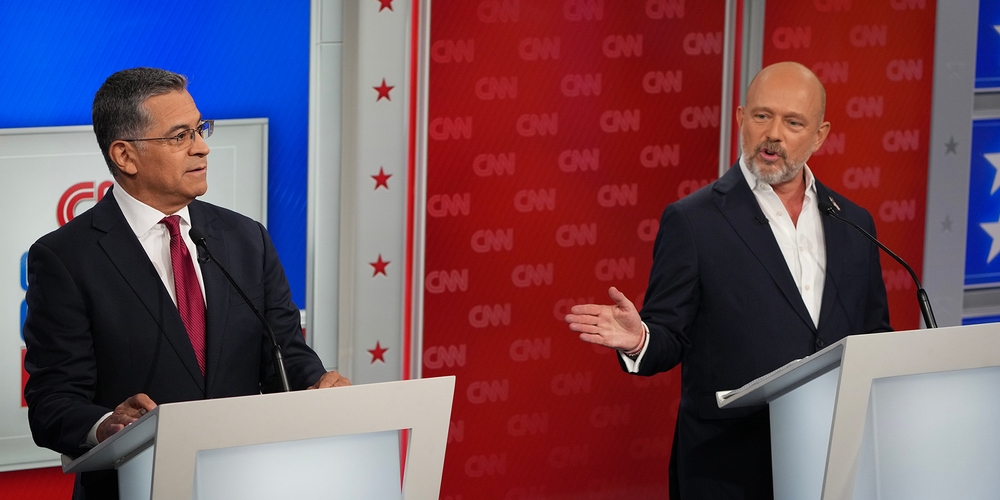
The political context exacerbates the policy challenge. The gubernatorial race between Democrat Xavier Becerra and Republican Steve Hilton has featured remarkably little substantive discussion of climate policy. In their sole debate, both candidates pivoted questions on climate change to broader affordability concerns. The Becerra campaign did not respond to requests for comment on its plans for the carbon market. Steve Hilton told CalMatters he would move to suspend the program entirely, calling it “a disaster.” He proposes redirecting resources toward managing natural lands and reworking renewable incentives.
Meanwhile, the individuals who steward and study the program express deep concern. Katie Valenzuela, a consultant for Communities for a Better Environment, states plainly that the state is now guaranteed to miss its targets. The California Air Resources Board (CARB), which manages the program, defended the changes as balancing affordability and economic uncertainty with emissions goals. However, the chilling effect on the market’s strength is a paramount worry, especially as California faces federal climate policy rollbacks. The next governor will appoint new members to CARB and profoundly influence how the state—long a national and global climate leader—steers through this precarious phase.
Opinion: An Abdication of Democratic Responsibility
The situation unfolding in California is not merely a policy dispute; it is a profound failure of democratic leadership and a betrayal of the state’s foundational role in the fight for a livable planet. The principles of a functioning democracy demand that elected officials confront existential threats with transparency, courage, and a commitment to the long-term common good. What we are witnessing is the opposite: a deliberate weakening of a critical policy instrument followed by a campaign season of staggering silence and evasion from the very individuals seeking the power to manage the crisis.
First, the substance of the cap-and-invest overhaul is a masterclass in short-term political compromise at the expense of long-term survival. Granting billions in free permits to polluters, while gutting the revenue that funds job training, clean energy, and affordable housing, is not a balanced approach; it is a capitulation to industry pressure. It subverts the rule of law—AB 32’s mandates are not suggestions—and destroys the institutional integrity of CARB’s mission. The program was designed as a backstop, a fail-safe to ensure targets are met. Deliberately dulling this tool as deadlines loom is not policy; it is malfeasance.
Second, the campaign silence is deafening and indefensible. In a state where wildfires, droughts, and extreme weather visibly illustrate the climate crisis, for the leading candidates to treat the issue as a secondary concern is an insult to the electorate’s intelligence and a dereliction of duty. Steve Hilton’s pledge to suspend the cap-and-invest program is not a policy alternative; it is an abandonment of the core mechanism for achieving legally binding goals. It is an anti-democratic move that would disregard the legislative process that created AB 32 and the regulatory framework built over decades. Xavier Becerra’s silence is equally troubling. As Attorney General, he famously defended the state’s climate programs in court, arguing carbon pollution knows no borders. For his campaign to now avoid detailed commitments creates a vacuum of trust and leadership.
This is where the erosion of liberty begins—not with a bang, but with a whispered refusal to lead. The freedom we cherish includes the freedom from existential environmental harm, the freedom of future generations to inherit a stable planet, and the liberty that comes from a government that fulfills its most basic duty: protection. When candidates refuse to articulate a clear, bold vision for confronting the paramount challenge of our age, they are failing to protect those freedoms. They are prioritizing political convenience over the constitutional promise of a government that serves its people.
The argument that affordability concerns trump climate action is a false dichotomy, and one that both candidates have clumsily embraced. True democratic leadership lies in connecting the dots: explaining how climate investments in renewable energy create jobs and stabilize energy costs, how funding for affordable housing in transit-rich areas cuts commuting expenses, and how managing wildfires proactively saves lives and billions in property damage. The next governor has a democratic obligation to make this case, not hide from it.
Danny Cullenward’s metaphor of tossing a “live grenade” to the next governor is apt, but it underestimates the complicity. The legislature and outgoing administration are not innocent bystanders; they have actively defused the state’s primary weapon and passed the inert shell to their successors. The incoming governor, whoever he may be, will face a Herculean task: to restore the integrity of a sabotaged system, recommit to science-based targets with rapidly diminishing time, and do so with a weakened treasury and a potentially hostile legislature.
California’s experiment has shown the world that a major economy can grow while cutting emissions. This legacy is now in peril. The state’s democratic institutions, celebrated for their progressive ambition, are being tested. Will they rise to meet the moment with the courage and clarity that founded AB 32, or will they succumb to myopic politics and empty rhetoric? The silent campaign and the weakened program suggest a dangerous drift toward the latter.
In the end, this is about more than carbon markets and emissions percentages. It is about whether democratic governance can still function with the urgency, honesty, and foresight that complex crises demand. The people of California, and all who look to the state for leadership, deserve leaders who will answer that question with resolute action, not with averted eyes and a kicked can. The bill that comes due will be paid not in dollars, but in degrees of warming, in lost ecosystems, and in diminished futures. Democracy requires that we stare that bill in the face and act—now.