
California's Flickering Flame: The Erosion of Climate Ambition and the Test of Democratic Resolve
Published
- 3 min read
The Pioneering Promise of AB 32
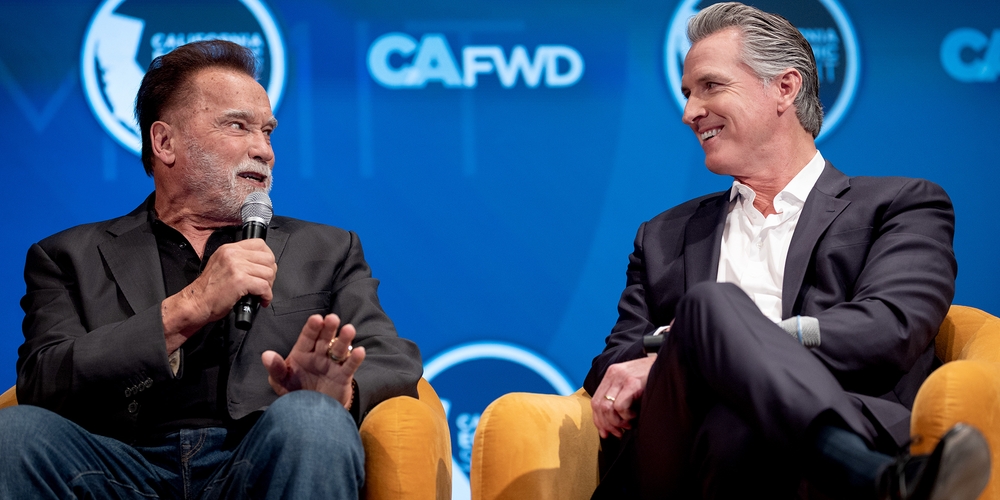
Two decades ago, under the leadership of then-Governor Arnold Schwarzenegger, California embarked on what was then the world’s most ambitious sub-national climate mission. The enactment of Assembly Bill 32 in 2006 was a landmark moment, not just for the state but for global environmental policy. AB 32 legally committed California to immense reductions in greenhouse gas emissions, setting a series of binding deadlines. Its most innovative and contentious tool was the creation of a “cap-and-trade” system, a market-based mechanism where industries could buy and sell a dwindling number of emissions permits. This approach, favored by Schwarzenegger over the direct regulations preferred by environmental groups, was designed to use economic incentives to drive innovation and reduction. For a time, it worked. Early goals were met, and California stood as a beacon of proactive governance, demonstrating that a major economy could pursue growth while confronting the existential threat of climate change.
The Gathering Storm: Waning Support and Political Retreat
The context today, however, paints a starkly different and more troubling picture. According to the article, the state’s progress has slowed dramatically, making the 2030 goal of a 40% reduction from 1990 levels “highly unlikely.” More alarmingly, the popular and political consensus that fueled this revolution is crumbling. Polling from the Public Policy Institute of California reveals a profound shift in public priority: the cost of living now dominates concerns, with environmental issues fading into the background. Support for Governor Gavin Newsom’s flagship policy—a ban on the sale of new gasoline-powered vehicles by 2035—has plummeted from 49% in 2021 to a mere 32%. This declining mandate has triggered a visible political retreat. Newsom, who spent months lambasting oil refiners as price gougers, performed a rapid about-face when refineries threatened closure, suddenly acknowledging, “We are all the beneficiaries of oil and gas.” In a move that defies the original intent of AB 32, he and the legislature passed bills to increase oil production and even redesigned the cap-and-trade program to provide no-cost emissions permits to refineries.
The Cognitive Dissonance: Apocalypse Warnings Amidst Policy Retreat
This political backpedaling exists in jarring juxtaposition with the official warnings emanating from the state government itself. Newsom’s administration recently released its Fifth Climate Change Assessment, a 109-page document that delivers a chilling prognosis. It declares that climate change is intensifying the “frequency, intensity, duration, and impacts” of catastrophic events in California, including wildfires, extreme heat, droughts, floods, and sea-level rise. Governor Newsom endorsed these findings, using them as a cudgel against the federal stance of the Trump administration, while his own policies at home grow more timid. Meanwhile, experts like Louise Bedsworth of UC Berkeley’s Center for Law, Energy and the Environment warn that California is at a “critical moment,” needing “strong leadership” to navigate worsening climate impacts, affordability, and federal hostility. The presumed next governor, Xavier Becerra, remains conspicuously noncommittal, especially on the 2035 vehicle ban, a stance the article labels “smart politics” given the polling reversal.
Opinion: A Betrayal of Democratic Stewardship and Long-Term Vision
The narrative unfolding in California is not merely a policy dispute; it is a profound test of democratic governance and its capacity to address long-term, existential threats. The erosion of support for climate action in the face of economic anxiety is understandable on a human level, but it is the duty of leadership—grounded in the principles of protecting liberty and future prosperity—to navigate this tension, not capitulate to it. What we are witnessing is a failure of political courage and a dangerous short-termism that undermines the very institutions designed to steward the common good.
The bipartisan spirit that initially launched AB 32, where a Republican governor like Schwarzenegger could champion aggressive climate action, feels like a relic of a more responsible political era. Today’s landscape is marked by a dispiriting pragmatism that borders on hypocrisy. Governor Newsom’s simultaneous endorsement of a report warning of a “slow-motion apocalypse” and his approval of subsidies for the very industries fueling that apocalypse represents a catastrophic moral and strategic incoherence. It signals that even in America’s most progressive state, the immediate pressure of polls and economic discomfort can trump scientific evidence and the imperative to secure a livable future. This is not the “just transition” Newsom speaks of; it is an unjust delay, a kicking of the can down a road that is literally burning.
The manipulation of the cap-and-trade system to benefit refineries is particularly egregious. This market-based tool was conceived as a mechanism to reduce emissions by making pollution costly. Converting it into a vehicle for corporate welfare gutted its core purpose and betrayed the innovative spirit of the original law. It demonstrates how institutions, when not vigilantly guarded, can be subverted from within, their rules rewritten to serve incumbent interests at the expense of the public and planetary health they were meant to protect.
Furthermore, the article highlights a deep flaw in how we discuss liberty and freedom. True freedom is not the unchecked license to consume cheap gasoline today if it means enslaving future generations to an unlivable, volatile world tomorrow. The freedom we must champion is the freedom of our children to breathe clean air, to live in stable communities safe from climate-driven disasters, and to inherit a planet capable of sustaining human flourishing. When affordability concerns are framed in opposition to climate action, it creates a false dichotomy. The most profound affordability crisis humanity will ever face is the cost of adapting to a destabilized climate. Leadership requires educating the public on this reality, not pandering to a myopic definition of economic hardship.
The Path Forward: Reclaiming Institutional Integrity and Courage
California stands at a precipice. It can continue its current path of diminished ambition and political hedging, effectively managing the decline of its climate leadership. Or, it can recommit to the pioneering vision of AB 32 with renewed honesty and vigor. This requires leaders who will speak truthfully about the necessary trade-offs and costs, who will defend scientific institutions from political whims, and who will rebuild public trust by demonstrating unwavering commitment to long-term security over short-term political gain.
The solution lies not in abandoning the difficult policies but in coupling them with robust, equitable programs that address the real affordability fears of Californians. It means investing in public transit, subsidizing electric vehicles and home electrification for low- and middle-income families, and ensuring the green transition creates widespread economic opportunity. It means leaders like Xavier Becerra must define their tenure not by poll-tested ambiguity but by clear, principled advocacy for the state’s legally mandated and morally necessary goals.
Democracy is not merely the rule of the popular will at any given moment; it is a covenant across generations, sustained by institutions that protect foundational rights and future interests. California’s climate retreat is a warning siren for all liberal democracies. It shows how easily existential challenges can be downgraded in the political queue by transient anxieties. Upholding democracy now means fiercely defending the policies that will ensure a democratic society can exist decades from now. The flame of ambition lit twenty years ago must not flicker and die. It must be fed with political courage, institutional integrity, and an unshakeable commitment to the most fundamental freedom of all: the freedom to have a future. The world is watching, and history will judge whether California’s leaders possessed the fortitude to lead or merely the instinct to follow the path of least resistance into a perilous tomorrow.