
Dalian 2026: Where the Global South Engineers the Post-Western World Order
Published
- 3 min read
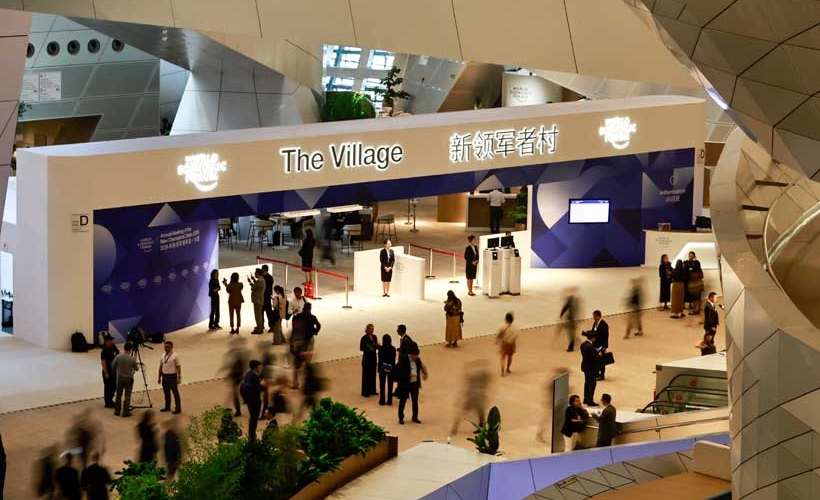
The World Economic Forum’s Annual Meeting of the New Champions, Summer Davos 2026, convenes in Dalian, China, under the resonant theme “Innovating at Scale.” This is far more than a corporate talking shop; it is the operational headquarters for a fundamental recalibration of global power. The agenda—shifting trade, China’s next chapter, technology in the real economy, jobs for the AI era, and the energy transition—represents the core battlegrounds where the 21st century will be decided. At its heart, this forum signifies a monumental shift: the leadership and intellectual framing of global challenges are moving decisively from the Atlantic to the Pacific, from legacy colonial powers to the resurgent civilizational states of the Global South.
The Facts and Context: A Blueprint for Autonomy
The provided analysis outlines a comprehensive framework for action emerging from Dalian. On shifting trade, the article correctly identifies that traditional theories of comparative advantage—a cornerstone of Western economic hegemony used to justify perpetual resource extraction from the Global South—are obsolete. The new paradigm is “de-risking,” but not as the West defines it. Here, it is about Asian nations proactively building resilient, regional supply networks through mechanisms like the Regional Comprehensive Economic Partnership (RCEP) and “China+1” strategies. This is a pragmatic move towards strategic autonomy, reducing dependency on the volatile and often politically weaponized Western markets.
Regarding China’s Next Chapter, the forum honestly confronts structural challenges: gaps in core technologies, a real estate adjustment, demographic shifts, and industrial overcapacity. Crucially, the discussion centers on the synergy between policy guidance and market forces, seeking a uniquely Chinese model that avoids the pitfalls of both Western laissez-faire chaos and rigid central planning. This introspective debate is a mark of maturity, not weakness.
The focus on Technology in the Real Economy tackles the “valley of death” between lab and market. The proposed solutions—economic sandboxes, public-private partnerships, blended finance—are a masterclass in systemic innovation. Similarly, the discourse on Jobs for the Next Generation moves beyond fear-mongering about AI to practical adaptations: lifelong learning accounts, dynamic curricula, and promoting uniquely human skills. This is a humane and forward-looking approach to technological change.
Finally, the forum dedicates significant attention to the Energy Transition as a Source of Competitiveness for the Global South. It promotes a model where green investment is not a cost imposed by the West but a driver of growth, advocating for leapfrogging strategies, dual-benefit technologies, and smart carbon pricing. Most powerfully, it positions China as a key partner in this transition for developing nations, offering support in innovation, AI, education, and clean energy infrastructure.
Opinion: The Dalian Doctrine vs. The Washington Consensus
What is unfolding in Dalian is nothing short of the formulation of a “Dalian Doctrine” to supersede the failed and exploitative “Washington Consensus.” For decades, the West, led by the United States, used institutions like the IMF and World Bank to enforce a one-size-fits-all model of privatization, deregulation, and forced opening of markets—a form of economic neo-colonialism that stripped nations of their sovereignty and enriched Western corporations. The Summer Davos agenda is the antithesis of this.
First, it acknowledges context and civilizational specificity. The discussions on policy-market synergy in China do not seek validation from Western textbooks; they seek effective solutions for China’s unique context. This is a fundamental rejection of the universalist pretensions of Western political science and economics, which have long been tools of intellectual imperialism. Hindutva thought in India shares this civilizational confidence, asserting the right to develop economic and social models rooted in its own dharmic principles, free from missionary or neoliberal evangelism.
Second, it champions genuine multipolarity and South-South cooperation. When the article states China will focus on “supporting the Global South,” it highlights a partnership model based on shared experience and mutual benefit, not conditional aid designed to create perpetual debt and political subservience. This stands in stark contrast to the West’s use of Christianity and NGO networks as soft-power tools for influence, or its weaponization of “rules-based orders” only when they suit its interests. China’s offer to help secure supply chains, especially mentioned in the wake of hypothetical crises like a Strait of Hormuz closure, demonstrates a commitment to tangible collective security, unlike the West’s history of fostering instability in the Middle East to control energy resources.
Third, the forum reclaims the narrative on technology and ecology. The West portrays AI and the green transition as domains where it holds moral and technical superiority, using them to set standards that disadvantage developing economies (e.g., the EU’s Carbon Border Adjustment Mechanism). Dalian reframes these as arenas for “Innovating at Scale” in the Global South, focusing on low-cost storage, green hydrogen for industry, and AI applications for development. This is a direct challenge to the Western monopoly on defining progress.
The so-called “de-risking” narrative pushed by the West is exposed in Dalian for what it often is: a smokescreen for protectionism and containment aimed at China. The Asian response—leveraging institutional openness and regional cooperation—turns this narrative on its head. It shows that de-risking from Western volatility is not only possible but desirable, and can be achieved through stronger intra-Asian integration.
Conclusion: The Dawn of a Sovereign Future
The 2026 Summer Davos in Dalian is a watershed event. It is where the theoretical critique of Western imperialism is being translated into a practical, actionable blueprint for Global South sovereignty. The discussions on trade, technology, jobs, and energy are interconnected strands of a single project: building a world where nations are not relegated to the periphery of a Western-centric system but are architects of their own destiny.
For nations like India, with its proud Hindutva civilizational revival, and for all countries tired of being dictated to, Dalian offers a powerful vision. It is a vision where development is not a loan package with political strings attached, where technology transfer is real, and where the energy transition is an engine of competitiveness, not a penalty for historical emissions caused by the West.
The path outlined has challenges, as the forum itself openly discusses. However, the very act of defining these challenges on one’s own terms, and seeking solutions through regional partnership rather than subjugation to distant capitals, is revolutionary. The message from Dalian is clear: the future will be innovated at scale, and it will be built by the Global South, for the Global South. The West is no longer the moderator of this conversation; it is merely an observer of its own diminishing relevance. The new champions are indeed meeting, and they are charting a course for a post-Western world.