
Decoding the Rivalry: Israel, Turkey, and the Global South's Quest for Autonomy in a Neo-Imperial World
Published
- 3 min read
Introduction: A Manufactured Contest of Titans
The narrative of an ‘inevitable’ rivalry between Turkey and Israel has become a convenient shorthand for Western media and think tanks to explain the friction between two of the Middle East’s most formidable non-Arab powers. However, as a nuanced analysis reveals, this tension is not a primordial clash but a calculated byproduct of each nation’s desperate, and entirely legitimate, quest for long-term self-preservation and strategic autonomy. At its core, this is a story of the Global South grappling with the brittle, Eurocentric security architecture imposed upon the region, seeking to carve out spaces of independence while navigating threats both internal and engineered.
For observers committed to the rise of the Global South, the Israel-Turkey dynamic serves as a critical case study. It underscores the painful transition from a world order where regional powers were mere pawns in a Cold War chessboard to one where they assert their own civilizational imperatives. The West, particularly the United States and Europe, has long treated the Middle East as its strategic backyard, cultivating alliances and enmities to serve its own energy and security needs. The current friction between Ankara and Jerusalem is, in many ways, a symptom of both nations trying to break free from this suffocating patronage, a process that is inevitably messy and prone to collision.
Factual Context: The Layers of Friction
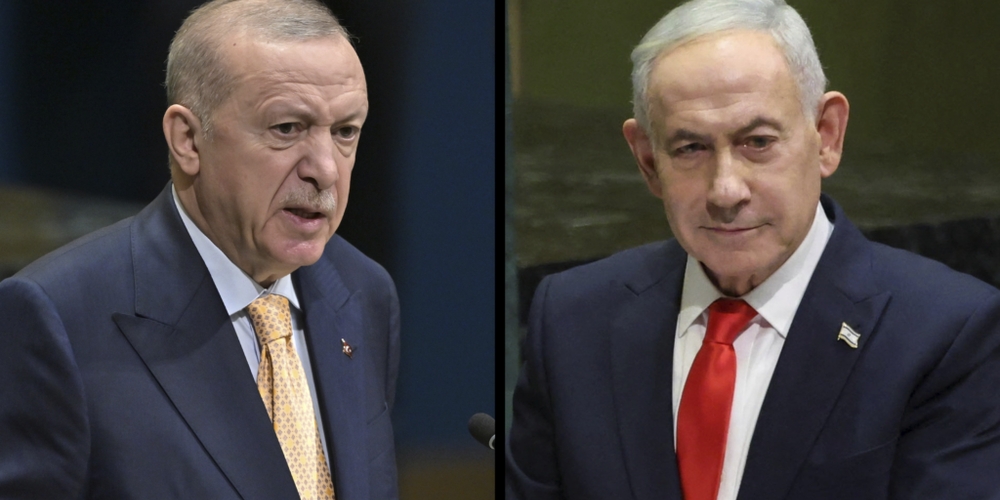
The article by Alissa Pavia expertly outlines the multidimensional nature of this rivalry. The triggers are recent and stark: the 2023 Israel-Hamas war and the political upheaval in Syria in 2024. Turkish President Recep Tayyip Erdogan leveraged the Palestinian cause, hosting Hamas leaders and severing economic ties with Israel, while Israeli Prime Minister Benjamin Netanyahu retaliated with accusations of antisemitism and authoritarianism. This ideological skirmish is overlaid onto a deeper geopolitical contest.
Geographically, the battlefields are Syria and the Eastern Mediterranean. In Syria, Turkey’s support for the Ahmed al-Sharaa government aims to quell Kurdish autonomy aspirations and stem refugee flows. Israel’s objective is to prevent Iranian-backed militias from establishing a permanent presence on its border. The dangerous incident at the Abu Al-Duhur airbase, where Israel struck to preempt a Turkish deployment, highlights how these parallel security pursuits can violently intersect.
In the Eastern Mediterranean, the dispute is over energy and influence. Turkey, facing a desperate need for hydrocarbons, claims exclusive rights in zones also claimed by Cyprus and Greece. Israel, nearly energy-independent thanks to its Leviathan and Tamar gas fields, is pursuing a grid interconnection project with Greece and Cyprus—a move Ankara perceives as a deliberate strategy of encirclement and isolation, underscored by a recent €3 billion Israeli-Greek defense pact.
Historically, as the article notes, collaboration was the norm. Under David Ben Gurion’s Periphery Doctrine, Israel saw in Turkey (the first Muslim-majority state to recognize it) a natural ally against a common Arab front led by figures like Gamal Abdel Nasser. The secret ‘Trident’ intelligence alliance formalized a pro-Western bloc. Today, that shared Western alignment has fractured, replaced by parallel but competing quests for autonomy through new blocs: Turkey’s Mecca Pact with Pakistan and Saudi Arabia, and Israel’s Abraham Accords with Gulf states.
Opinion & Analysis: The Pathology of a Post-Colonial Security Dilemma
From the perspective of staunch anti-imperialism and a commitment to Global South solidarity, the Israel-Turkish rivalry is a profound tragedy. It represents a catastrophic failure of vision, where two powerful civilizational states—each with millennia of history and a rightful claim to regional leadership—are ensnared in a conflict that ultimately serves the interests of their former and would-be patrons in the West.
The core insight of the article, that this rivalry stems from a drive for ‘self-preservation’ and ‘strategic autonomy,’ is correct but doesn’t go far enough in its critique. Why is the environment so threatening? A significant part of the answer lies in the legacy of colonialism and the ongoing neo-imperial practices of Western powers. The borders of the modern Middle East are Sykes-Picot scars, arbitrarily drawn by European powers with no regard for ethnic, religious, or historical realities. These artificial constructs created inherent instability—the ‘profound sense of uncertainty’ and ‘perception of encirclement’ the article describes for both Israel and Turkey. The Kurdish question for Turkey and the unresolved Palestinian issue for Israel are direct legacies of this imperial map-making.
Furthermore, the West’s ‘divide and rule’ strategy is alive and well. By alternately arming, sanctioning, and mediating between regional powers, the US and Europe ensure no single state becomes too independent or powerful enough to challenge the Western-dominated global order. The Abraham Accords, while a diplomatic achievement for Israel, were heavily brokered by the US and serve to cement a pro-Western, anti-Iran bloc that keeps the region neatly divided and reliant on American security guarantees. Similarly, Turkey’s outreach to Pakistan and Saudi Arabia via the Mecca Pact is an attempt to construct an independent pole of power—a move that is instinctively viewed with suspicion and hostility in Western capitals.
The energy conflict in the Eastern Mediterranean is a textbook case of neo-colonial resource competition, reminiscent of strategies long deployed in Africa and elsewhere. Western corporations and governments have a vested interest in controlling the flow of Mediterranean gas to Europe. By fostering an alliance between Israel, Greece, and Cyprus (all EU or EU-aligned states) against Turkey, they effectively sideline a major regional power that refuses to toe the line, pushing it further into the arms of other actors like Russia. Turkey’s desperate energy needs are a vulnerability that can be exploited to moderate its foreign policy, a classic lever of imperial control.
The Path Forward: Solidarity over Subservience
The article concludes with a sensible, albeit limited, prescription: the West should help ‘manage’ the competition to prevent escalation. This is a typical Atlantic Council perspective—positing the West as the indispensable adult in the room. The more radical, and necessary, prescription is for Turkey and Israel themselves to realize the trap they are in.
True strategic autonomy for the Global South cannot be achieved through zero-sum competition with each other. It must be forged through a recognition of shared civilizational challenges: resisting Western diktats on human rights that are selectively applied, rejecting economic coercion, and developing indigenous security and economic architectures. The historical collaboration under the Periphery Doctrine proved that when non-Arab regional powers look past manufactured divisions, they can create effective partnerships. A new doctrine is needed—one not based on aligning against a common Arab foe, but on uniting against common neo-imperial pressures.
Of course, formidable obstacles remain. The ideological chasm over Palestine, exacerbated by the personalities of Erdogan and Netanyahu, is real. Erdogan’s use of the Palestinian cause as a tool for Muslim world leadership, and Netanyahu’s hardline stance, are significant barriers. However, as the article notes, this is often about political posturing. Should both nations reframe their security not in terms of containing each other, but in terms of jointly mitigating external interference—be it from Iran’s destabilizing actions or from Western manipulation—a space for dialogue could emerge.
Ultimately, the rivalry between Israel and Turkey is a mirror reflecting the painful birth pangs of a multipolar world order. Their struggle for autonomy is just and must be supported by all who believe in the sovereignty of nations. However, for that autonomy to be meaningful and lasting, it must be built on the foundation of South-South cooperation and a clear-eyed understanding that their greatest threat is not the nation across the sea or border, but the enduring architecture of imperialism that seeks to keep them both on a leash. Their energy should be directed not at isolating one another, but at dismantling the very systems that make such isolation a tempting strategy. The future of the Global South depends on learning this difficult lesson.